

|
 Support Science Not Superstition
|
|
|
|
UFOs and Aliens UFOCUS NZ and Alien Abduction
Add a Comment
What to believe? Friendly aliens or malevolent ones? Of course we first need to take step a back and ask whether there are any aliens at all, friendly or malevolent? Before we can decide what their intention might be, we have do decide if they even exist. And while we shouldn’t need to say it, considering who we're dealing with I fear we must: No images of real flying saucers or aliens appear in this article since no such verified images exist. |


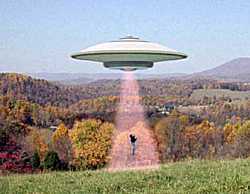 Flying saucers or UFOs, if you're an optimist, are full of advanced aliens waiting to welcome us into a galactic federation of space-faring beings and assist us with our problems. If you're a pessimist they're full of aliens bent on our domination or extinction. Devious aliens that are busy experimenting on us and our cattle, covertly of course, until the time comes to reveal their intent. By some accounts they are even in league with our governments who are trading our liberty for alien technology. Where do you think microwave ovens came from? And we're 'lucky' in New Zealand that we now have our very own UFO and alien contact support group in the form of UFOCUS NZ, a group we can turn to for advice.
|
In this article we'll look at why a small number of people think they've encountered aliens and why a much larger group supports their belief. We'll look at the usual reasons people give for believing in aliens and show that in centuries gone by these same people would have been burning witches at the stake or making sacrifices to hawk-headed gods. Where ignorant peasants once saw witches on broomsticks, now they see aliens in flying saucers. We'll discover the reason that they believe they've had sex with an alien is the same reason that their ancestors believed they were fornicating with demons. We'll learn that for all the great advances we've made in knowledge, humans are just as gullible now as they ever were and many still select simple, desirable fantasies over the truth. Why is there a belief in flying saucers and aliens? Mainly, it seems, because there are quite a few people out there that believe they've actually seen flying saucers and aliens. Then we have a much larger second group who generally support this first group, even though they haven't had a personal encounter themselves. So have this first group really shook hands with, been inappropriately touched by or conversed telepathically with aliens — extraterrestrials, beings from outer space — or at the very least, spied their spacecraft blazing across the sky, hovering over their neighbour's barn or in the queue at a KFC drive-through? In NZ we now have a group called UFOCUS NZ that answers 'YES'. Aliens really are visiting earth, people are seeing their spacecraft and some are actually meeting aliens face to face. Of course not all encounters will really be down to aliens, for example that UFO sighting at KFC probably has a prosaic explanation, as will most others, but a few will remain that groups like UFOCUS NZ believe signal aliens and alien spacecraft. And lucky for us mere plebs, we can now report our sightings and encounters to UFOCUS NZ who will investigate them and deliver their verdict. No longer do we have to tell our associates and risk being laughed at. UFOCUS NZ will listen to our tales with no hint of a suppressed giggle. Unfortunately the verdict from UFOCUS NZ will either be: "Yes, aliens are real and it's highly likely that you did see one."No matter the outcome of their investigation, their core belief remains the same — aliens are real and they're here — and therefore the person reporting the sighting risks going away believing there is support for aliens whether their particular sighting was confirmed or not. While UFOCUS NZ may serve a valuable role in explaining mistaken sightings, it is biased towards belief in aliens. Then you get people like us, who are skeptical of these alien claims. So we repeat our original question: What to believe? As we see it people have two options regarding this claim of alien visitation:
If the claim of alien visitation is false, we need to explain where this belief in aliens came from and why some people mistakenly accept it as true. If false it's also likely that many of the claims won't make sense scientifically or logically, plus evidence will be lacking. We hope readers will agree that there is no concrete, indisputable evidence or widespread acceptance for aliens. If there was we wouldn't be having this discussion. And it's no good mentioning conspiracies. It doesn't matter how many aliens the US government have hidden at Area 51. Evidence that is supposedly suppressed by governments is not evidence as long as it's suppressed. There is no proof of aliens (at present anyway) so it all comes down to weighing up the statements and available evidence from both believers and skeptics and deciding rationally and honestly what the most sensible conclusion is. It won't come as a surprise that we at Silly Beliefs take the stance that claims of alien visitation are false. That said, it's probably the first belief we've looked at that we accept could be true. We believe it's possible that an alien could land tomorrow, or may have already landed, whereas we don't believe gods or ghosts have or will ever turn up. So please don't write stating that we're arrogant to claim that aliens couldn't exist. Once again, aliens are definitely possible, what we're talking about here is alien visitation, we're saying that the evidence for them coming here and abducting hillbillies is non-existent. We'll attempt to show that what believers offer as evidence of aliens is nothing of the sort. Then we'll examine why even more people, those that haven't had any personal experience of aliens, still go on to support these bogus claims. Finally we'll look at what part UFOCUS NZ plays in perpetuating the belief that aliens might appear in your bedroom tonight. So where do we begin? Since we believe the claim of alien visitation is false, we need to explain what conditions in society could generate false sightings of aliens. Why do people see aliens and not witches? We'll start with what many people consider is the best evidence of aliens — first hand accounts of alien encounters. Most people on the planet have never seen an alien spacecraft, an alien or experienced an alien abduction. In fact there is no good evidence that anyone has. But a minority claims that they believe they have had an 'alien encounter'. Do their statements stand up to scrutiny? After all, if they really have experienced aliens then we should all be supporting them, not just groups like UFOCUS NZ. Basically one of two things makes up a typical 'alien encounter':
Let's start with a fact — UFOs are real. That's right, UFOs are real. This has been proven time and time again.
Unfortunately confusion arises around the term UFO — what it actually means and what the general public takes it to mean. UFO is an abbreviation of 'Unidentified Flying Object'. It simply means any apparent object or phenomenon that we happen to observe in the sky that appears to be flying (or hovering) and that we can't identify. The term unidentified
Unfortunately in the public mind UFO is not so much an abbreviation but a term that is synonymous with alien spaceship, extraterrestrial craft and flying saucer fill of little green men. When people hear the word UFO mentioned their minds immediately turn to aliens and flying saucers, not to possible weather balloons or the planet Venus. When most people claim to have seen a UFO they're not saying they saw something that they couldn't identify, just the opposite in fact. They believe they have positively identified a strange object in the sky as an alien craft. In reality it makes no sense to say, 'I saw a UFO last night. It was an alien spacecraft.' If you were able to identify it as an alien spacecraft then it's not a UFO since you have identified it. You either see a UFO or an alien craft. You can't see both. You're simply not justified in saying, 'I couldn't identify what I saw, therefore I know it was an alien spacecraft'. When people say, "I don't know what it was", why won't they just stop right there? Why do they have to continue with, "Since I don't know what it was ... I can safely assert that it must have been an alien spacecraft"? Why can't some people stop themselves from making this illogical leap? And many even realise that the object remaining unidentified is an important component of their sighting. They acknowledge that they believe it was an alien craft simply because they couldn't identify it. The fact that they have no knowledge of what it was leads them to believe that they do know what it was. The less knowledge they have the more confident they are.
In the true sense of the phrase UFOs have always been with us. This is what we mean by our statement that UFOs are real. Throughout history humans have seen strange things in the sky and wondered what they were. Comets, shooting stars, 'stars' that moved (and later called 'planets'),
So we definitely do need experts and organisations that we can turn to for advice when we see something strange in the sky. But we need experts who know that UFO means UNIDENTIFIED Flying Object and who start their investigation from this premise. These experts are scientists, especially astronomers, meteorologists and physicists belonging to universities, research companies, planetariums and astronomical societies. What we don't need is an organisation like UFOCUS NZ that believes UFOs and alien craft are one and the same thing. Ok, so now that we know that UFOs and alien craft are different things, and that seeing a UFO is nothing unusual, is there any good evidence that some UFOs could well be alien craft, even though we can't positively identify them as such? No. Of course some believers in aliens mistakenly claim that because we can't identify a UFO this suggests that it's something unknown to this world, ie extraterrestrial. But in the same way a child could argue that UFOs could be Santa's sleigh and are therefore evidence of Santa. Since the object is unidentified you can't prove it wasn't Santa in the same way that scientists can't prove it wasn't a flying saucer. Of course as regards Santa an adult would say that there are nevertheless good reasons why it probably wasn't Santa, the flying reindeer problem for example. And in the same vein there are good reasons why it probably wasn't aliens either. Of course believers will also argue that there are plenty of photos and videos of real alien craft. This is false. There are only photos and videos that are claimed to be of aliens. In the same way that Christians claim they have images of Jesus or the Virgin Mary burnt into a tortilla, or children claim they have toys from Santa or people claim they have photos of Bigfoot, simply claiming something is not sufficient to make it true. They must provide evidence that their photos actually show aliens, not just the photos themselves. There is not one image or UFO description that real experts accept as being of an alien craft.
All UFO sightings will progress to one of the following categories: IFO — an identified flying object, a deliberate hoax, or a fantasy — a psychological misperception by a witness. Or it will simply remain as a UFO — unidentified. At the end of the day, no sighting worldwide has been confirmed as an alien craft, and between 90% and 95% of all sightings, once properly investigated, have been found to have prosaic explanations unconnected to aliens. Of the few sightings that remain unexplained, usually this is because there is simply insufficient evidence to examine, and they remain as true UFOs. And something that is unidentified can not be used as evidence for aliens. This is known as the argument from ignorance. Arguing that it 'could' be an alien craft, therefore it is an alien craft, carries no more weight than arguing that it could be Santa's sleigh. Current scientific knowledge would suggest that it's far more likely to have a natural explanation than to be an alien spacecraft. So to recap, anyone that provides a photo or oral description of a UFO is providing no evidence for aliens. All they have shown is that UFOs exist. And that fact isn't in contention. But as we've said, UFO sightings do occur, so let's assume we see a UFO. That is, we see something unfamiliar in the sky that we can't immediately identify. Naturally we will try and think up possibilities — based on our knowledge of the world — of what it might be. The question is what knowledge would cause some of us to settle on flying saucer? We'll get to that shortly. The other cause of 'alien encounters' — weird experiences — are real too. Who hasn't had an experience that they've summed up with, "Well, that was weird". We've all had dreams that seemed to predict the future or nightmares that seemed a little too real. Have you ever had an experience of déjà vu? Have you ever been in a stationary vehicle when the one next to you moved and you could have sworn that it was actually you that were moving? Weird eh? Have you ever been so engrossed in a TV show that you failed to notice what was happening around you? One of my favourites is waking up to the radio rather than an alarm. If you don't wake up immediately I've found that the music or people on the radio can intrude into your waking dreams. Dreams with their own soundtrack can be great but politicians suddenly appearing in your dreams is the down side. And what about coincidences? Ever thought about someone and then suddenly they ring you up? Have you ever looked at some of those visual illusions where images flip from one thing to another or found the hidden image in those 3D pictures? Have you ever recalled a memory from your distant past that you're now not sure was a real experience or just a dream? So there's no doubt that weird experiences are real. Problems only arise when we try and explain what was happening during that weird experience. So what weird experiences are people interpreting as alien experiences? No doubt some people do think of aliens and then the phone rings, but the most common are:
This one is probably the most convincing in the minds of those that experience them, since it's hard to convince people that a personal experience was false. "I know what I saw" they proclaim. And what do they think they see and feel? By far the most common experience that people believe screams 'alien' happens at night while they're asleep. They describe suddenly waking for no obvious reason and being filled with the impression that they are not alone, that there is a strange presence in the room. They often believe they can detect vague shapes moving in the darkness and some even feel a pressure on their chest, as if some thing — some being — is sitting on them, holding them down. They try to react but suddenly realise they can't move. They're paralysed! Understandably panic and fear grips them. Then everything fades out. Their next memory is waking again, but this time everything is normal, they can move and there is no feeling of dread, no feeling of a presence in the room.
So what happened to these people? In the minds of believers, aliens have visited them. The presence they felt were alien beings and their paralysis was brought about by these aliens. The fact that
Is there a better, more rational explanation for this experience that doesn't involve aliens? Yes there is. It's a sleep disorder that's called 'sleep paralysis', which is part of a condition commonly called 'waking dreams', or more technically, 'hypnogogic and hypnopompic hallucinations'. It's a state of mind sometimes entered into when you're falling asleep or waking up. Part of your mind can be in a 'dream' state and part fully conscious, and bizarre hallucinations can occur in this crossover state. Sometimes 'waking dream' hallucinations that are experienced on waking are accompanied by 'sleep paralysis'.
Normally when people are asleep — in the periods called REM sleep — the mind tends to paralyse the body, one reason is possibly to stop you thrashing about, to stop you acting out your dreams, and after all, when you're asleep you don't need your body to be able to move. As your mind starts to wake up, it releases the hold it had on your body and by the time you've become fully conscious you have full movement back without even realising you had ever lost it. This is perfectly natural and happens to everyone, every night. But for some people the mind and body occasionally gets out of sync. This condition may be prevalent in 3 to 6% of the general population and "occurs occasionally as 'isolated sleep paralysis' in 40 to 50%." [1] Two of our group have experienced it, and we know of several others also (and none of us saw aliens). What happens is that sometimes the mind 'wakes up' before the paralysis of the body is removed. You become conscious of your surroundings, but you can't move or speak. Often also associated with this condition can be hallucinations of bright lights, sounds and bizarre imagery, the feeling of a presence of someone or something else in the room, a feeling of dread, a feeling of pressure on your chest, sexual stimulation and even floating out-of-body experiences (OBEs). This condition has been observed many times under controlled conditions, and it has been shown there most definitely wasn't anyone else in the room, even though the subject thought there was. And it's not a new phenomenon. There are accounts of it happening to people throughout history
We now need to ask which explanation is the most likely? Which does the evidence support? Visits by aliens or a recognised psychological condition? Conclusion: These experiences are most likely explained by sleep disorders. There is no evidence of aliens. Even if people reject the 'sleep paralysis' and 'waking dream' explanations, at most they are left with a mystery, a sense of a presence. There is no evidence that aliens are causing that feeling. The 'missing time' experience is usually described as not being able to remember what happened for part of your day. Examples are waking up at 7 am, noticing that it's going to be a sunny day, and then looking at the clock again and being surprised to see that it's now 8 am. Another is setting out on a journey you've done many times before and suddenly you find you've arrived, yet you don't really remember much about the journey itself. Another example is going out with friends and having a great time but drinking far too much alcohol. However the next morning your memory of much of the previous night is blank. And who hasn't noticed that they had an hour to get to an appointment then looked at their watch again and suddenly realised they now only had ten minutes. Where did the time go? These are all examples of 'missing time', where people can't account for an hour here or several hours there. Believers in aliens often attribute any block of time that they can't clearly recall as meaning that they must have been unconscious for that time or that their memory of that period has been erased or suppressed. And who rendered them unconscious or erased their memory? Aliens! Yet the examples we gave of 'missing time' all have simple explanations. Who hasn't woken up and then unintentionally drifted back to sleep, only to wake up an hour later. Of course you can't remember what happened between 7 and 8 — you were asleep! The 'missing time' on the journey can be explained by the brain's tendency to switch off in boring, mundane situations. In a sense you complete the journey on 'auto pilot'. Your attention is still high, but your brain doesn't bother memorising things it's seen a million times before. The 'missing time' after your night out is simply explained by alcohol's ability to disrupt the storing of memories. Many experiences of 'missing time' as related by believers occur late at night when people are becoming drowsy in their armchairs, as they're drifting off to sleep in bed and in the waking hours. The next most common seems to occur on long, boring road journeys, especially at night. Again, the important thing to take from these experiences is that those that report them never say they actually saw aliens. All they notice is a period of 'missing time'. They then make the leap of attributing this 'missing time' to having been caused by aliens. Yet this leap is completely unwarranted. All they have experienced is 'missing time' and as we've seen, there are much better explanations than aliens. This is another favourite indicator of alien tinkering. Find a mark, bruise or scar somewhere on your body and if you can't remember why it's there and you don't remember cutting yourself accidentally, then it must have been aliens. Why would aliens want to cut you? The usual explanation is alien implants, which means aliens have surgically implanted 'something' in your body, often just under the skin. This 'something' could be a tracking device, an identification code or maybe a device for monitoring your vital signs. Another possibility for the scar is that aliens have surgically removed a tissue sample. How could they have done this without your knowledge? Well, remember that 'missing time'? But again it's quite common for some people to get cuts and bruises as they go about their work without registering the fact. Of course there are some wimps that scream blue murder if a leaf lands on them but many people will have had the experience of suddenly noticing blood on their clothes. They then realise they've cut their finger, exclaiming, "I wonder how I did that?" To make matters worse no object has ever been removed from these scarred believers that proved to be of alien origin. Anything that has been removed was just simple slivers or splinters of metal, wood, glass etc. No microscopic alien transceivers, no nanobots and no alien computers. A great majority of alien abductees believe aliens have a special interest in human sexuality, genitals and the collection of sperm and eggs, seemingly for the breeding of human-alien hybrids. Thus any sexual arousal that might be noticed during the night could be interpreted as aliens at work. If males get erections and have orgasms while sleeping then it's suspected that this was brought about by aliens trying to collect sperm. Likewise female arousal and/or orgasms while sleeping are believed to be a sign of aliens collecting human eggs. Remember in our discussion of sleep disorders we mentioned some mythical beings called succubus and incubus? In Europe in the Middle Ages people believed these demons visited you while you slept. But they didn't just sit on your chest. Succubus were female demons that had sex with sleeping males. When the male ejaculated in his sleep due to the erotic attentions of the succubus, the sperm was collected. The succubus then transformed into an incubus, a male demon. This incubus then went and had sex with a sleeping woman, depositing the collected sperm from its previous encounter in the woman. So when a woman suddenly found herself pregnant and claimed that she hadn't had sex, two things could happen. People could call her a liar and punish her accordingly, or if the idiots believed her, then the pregnancy was attributed to the work of demons. But regardless of whether pregnancy results or not, in years gone by many people connected sexual arousal while asleep as attributable to the likes of demons. Today the demons are called aliens by some. And yes some even claim aliens have impregnated them. You may be skeptical that modern adults could still entertain this silly idea, but some have such a naïve, puritanical view of sexuality that they are simply unaware that the human body naturally undergoes episodes of sexual arousal while sleeping. Males can get several erections during the night, and the occasional ejaculation (called 'wet dreams'), during what is known as REM sleep, and this is perfectly natural. It is not a sign of sexual depravity or inappropriate touching by aliens. Demonstrating their ignorance yet again, some claim that aliens are collecting sperm and eggs to obtain samples of human DNA. Yet as any educated adult should know, and any alien capable of analysing and manipulating DNA would most definitely know, identical copies of DNA is contained in every cell in the human body (except red blood cells). All you need is a swab of saliva or piece of skin or hair. If you want to be a bit more invasive you could take a blood sample. You don't have to muck around with complicated methods to collect sperm and eggs. And since scientists have now sequenced the human genome, aliens could just log on to the Internet — from space — and no doubt obtain a record of human DNA without going anywhere near a real human. If we assume aliens really are collecting sperm and eggs for the breeding of human-alien hybrids as some believers claim, then this must mean that their gene technology is far in advance of ours. Yet for some time now we have had the simple ability to freeze sperm and eggs cryogenically and use them later with in vitro fertilisation. Why do we have this knowledge but advanced aliens don't? Why do they have to continually go out and get new samples, risking detection every time? Of course even when they obtain our DNA, there are innumerable problems that aliens would have to overcome to breed a human-alien hybrid, all of which your typical believer is oblivious to. The main one is our genes and the bodies they construct. Some people naively imagine that because alleged aliens more often than not resemble humans, then humans can obviously have sex with them, and produce offspring. They're wrong. A very simple definition of species is a group that can reproduce only with its own members. Ducks can't breed with mice, or dogs with cats. This is not a religious or ethical prohibition but a biological one. While some different species could physically mate, no offspring will result, or in the rare case of closely related species where it does, the offspring are usually infertile. The physiology of different species is different enough to make them incompatible. It's like trying to connect pieces from two different jigsaws. They just don't match. Although every living thing on Earth is related genetically, different species still can't interbreed. If we can't even breed with related species, why would we have a hope of breeding, even in a test tube, with an alien species that has no genetic connection to us, a species that didn't evolve here on Earth?
So what is it about aliens and sex? The abduction reports are just chock full of sexual references
Here's what one website tells people they might expect if they're ever abducted. We've underlined the crucial bits: They remove your clothing and lay you down on a hard metal or ceramic table.But it's not all good clean fun as some aliens still seem to be struggling to understand how human reproduction is actually achieved. Famous abductee Whitley Strieber and author of Communion said "'an enormous and extremely ugly object', triangular in structure and with a tangle of  wires at one end, was inserted into his rectum." [2] Perhaps it was something similar to the antenna that young Eric Cartman of South Park, Colorado had inserted into his rectum by aliens. (It should be noted that Strieber's 1987 book Communion detailed his abduction experiences. However in 1993 he announced that he had not in fact been abducted by aliens.)
But once again the main thing to take from this discussion is that at no time do people actually observe aliens taking samples. They merely think that sexual arousal while sleeping is unnatural and therefore is best explained by aliens poking things where they shouldn't. If anything, this preoccupation with sex by alien abductees is telling us something about the abductees themselves, not the aliens. Emotional problems and irrational fears These experiences are problems looking for a cause. Some people have real emotional or psychiatric problems that initially have no connection with aliens. They may have a fear of the dark, of needles, of sexual intimacy, of demons, of being kidnapped etc. And then somehow the suggestion surfaces, often under psychotherapy, that their symptoms are similar to people who claim to have been abducted by aliens. In the same way that some counsellors and therapists would suggest that a family member has probably sexually abused them as a child, others point the blame at aliens. However there is no evidence that aliens are the cause of anyone's emotional problems. A belief in Satan or witches would work equally well and be equally lacking in evidence. Remember that these people have no memory of meeting aliens, they merely believe that if aliens did exist this could explain their emotional problems. They then convince themselves that aliens must exist because their existence would explain their symptoms. In the past their problems would have been attributed to demons, Satan, curses by witches, the breaking of a taboo etc. And just as these adults never actually saw Satan or witches, modern day adults with emotional problems never actually see aliens. As if they don't have enough problems, why do irresponsible therapists have to add aliens? Blaming aliens for your emotional problems is as silly as blaming gremlins for your missing car keys. Recovered memories are an extension of the previous section in which emotional problems are believed to have been caused by aliens. Annoyingly these people have no memory of aliens however, so what recovered memory does, usually under hypnosis in a psychotherapy session, is to recall forgotten memories of alien encounters from the minds of believers. Now they know that aliens are the cause of their problems because they remember them, and often in exquisite detail. All the other experiences we've looked at — lights in the sky, blurred photos, vague shapes at the end of the bed, unexplained scars and irrational fears — all these people merely saw a ... well, nothing really. They merely encountered a mystery and surmised aliens. We gain almost no real information from them, and in fact nearly all the detail we have about alien appearance, technology, purpose etc comes from the recovered memories of abductees. People that claim to have immediate and detailed recall of close encounters with aliens are relatively rare. By this we mean where detailed information of the encounter is provided on the first telling. Most people start out very vague about what they saw or experienced, but as they read more about aliens, attend psychotherapy sessions, discuss it with other believers etc, the stories of their encounter become more detailed. They seem to recover memories, to remember more and more about what actually happened.
As recovered memories go, the great majority are dredged up using a very controversial method known as hypnotic regression. This is where people under hypnosis are encouraged to recall forgotten memories of past events. It's controversial because therapists can unwittingly create false memories as they encourage the patient to remember. By asking seemingly innocent questions the therapist gives the patient information. For example the therapist may ask, 'What did the alien look like?' This confirms in the patient's mind that he did indeed see an alien and not a demon or leprechaun. If the patient replies, 'I don't know. I can only see a vague shape',
These are known as leading questions in that they lead the subject in a certain direction. They give the person being questioned hints about what the answer should be. Therapists often resort to leading questions because if left to their own devices patients under hypnosis usually provide very vague, and probably honest, descriptions of their experience. Some therapists become frustrated with their simple answers and based on what they think they know about aliens and alien technology, start asking leading questions — 'Was the craft saucer shaped? Did the aliens pass right through the walls? Did they beam you up to the ship? Did they perform a medical examination? Did they touch you in the naughty place? Did you have headaches the following day?' Unknowingly they give the patient the details with which to build a common abduction experience. The patient is often desperate to explain the very vague feelings and memories they've been having, and under regressive hypnosis these visions of Grey aliens beaming them to their ship for medical experiments form in their mind. As you've been reading this paragraph you will no doubt have also visualised Grey aliens beaming someone to their ship for medical experiments, but you realise it's just fiction. Unfortunately many patients when they come out of hypnosis don't realise that the therapist implanted these visions. To them they are now real memories, real memories that were forgotten but that have now been recovered. They will now go home and read up on Grey aliens, beaming technology and why others believe aliens are performing medical examinations. These stories will then blur and reinforce their false recovered memories, and also give them further information that they can 'remember' during future regressive hypnosis sessions. The implanting of false memories has been scientifically verified. People can come to firmly believe in an experience that never happened, believing in a false memory that was implanted in their mind as an experiment. Transcripts of regressive hypnosis sessions have been analysed and revealing details of aliens only seem to surface when the therapists ask leading questions or the patient has already studied the literature regarding aliens and UFOs. In both cases it is believed the alien info is coming from the therapist or the patient's previous knowledge rather than real recovered memories. But is it even possible to recover memories? Of course we must ask if it's possible to suppress memories in the first place. Humans can certainly forget things without actually losing the memory. Our mind can lose the ability to retrieve memories, even though they're often still in there somewhere. You know you know the answer to a question but you just can't retrieve it. Then two days later it suddenly pops into your head. So I guess an advanced alien could plausibly develop a way of breaking the links our mind uses to retrieve a particular memory. The other option is that the alien might have tried to erase the memory itself, as well as the links to it, and failed. Either way this means that the memory is still there and can potentially be retrieved. However there is a major problem with recovered memories. Are they real? The human mind has no way of telling a real recovered memory from a false recovered memory. Remember that our vision of the world is created in our mind, and if it chooses to create a false vision and stamp 'authentic' on it, it can be very difficult if not impossible to grasp that your own mind is fooling you. Try this little experiment. Look up at the ceiling and visualise an enormous fly one metre long on the ceiling. You now have that image in your mind but you know that it's a false image. Imagine you now get a bump on your head and you lose the memory that you merely dreamt up that image. The vision of the enormous fly is still there, but the fact that you created it is gone. Would you not now believe, based on this memory, that you have really seen a giant fly? If not why not? You might be able to reason that giant flies don't exist so this image must be false, but what if the image was of a kiwi? How could you tell whether you'd really seen a kiwi in real life? I personally have a memory of being in a tropical butterfly enclosure 'somewhere' in the world, but I have no idea whether it is real or not. I might have experienced it somewhere on my travels or I may just have seen it on TV. I have no way of deciding whether it's a real memory or not. Too many people think our mind works like a video or DVD recorder, faithfully recording everything it sees, hears and feels. Thus it's just a matter of rewinding back to a specific event in our past for a perfect playback of exactly what happened. Unfortunately this is not the case. Think of watching a movie with friends. Later some will be able to give detailed descriptions of what happened, some may even be able to quote lines of dialogue, while others will have no knowledge of certain scenes. You all watched the same movie, yet everyone remembered it in different ways. Your mind noticed details missed by others and vice versa. And some of the details you think you can faithfully recall will be wrong. Our memories can be notoriously unreliable. Think of watching naturalist David Attenbourgh on TV. You see him, you hear his voice and you read his name written across the bottom of the screen. This is not how memory works. Our brain saves images in one area, sounds in another, smells and taste in others. A person's name is not saved with their image and this is why we often see people we recognise but can't remember who they are. Our mind was able to retrieve the image but not the link to who they are. Worse still, sometimes our mind fills in our gaps of knowledge with utter falsehoods without us being aware of it.
As for the 'alien' memories themselves, people tell stories of being shown around spaceships, of having alien technology explained to them, of being given advice on how to save the planet, but then they claim they have had their memories suppressed. Why would aliens bother educating and giving advice to abductees knowing full well that the last thing they would do before tucking them back into their bed was to wipe their memories? You don't tell secrets to people who you would rather didn't know those secrets. It can't be argued that aliens let abductees see
Of course the most damming evidence against the recovered memories of aliens, as opposed to recovered memories of sexual abuse for example, are the details contained in the accounts themselves. It is easy to say that your uncle abused you when you were three, and difficult for him to prove otherwise. However the 'abductees' relate things that they believe they experienced that just couldn't be true. For example they break scientific laws. It would be akin to claiming that your uncle abused you when you were three — so far it's theoretically possible, but then you add — while you were on his magic flying carpet visiting Santa Claus. This is what alien abductees normally do, they unknowingly add impossible details that show their account to be nothing more than fantasy. Furthermore, it should be noted that there is a branch of psychology called 'anomalistic psychology' that investigates and explains weird experiences such as visions of strange beings, missing time, sexual arousal while sleeping, recovered memories under hypnosis etc and reaches the above conclusions, that they are perfectly natural and normal. No aliens are needed to explain them. And importantly, we're not saying that all those that believe they've encountered aliens are lying. While there are certainly examples of hoaxes and deception, most are no doubt sincere in their claims. Unfortunately they are deluded. Delusions of actual encounters
There is one other reason people give for believing in aliens. This doesn't involve UFO sightings or weird experiences that need to be resolved. It comes from people who insist they have had clear, unambiguous contact with aliens. They don't need to wonder if what they saw was an alien since the being clearly told them that they were. They don't need hypnotic regression to recover memories and they don't need to consult scientists or psychologists to eliminate other possibilities. To these people their encounter was as real and as clear as a visit from the Mormons is to you and me. These being's (aliens or Mormons) came up to them, identified themselves and explained the purpose of their visit (exploring the Universe or saving your soul). They answered questions, explained their form of transport (spaceship or bike) and left material for them to read at their leisure. They didn't hide in the shadows or attempt to wipe their memory (although the Mormons certainly try to corrupt it). They promised to call back and they have (both the aliens and the bloody Mormons). These believers often state that they're in regular communication with aliens, that they've travelled to their planet, that they have photos of them, their craft and their home world and that they have alien artefacts etc. But almost no one on either side of the debate believes them. Not the scientists or the serious UFO groups. Even the die-hard believers in aliens realise that their stories are delusions. Their descriptions are full of errors, contradictions and claims that even believers find implausible. Their photos depicting aliens and alien spacecraft,
So what have we discovered? We've seen that the usual reasons offered by those that claim to have had an alien encounter — UFO sightings and weird experiences — offer no real evidence of aliens at all. The one common thread with all these explanations is that no alien, alien craft or evidence of an alien presence was ever shown to have existed. Even if people refuse to accept the more prosaic, natural, rational and scientific explanations that we've set forward, all they are left with is mysteries — unidentified objects and unexplained experiences — from which they must try and find an answer. So what causes some people to go on to 'solve' these mysteries with a liberal application of aliens and not witches? As we've already stated, seeing and feeling strange things is nothing new, but historically humans never saw aliens in the sky or at the foot of their beds. So why add aliens now? If they didn't actually see aliens, just some unidentified blob or feeling, why did they assume aliens and not something else, demons for example? In fact for most of our history humans had no real concept of aliens at all since they believed there were no other worlds apart from the Earth to worry about. They believed there were gods and demons and innumerable other supernatural beings pushing their wares and generally annoying mankind, but no other beings, on a par with humans, were envisioned living out there in the sky. In fact for most of history the sky, or outer space, didn't actually extend 'out there'. The sky was simply a solid dome that didn't extent much further than what they could see. While ancient astronomers did identify seven planets, the name simply meant wanderer, in that these objects appeared to wander among the fixed stars. They didn't see them as earth-like bodies. To them even the Moon and the Sun were 'planets'. Of course the odd intellectual did wonder if there might not be places like Earth out there, but this was not a popular idea, and it was more often than not a very dangerous one. For example, in 1600 CE Italian philosopher Giordano Bruno was burnt at the stake by the Catholic Church. One of his crimes was merely suggesting that the Universe might contain alien worlds. But for most of our history intellectuals and peasants alike didn't believe in aliens, although they did believe in even more fantastic things, like angels lolling about on clouds strumming harps and demons stoking fires of torture deep underground. They believed that witches could place curses on them and that demons had sex with people as they slept. They believed that ghostly virgins called Mary might appear before them and that Satan could possess people. In the past if people saw strange things they thought of gods, of demons, of witches, of gremlins and leprechauns, but they didn't think of aliens from outer space. What's changed? Did there used to be gods and demons and witches? Have aliens arrived only relatively recently and vanquished these beings of old with their star-cruisers, death rays and superior technology? No, we don't think so. In fact if we look back through history there has never been a consistent belief in any one of these beings. They have varied enormously from era to era and from culture to culture. What you believed in depended on where and when you were born. Different cultures were continuously replacing the 'magical' beings that they believed in with new ones. The story is the same for them all, so let's pick one — gods — and look at a simplistic overview of how belief changed throughout human history.
When the shaman or priests of ancient hunter-gatherers thought the gods were spirits residing in the animals and the wind and the rivers, so too did the people. Not long
No doubt you've discerned a pattern in all this. We discover that as the beliefs of the priestly classes changed throughout history the beliefs of the general population changed to match. The priests created the visions — the fairytales — and implanted them in the minds of the peasants. The interpretation of any strange sight or occurrence that peasants thought they saw depended on what the priests believed at the time. If the priests believed that the Sun could stop in the sky then people saw it happen, if they believed angels could stand on the head of a pin then people tried to count them, if priests thought sorcery was real then peasants saw witches flying on broomsticks. If kamutanga (Maori priests) thought powerful spiritual beings existed in swamps then engineers built roads around them rather than through them. But why has the way priests perceived gods and the world changed over time? The simple answer is knowledge. Our knowledge of the universe we live in has expanded tremendously and beliefs that may have seemed plausible 2000 or even 200 years ago have fallen by the way. It seemed perfectly reasonable to say we were at the centre of the Universe until we discovered we weren't. It was perfectly safe to claim that there were angels on the clouds and heaven was above that until we went up there and discovered them missing. Most everyone believed the Earth was only a few thousand years old until evidence indicated it must be millions then billions of years old. What happened to bring about this increase in knowledge? Science happened. As science advanced religion and superstition retreated. One after another cherished beliefs and notions were gradually shown to be groundless and believers were required to continuously modify their claims to match the advance of science. Most people now no longer see gods, demons, witches, gremlins or leprechauns because modern scientific knowledge has shown they don't exist, and have never existed. I say most people because of course there's no denying that there are still a few out there that still see the hand of gods, demons, witches and taniwha in the world around us. In fact research has shown that "10-15% of the population have hallucinatory experiences in their lives, and 20% reported delusions." [3] I personally know a woman that honestly believes in the existence of gremlins, but her sincere belief in no way convinces me that we should take these claims seriously. Aliens haven't vanquished the gods and demons and witches of old. Science has. This means we've lost all the traditional explanations for lights in the sky and bumps in the night, but still they occur. We now have vacancies. Real experiences in search of explanations. So along comes a group of people that proposes aliens as that explanation. Has anything really changed? Haven't they just replaced powerful and mysterious gods and demons with powerful and mysterious aliens? The need to believe that there is 'someone' looking out for you, be it an all-powerful, all-knowing, benevolent god or an advanced alien with god-like powers seems to be present in many people. As we saw with religion and superstition, throughout history the general population simply adopted the beliefs of an authority group, eg the priests. It was from the priests that they learnt what their gods looked like, how they would act and what their motives were. The plebs didn't invent the beings they thought they saw, the priests did. Thankfully today the intelligent among us no longer look upon priests and their ilk as an authority group. Reason, critical thinking and science are where we now place our trust. This authority has the reassuring ability to check whether its claims are correct and the willingness to reject those that are false. It is this authority that has relegated religion and superstition to the realms of fantasy, and believers in aliens generally support these conclusions of science. So has science, our new authority for the masses, encouraged us to fill the gap left by gods and demons with aliens? No, definitely not. But if it's not science, what group have believers in aliens adopted as their authority on aliens? What alternative authority has given them the images and ideas that enables them to see aliens in the shadows?
|
||

|
||
|
Aliens don't come from Mars or a planet orbiting Alpha Centauri or from distant galaxies or other dimensions. They come from Hollywood. Or more specifically, they come from a genre called science fiction that Hollywood turns into blockbuster movies.
Like hobbits, giant apes, wizards and wascally wabbits, aliens and star-cruisers have leapt off the printed page and onto our screens, both large and small. Movies and TV shows have featured aliens almost since their inception. Initially only found in magazines and books, science fiction (often
The argument that science fiction is the 'authority group' providing the images and ideas of aliens and that Hollywood and modern media are blurring the difference between fact and fiction is not new, but based on the public belief in aliens, obviously it needs repeating. Science fiction is undeniably the source of aliens
Of course believers in aliens will complain bitterly that naturally they know science fiction is
Everyone alive today has grown up watching, listening and reading about aliens, from the early black and white 'Flash Gordon' and 'Buck Rodgers' movies to the latest 'Star Wars', 'Star Trek' and 'Alien' blockbusters. I hate TV soap operas and deliberately avoid them but I am nevertheless fully aware of 'Coronation Street' and the morons that always go to the Rover's Return to discuss the most intimate of problems. I know that 'Shortland Street' is full of incompetent, sex driven medical staff and that the characters on 'The Young and the Restless' are always immaculately groomed no matter the disaster befalling them. Simply avoiding watching these shows isn't enough. Magazines are full of stories and pictures, I'm bombarded with show promos during TV ad breaks and friends insist on talking about the latest scandal within earshot.
It's the same with science fiction shows. It's nigh on impossible not to be exposed to images, sounds and ideas about aliens. My mother never watches science fiction shows but is perfectly aware what 'Star Trek's Mr Spock looks like, that the inside of Doctor Who's Tardis is much
So hopefully you'll accept that we all have varying amounts of information in our minds about aliens. We all know that it's fictional information, garnered from movies and such, but some of us, perhaps most of us, have also had the following thoughts, 'What if aliens were real? What if they did visit us? What would they be like? Would they really say, "Take me to your leader?" How would we respond? ' This is no different than considering what it would be like if magic were real after reading Harry Potter or contemplating superpowers after watching a Superman movie. The difference with aliens, contrary to magic and superpowers, is that science tells us that aliens could be real. If an alien did land on your front lawn and said, 'Take me to your leader', no scientific laws would need to be rewritten. So going from being skeptical about real aliens to believing they're visiting us isn't a major step, it doesn't necessarily involve going against science, common sense or reason. It's a bit like someone refusing to believe that kangaroos really exist. Since they already know what these 'fictional' animals look like, how they behave and where they supposedly might be found, all it would need would be a brief chance encounter with a real kangaroo to change their mind. The strange animal they observe would find a match with their image of 'kangaroo' and what they thought was a fictional animal suddenly becomes real. So what would it take to turn 'fictional' aliens into real aliens? All it would need is someone that has a knowledge of aliens — most everyone — to be suddenly confronted with what we have termed a UFO sighting and/or a weird experience. This person must then try and decide what best explains this sighting or experience. This is where different people will reach different conclusions. Like in the case of the kangaroo, some people will be convinced that their knowledge of aliens, knowledge that they thought was fictional, matches their experience too closely to be a coincidence. Aliens suddenly become very real. Not aliens exactly like Darth Vader or Mr Spock of course, they're still fictional, but the idea that actual aliens might really exist becomes real. They may entertain other explanations of course — gods in fiery chariots, witches on broomsticks, demons sitting on their chest, top secret test aircraft, weather balloons and fireballs, but all are rejected as either superstitious rubbish or not matching what they saw or felt. Aliens tick more boxes than any other option. So aliens it is then. Like the kangaroo, and unlike gods, it helps that science appears to support the possibility of aliens, so it's not difficult to see how fiction blurs into fact for some people. They accept that most sci-fi movies and TV shows are fictionalised stories with special effects and actors, but they now believe that the basic concepts are based on fact. There really are aliens and flying saucers and abductions. They might compare it to the likes of the TV show Desperate Housewives. While it involves fictional characters and fictional plots, there really are desperate housewives in the real world. And so it is with aliens they believe. The only thing that allowed these people to identify what they saw as aliens was science fiction. Religion doesn't describe what aliens and flying saucers look like, nor does mythology, New Age beliefs or even science. Only science fiction books, movies and TV shows describe aliens and flying saucers. Every single piece of information we think we have about aliens and alien technology comes from science fiction, not science fact. That's not to say that science doesn't comment on the possibility of aliens, it does, but nowhere in real science will you find factual descriptions of aliens or their technology or support for the notion that they are visiting Earth. But if science does nevertheless theorise about aliens, about space travel, about warp drives and matter teleportation, might not believers in aliens be getting their images and ideas from science rather than sci-fi? And surely science is a credible source of information, a respected authority? Yes it is, but if these people were getting their ideas about aliens from science then their views would reflect the view science has of aliens. But it doesn't, it reflects the view of science fiction instead. The scientific view is that aliens are not visiting us, not abducting us, not breeding alien-human hybrids, not mutilating our cattle, not toying with military jets in their faster-than-light spacecraft and not shining bright spotlights into remote rural homesteads. This is just the opposite view to believers in aliens and sci-fi stories. Science also has credible explanations as to what UFO sightings and weird experiences really are, and they don't involve aliens. Of course you could argue that science could be wrong, which is true, but that is its view at present. If you follow science then, rightly or wrongly, you won't tend to see aliens. If you are seeing grey aliens with big eyes, if you find yourself floating through solid walls and visiting other galaxies then you're being influenced by science fiction, not science. So how do we know sci-fi snippets of aliens and their technology are making their way into the accounts reported by those that claim to have had alien encounters? Well, while believers in aliens are being influenced by science fiction, it in turn is being influenced by real science. Good science fiction keeps pace with real scientific knowledge. As science makes new discoveries, such as relativity and quantum mechanics, black holes and antimatter, science fiction writers incorporate these advances into their stories. Many scientists are also fans of science fiction and some have explored whether the ideas expressed in sci-fi are scientifically plausible or mere fantasy. Sci-fi writers then weave these comments from scientists along with new details of scientific breakthroughs into their future work. Sci-fi stories evolve as science evolves. And culture is the other biggie in sci-fi, and is usually far more important than the science aspect of the story. Actor Ben Broder ('Farscape', 'Stargate SG-1') noted that, "good sci-fi is often concerned with ethical and moral issues". Author J.G. Ballard wrote the following about sci-fi: "At its best and to its credit, it tries to deal with the largest issues facing us today, and attempts, however naively, to place some sort of philosophical framework around man's place in the universe." Because of this enormous influence that science and contemporary culture has on sci-fi, we should be able to discern something about sci-fi stories called cultural tracking. We've already seen it at work in the way belief in gods changed throughout history and from place to place. Different cultures, different societies and different eras all had different views of gods. If you were born in ancient Egypt you would have worshiped the Sun god Ra, but if you were born in modern Egypt you'd most likely worship Allah. If you were born in India you'd almost certainly be raised a Hindu and if you found yourself running around what is now known as New Zealand 500 years ago, you'd have believed in gods such as Maui and Rangi. If you lived in ancient Rome or Greece you'd have accepted gods such as Jupiter or Zeus without a second thought, but living in these places today you'd probably be convinced Jesus Christ is the one to follow. Cultural tracking means that the beliefs people hold tend to track or follow the culture they are immersed in. As cultures change so too do the beliefs of the people. By examining how someone describes the beliefs of their religion and their culture, we can determine when and where they might live or have lived. For example if someone says they worshiped Thor, the Norse god of thunder, and that their most advanced form of transport were longboats, we could assume they lived in Scandinavia during Viking times. Likewise if we examine sci-fi stories over the years we discover that the scientific descriptions contained in them match the scientific knowledge of the period they were written. Not only that but the philosophical, ethical and social customs of the era were also reflected in the stories. Early sci-fi writers didn't write about black holes because science hadn't yet discovered them. Computers didn't control spacecraft because they hadn't yet been invented. Aliens were coming from Mars and Venus because science hadn't yet discovered there was no life there. The heroes were always men rescuing beautiful but dumb damsels in distress because society hadn't yet accepted that women were as intelligent and resourceful as men. The point is that if we look at old sci-fi stories we can see that they contain many errors. This is not a criticism of past stories, merely a realisation that their content was a product of their time. However if people claim they've seen real aliens and have experienced real alien technology and yet are describing the same errors that are mentioned in contemporary sci-fi, we can safely conclude that they are getting their details for their accounts from sci-fi stories, not real life encounters. They aren't describing real aliens and real alien technology, they're describing the current beliefs of their culture. Their culture suggests what they should see if aliens were real, and they unconsciously reproduce it. Science, sci-fi and culture have advanced enormously over the years, so if cultural tracking is real, the descriptions of aliens and alien craft should also have changed to keep pace. And they have. Many descriptions of 'alien encounters' — if they provide sufficient detail to be useful — betray the era in which they supposedly happened. Time specific descriptions of science, technology and culture appear in nearly every report of a certain decade, then they disappear never to return. The next decade sees details of new science, technology and culture, which again fades to be replaced by more recent advances. For example you never read reports of aliens in the 1980s using airships, but in the 1890s you do. Aliens in the 1970s used warp engines but aliens in the 1950s hadn't even heard of the concept. Aliens in the 1940's were extremely worried about a few atom bombs, yet aliens in the 1990s never mention them, even though we have far more powerful weapons under doubtful control. The only common element that appears in alien reports from different eras is 'cultural tracking'. The aliens and their technology appear to continually evolve to keep just slightly ahead of us. The argument that there might be aliens out there just slightly ahead of us technologically is of course perfectly reasonable. But if it's true, then they are stuck on their planet just as we're stuck here. You can't visit other planets in airships, let alone travel to other star systems. Aliens that have developed efficient interstellar travel would need to be at least hundreds of years in advance of our present science and technology. Aliens with our current level of technology or only slightly ahead of us could never visit worlds outside their own solar system, just as we can't. And the reports of contacts with aliens seem to confirm this, since aliens are always claimed to be far in advance of us. But this claim, and the necessity of their superiority, creates a problem. If we agree that visiting aliens will be hundreds or thousands if not millions of years more advanced than us, then why is much of their science and technology — as described by those that have met aliens — only slightly ahead of ours? And not only that, some of their technology actually matches ours and some is considerably more primitive. This is a paradox. If they're around our level of technology then they could never reach Earth, but if they have reached Earth then they couldn't be around our level of technology. Both claims can't be true but believers insist they both are. Again, it's as if alien science and technology, to varying degrees, and their culture as well, is keeping pace with ours, or is just slightly ahead.
According to reports from those that have had alien encounters, alien technology often mirrors our knowledge of what we believe is possible. As we discover airships so do they. When we invent retro-rockets they suddenly appear on their craft as well. When we believe nuclear power is a wondrous thing, we learn that all alien craft are powered by it. Yet when we go on to discover that it's actually quite primitive in the scheme of things, suddenly we find the aliens have upgraded to power sources matching our new theories. When Star Trek's Captain Kirk starts using transporter beams to teleport people from place to place, suddenly we get reports of alien craft using this technology also. When we realise that to get from star to star quickly we would need faster-than-light propulsion, we discover that alien craft have now installed these propulsion systems. When we believed there could be intelligent life on Mars and Venus, most aliens claimed this is where they were from. When we realised this was impossible, the aliens suddenly moved to Jupiter, Saturn and even Pluto. When we discovered that none of our planets could support life suddenly the aliens were coming from planets around nearby stars. When we couldn't detect planets or signals from nearby star systems, now many of them seemingly come from other galaxies and even other dimensions. When we believed that aliens would look exactly like us, simply more advanced and more refined, they appeared with the looks of a Greek god or goddess, often naked. When we realised that aliens were not going to be human, they became more alien looking, but still humanoid in form. If we believed aliens were evil, then they often had reptilian like features, but still humanoid. In fact almost all aliens are reportedly humanoid in appearance. There has been the odd report of
aliens, especially the evil ones, looking like insects, octopus-like things with tentacles, plants, blobs of jelly or even
Yet on other things aliens appear extremely backward in relation to us. While some of their medical knowledge, operating instruments and diagnostic tools seem very advanced, others are extremely primitive. Often descriptions of alien surgery match those of medieval times. Even 'primitive' 21st century medicine knows how to render people unconscious during operations, collect samples painlessly and conduct non-invasive body scans. Advanced aliens often struggle with what we consider the simplest of tasks. They can seemingly manipulate the very fabric of space and time to travel between the stars and genetically engineer our DNA, but according to one UFO believer, their nuclear-powered craft can be simply disabled with an ordinary flashlight, as the beam interferes with the 'power plant'. Another insists that their craft have highly advanced weaponry, but it won't work if it's raining. Huh? Even our primitive heat-seeking missiles work in the rain. We're also told that their spacecraft sometimes show up on radar, whereas we have invented rudimentary stealth technology. Why haven't they got advanced stealth technology? Not only that, the great majority of UFO sightings only happen because people spot extremely bright lights zipping across the sky at night. Why are their craft lit up like Xmas trees? Why don't they just switch their bloody lights off? And then when the aliens get where they're going they shine more bright lights around to locate their abduction victims, whereas we have invented night vision technology. They evidently want to breed a superior alien-human hybrid but source their human genes and germ cells from overweight, low IQ, inbred trailer park trash, rather than those with intellectual and/or physical excellence. Often these aliens just don't seem all that bright. And what about many of those descriptions of alien ships? How can people insist a UFO looks like an alien craft if they've never actually seen one before? What they really mean is that it looks like a fictional craft that they've seen in a sci-fi movie. But why would aliens on planets many light years away and hundreds of years in advance of us design their craft to look like something from 'Star Wars' or 'Independence Day'? The fact that reported UFOs resemble sci-fi spaceships is good circumstantial evidence that they're not really alien at all. It's just another example of cultural tracking. Since we use metal containers to travel about in, we assume aliens will too. Another 'cultural tracking' example that people usually fail to notice is that aliens almost always speak the language of the abductee, and not just the textbook version, but with the accent of the abductee as well. Are aliens fluent in all the world's languages? Or should that be 'all the galaxy's languages'? We must assume that they're visiting many, many worlds other than just Earth. Of course in sci-fi movies and TV shows the aliens nearly always speak English, and this is no different than Nazis in WWII movies, Russians in spy movies, Indians in westerns or Romans in historical movies speaking fluent English rather than their native language. But it's amazing to discover how many people don't realise that this is just a Hollywood 'trick', poetic licence for ease of viewing. Of course they immediately grasp this point if you mention it, but until you do, it often fails to register that this ease of communication wouldn't happen in reality. And thus 'real' aliens tend to be just like 'movie' aliens, they speak fluent English. So let's look at a few well-known examples of claims of real alien encounters through the years. Do they reflect the science fiction writing, the culture and the science of the time? Or do they describe something completely unexpected, something completely 'alien'? As we've said the concept of aliens is a relatively new idea. So is science fiction. Jules Verne is considered the father of modern science fiction, with such books as Journey to the Centre of the Earth (1864) and Twenty Thousand Leagues Under the Sea (1870). Other books followed this by H. G. Wells, such as The Time Machine (1895) and The War of the Worlds (1898). Funnily enough it wasn't until science was combined with fiction writing that aliens made an appearance in the public psyche.
Let's start with one of the most common images relating to aliens — the flying saucer. This term was coined in the US in June, 1947 following a UFO sighting by Kenneth Arnold. Within weeks thousands of people were reporting their own So were thousands of people seeing real flying saucers? Of course not. Their descriptions of alien craft matched exactly the distorted newspaper report. Their sightings matched a cultural belief, not reality.
Prior to 1947 alien craft weren't saucer-shaped, or boomerang-shaped either. One of the first waves of 'UFO' sightings occurred in the US in 1896-97. Tens of thousands of witnesses reported seeing dirigible-shaped craft, or what we now call airships. Most were propeller driven and had gondolas hanging beneath them. To put this in context, the first successful power driven airship was built in 1852 and Count von Zeppelin invented the first rigid airship which wasn't even completed until 1900, so airships were seen as cutting edge technology. They were the space shuttle and stealth bomber of
So were they real encounters? Of course not. Their descriptions of airships, alien craft and aliens simply matched the beliefs of society and the science fiction of the time.
The first published account of alien abduction was that of Antonio Villas Boas in 1957. Up until then aliens occasionally made contact with people, chatted with them, even took them for rides in their spacecraft, sometimes all the way back to their home planet, but they never bothered abducting them. It was usually all very friendly, very civil, with aliens normally wishing to warn mankind of some relevant threat, such as the dangers of atomic power. Then something changed. Aliens began forcibly abducting humans for examination and experimentation. It was in Brazil, October 1957, when 23 year old Villas Boas was abducted while ploughing a field late at night, around 1 am. Grabbed by three aliens and taken aboard their spaceship, he was stripped naked and blood samples were taken. Eventually a female alien appeared. She was human in appearance, completely naked and according to Villas Boas 'more beautiful than any I have ever seen before'. To cut a long story short, he willingly had sex with this alien, twice, then got tossed off the ship which promptly left, listing to one side. The female had appeared to indicate that she was now pregnant. He gave a detailed description of her naked body, noting that the hair on her head was white or blonde while her pubic hair and the hair in her armpits was blood red.
So did he really have sex with an alien goddess? Of course not. His description simply matched the fantasy of any hot-blooded male in the 1950s.
The next big abduction case, and still one of the most famous, was that of Betty and Barney Hill (below) in 1961. While on a long-distant drive one night they saw what they believed was a UFO and experienced 'missing time'. Betty already had an interest in UFOs but now she read avidly about UFOs, aliens and alien abduction. Betty then started having nightmares where she imagined they had been abducted by aliens. Barney on hearing about her dreams was also led to believe that they may have been abducted. Two years later they both started hypnotic regression therapy where they So were they really abducted? No. It's been shown that many of the abduction details provided by Betty match those found in the 1953 movie Invaders from Mars, which Betty had seen. Likewise Barney's description under hypnosis of the new aliens matched the new aliens shown 12 days previously on the sci-fi TV series The Outer Limits, which again they had both watched. Also Betty claiming to have had a pregnancy test is particularly strange since she had already had a hysterectomy. Surely advanced aliens skilled in genetics and human reproduction would know that a woman without a uterus can't be pregnant? Was this imagined test her mind expressing regret at the loss of her fertility? Barney died in 1969 but up until her death in 2004 Betty claimed to have had numerous follow-up sightings and visits from aliens, some who evidently borrowed the likes of a cup of laundry detergent or fishing rods while performing their abduction. [4] Can you imagine the conversation between two aliens as they warp their way towards earth: Alien One: "Oh damm and zarcfox. I forgot to pack any laundry detergent."The weird thing is that the Grey aliens never wear clothes and examining tables never have sheets so what have they got that needs washing? And to think that believers still quote the Hill case as good evidence for aliens. Evidence of deluded thinking more likely. While cultural tracking can easily be discerned in the above accounts of alien airships and aliens from Mars, present day believers claim that modern accounts don't have these silly elements. This is actually not true. Most modern accounts are still riddled with scientific errors, contradictions and examples of contemporary knowledge and culture. It will just take a few more years or decades, as science and culture moves on, before they are obviously and conclusively seen as fictions by believers. To give you an example, look at the following images. The one on the left advertises a UFO conference called 'Stargate To The Cosmos', where we're told attendees (including Suzanne Hansen from UFOCUS NZ), will discuss: 'UFOs, metaphysics, spirituality, disclosure, experiencers, exopolitics and the paranormal. We gather together in person and in hyperspace to explore the issues that affect our lives ...'. 
Believers in UFOs will almost certainly be familiar with the terms 'stargate' and 'hyperspace' and the centre ring in the image featuring 9 chevrons and what appears to be constellation symbols. The familiarity arises not because aliens have revealed the existence of stargates and hyperspace to the world, but because the terms and the image of the stargate itself have been shamelessly stolen from a sci-fi movie called ... wait for it ... 'Stargate' (and subsequent TV shows 'Stargate SG-1' and 'Stargate Atlantis'). Of course the obvious question is why? Why do these UFO believers need to steal the name and image of a fictional alien device from a fictional movie to advertise their UFO conference? These are people that are on good terms with real aliens, that have been on their spaceships and have studied their technology. Why don't they entice people into attending their conference with images of real alien devices and talk of real alien technology? Using a sci-fi movie and TV show to promote their conference is akin to astronomers using images of Santa Claus and talk of flying reindeer to advertise a conference that's discussing mining asteroids out past Mars. The embarrassing reality for believers in UFOs is that they have absolutely no knowledge of aliens or their technology, and so they must fall back on stealing images and concepts from sci-fi movies and TV shows, but in the process they somehow forget that what they stole was just make-believe, just a fantasy designed to entertain. Using the 'Stargate' imagery works in their advertising because it is culturally current, but in a few decades it will be as outdated, and as laughable, as talking about airships, Flash Gordon and invasions from Martians now is. As long as UFO believers only talk about elements familiar to the current culture, whether it be from science fiction or from science, and reveal nothing completely unexpected, nothing completely 'alien', we can be fairly confident that they're quite delusional. What do people generally do after they spot a UFO or have a weird experience? Why do some settle on aliens as the cause and some don't? Why the difference?
We've already acknowledged that pretty much everyone has a basic knowledge of sci-fi aliens, but not only this, studies show that most people that claim to have seen aliens already entertained the basic belief that aliens actually existed before they had their 'alien encounter'. Some believers took an avid interest in accounts of UFOs and alien contact prior to their encounter, while others were convinced that aliens existed but were largely ignorant of the stories about them. They would be similar to people that are adamant that god exists but who aren't particularly religious and know next to nothing about religion. The lack of knowledge doesn't stop many people from forming strong beliefs.
What about science, do many consult it to seek the answers? While a few believers in alien visitation are quite knowledgeable in the science surrounding aliens, most appear not to be. We suspect that most cease reading up on science, if they even begin, as soon as they realise mainstream science doesn't support their views. Sick of being told that they are mistaken or deluded or that there is simply no evidence, they retreat back to the books that say 'I believe you. I've seen them too'. They don't reject science outright, and as we discuss shortly, many in fact rely on science 'sound-bites' to support their belief. Believers in aliens — like proponents of religious, New Age or paranormal beliefs — grasp science with indecent haste when it appears to support their claims and accuse it of being close-minded when it doesn't. Nor does their sidelining of science stop them from filling their descriptions of alien encounters with scientific terms and concepts, but there is a term for this — pseudoscience. To those that know little about astronomy, physics, biology, genetics, psychology etc these descriptions of aliens and alien encounters sound reasonable and scientifically plausible but in fact they are normally riddled with errors and contradictions. This if anything supports our contention that your average believer in aliens wasn't interested in good believable sci-fi (or the related sciences) prior to their encounter. Their ignorance shows through in their descriptions which are obviously woven around a superficial knowledge of aliens and alien technology gleaned from movies, TV shows and the demented ravings of other alien abductees. An avid sci-fi fan and/or scientifically literate person would come up with much more believable descriptions. And then you have people like us. We don't believe in gods, demons or ghosts, but we do believe in the possibility of aliens. Yet we still don't see them. Even though we've seen UFOs and had weird experiences, they never morph into aliens. Even though we probably know far more about aliens, from both a fictional and scientific perspective than your average alien believer, even though our minds are full of images of aliens, we never run into them. Why not? Why don't you or I think of aliens if we see a UFO or have a weird experience? Well, a lot of us do, after all we've all been exposed to the same ideas. I've noticed 'missing time', unexplained cuts and sexual arousal while sleeping. I've even personally seen three UFOs and have experienced waking up paralysed, and naturally one of the first things that flashed through my mind with the UFOs was alien spacecraft. Luckily I was able to observe the sightings long enough for me to resolve what they were. All had simple explanations, but if I had gone to get a camera or seek other witnesses, they would have been gone when I returned and they would have remained UFOs. As for waking up paralysed, this first happened to me as a young child and before the alien abduction phenomena became well known, so the thought of aliens as an explanation didn't occur to me. But that said, even today with my knowledge of Roswell's 'little grey aliens' and their molecular deconstruction beaming technology, if something wakes me during the night my thoughts turn towards burglars, not aliens. Would my UFO sightings if they hadn't been resolved have turned me into a believer? No, I don't think they would. I would have been content to leave them as unidentified. But some people can't. It's not in their nature to leave things unresolved. They abhor the statement: 'I don't know what it was'. They must have closure. They must have an answer to what they saw or felt, and a weak answer derived from minimal evidence is better than no answer at all. This is sometimes known as the jump-to-response. They prefer to jump to a conclusion even when the evidence doesn't warrant it. A further psychological condition that allows people to reach false conclusions is 'confabulation': "finding explanations for our experiences and conditions that have little relation to what has actually happened". [3] Yet another psychological condition that is prevalent in those that believe they've seen aliens is what is known as a 'fantasy prone personality' or FPP. Psychologist Richard McNally states that features of a FPP include "having a rich fantasy life, showing high hypnotic susceptibility, claiming psychic abilities and healing powers, reporting out-of-body experiences and vivid or 'waking' dreams, having apparitional experiences and religious visions, and exhibiting automatic writing." [23]Jim Schnabel describes FPP as people that: "typically had higher than average intelligence and creativity, were highly hypnotizable, and had a profoundly active fantasy life which occasionally would become indistinguishable from reality. As children, they had imaginary playmates. They saw ghosts and monsters. They were surrounded by poltergeists. They could read minds. Their dreams foretold the future. They had out-of-body experiences. They seemed to have extraordinary recall, even of events from their early infancy, although sometimes they also suffered partial, and apparently inexplicable amnesia. Many claimed to have suffered trauma or abuse in childhood... At one end of the spectrum would lie those whose fantasy-proneness was relatively minor, perhaps even beneficial if their livelihoods depended on imagination and creativity; at the other end would lie those with debilitating ailments known as dissociative disorders." [24]And from personal experience we've found that if you scratch the surface of people that say they believe in aliens, many do also profess a belief in psychic and healing abilities and other paranormal and supernatural nonsense. It's amazing, scary and surprising how the human mind can convince its owner that a fantasy might actually be reality. Maybe you have to believe in something before you can see it? Do you have to believe in ghosts before you can see them? Can only Christians see Jesus? Religious people often claim that you have to first believe in god — you have to take a leap of faith — before you will see and feel evidence of his presence. Many mediums believe it is impossible for a skeptic to hear the voices of the dead. Many people that believe they have paranormal abilities claim that the mere presence of skeptics tends to neutralise their powers. Thus the reason skeptics never witness paranormal phenomena is their lack of belief. So when dealing with mysterious, shy and enigmatic entities it would appear that this initial belief is important. Only Christians see visions of Jesus. Muslims or Hindus never do. They see visions of their own gods. But we already know this. People see the things their authority group tells them to see. If something fuzzy appears at the foot of your bed, then Christians see Jesus, not aliens. Believers in ghosts see ghosts, not aliens. Believers in aliens see aliens, not ghosts. So if many people that have had 'alien encounters' already believed in aliens, how did they get to believe in aliens before they saw them? As we've said, everyone gets their ideas and images of aliens from science fiction — from Hollywood — but why do many people think that there might be a kernel of truth to sci-fi aliens? Remember that there is a crucial difference between aliens on the one hand and gods, demons and ghosts on the other. In the past the authority groups insisted their strange beings actually existed, and therefore it was much easier for the general population to believe they'd actually seen one when something weird happened. But today science fiction insists their beings — their aliens — are fictional. So what allows some rational people to believe in them anyway, what makes them think that they could be fictional stories about real beings? Even though many believers deny or are ignorant of the true scientific stance on aliens, it is actually science that many people believe gives them the justification to claim aliens are real. I know that we've already said that science doesn't support alien visitation, and it doesn't, but many people nevertheless believe it does. They rely on science 'sound-bites' in the media to enlighten them regarding what science is saying about aliens. They've all seen and heard articles and documentaries that mention possible life on Mars; the Big Bang origin of the Universe; the possible evolution of life elsewhere in the Universe; the weird predictions of both relativity and quantum mechanics; the discovery of planets around other stars and the development of technologies that were once only seen on sci-fi shows like Star Trek. Not only that, but we as a species are finally making our own small steps out into the cosmos, to visit alien worlds. Unlike gods, demons and ghosts, we're told that it is scientifically possible that real aliens could exist. It's this apparent support from science that makes it easier for some people to make the leap from fictional aliens to real aliens. Of all the people that believe in aliens visiting Earth, most have never had an alien encounter and a great many of them don't put much credence in blurry UFO photos or stories of abduction. They believe simply because they think we would have to be very naïve and arrogant to believe that aliens don't exist, that humans are the only intelligent life form in the universe. And science seems to support them in this belief. Earlier we looked at the confusion over the term UFO, but this is another area where scientists and the general public are talking at cross-purposes. Alien life — is it possible and is it visiting us? So do scientists support the notion of alien life? Not all scientists do but possibly a great majority does. No scientist will say that alien life does exist, because we have no proof of that, but based on what we know about the universe and life most will say that it is certainly possible and maybe even probable. Some go so far as saying that the universe could be teeming with alien life. So far so good, but a problem arises when scientists and the general public visualise what is meant by 'alien life'. Scientists think first of alien microbes, of bacteria and maybe plants and simple animals, whereas the general public has images of highly advanced aliens, often human in appearance, piloting sleek craft through, not just their own atmosphere, but our atmosphere as well. When scientists talk about alien life they realise that there is an enormous leap between life and intelligent life. By intelligent life we mean life capable of building a civilisation and of understanding and manipulating their surroundings. Life itself may be quite common in the universe but intelligent life may be extremely rare. As the argument goes, there are billions of galaxies in the known universe and there are at least 100 billion stars in the galaxy in which we live. Some of these stars will have planets orbiting them and on some of these the conditions may have been sufficient for life, as we know it, to arise. On those planets where life did arise the odd species may have evolved intelligence. Because we are dealing with such large numbers many people think that alien life is inevitable, but whether intelligence is common or rare or unique is undecided. To date we know of only one species in the universe to evolve intelligence — us. Many people believe that intelligence is the pinnacle of evolution, that life progresses from simple to complex. That once life arises evolution will assure that intelligent life is the end result. Cell phones, two minute noodles and eventually death rays on star-cruisers are inevitable. But is this reasonable? Think of our own planet. Scientists have at present described around 1.4 million living species. They say the actual number of species could be anywhere between 2 and 100 million, but probably somewhere between 10 and 30 million. Yet we also know that the enormous number of species in existence today is only a fraction of what has existed and has since gone extinct, dinosaurs for example. Scientists believe that around 98% of all species have gone extinct. To put it another way, of all the species that have existed only a measly 2% now remain. If we're conservative and assume that this 2% is around 10 million species, this means that around 500 million species have spent time on Earth. Of these half a billion different species how many evolved intelligence? Only one. If intelligence is likely to evolve wherever there is life, why did it only happen once on Earth? The Earth is around 4.5 billion years old and life first appeared around 3.8 billion years ago. Species have been coming and going for nigh on 4 billion years and yet intelligent life only appeared once and only yesterday in historical terms. So why is intelligence so rare, indeed unique, on Earth? And if it's so rare here, where we know the conditions are suitable for producing intelligence since we're here, why should it be common on other planets, where conditions are surely different? Of course this isn't to say there isn't intelligent alien life out there, only that the likelihood of alien life and intelligent alien life will be vastly different. Alien life could well be common, but intelligent alien life is most likely rare. And it gets worse. Of all the intelligent species we know of in the universe how many have developed the technology to travel between the stars? None. So every intelligent alien that may be out there may be just like us, technologically incapable of interstellar travel. You must also remember that the majority of humans are against spending or 'wasting' money on research into space travel. At this rate we may never develop advanced space technology. We certainly aren't going out of our way to visit other worlds so why do we assume that the odd alien that is out there is spending mega-fortunes to visit us? So the crux is that when scientists say they believe alien life is not just possible but maybe even probable, they're talking about alien microbes. Think of something akin to the bacteria that was in the yoghurt you had for breakfast. They're maybe even talking about life resembling plants and animals such as seaweed, insects and rodents. Maybe even dinosaurs. They're not talking about a guy with pointy ears saying, "Live long and prosper" or even, "We come in peace". Even if they do think it's possible that there are intelligent aliens struggling to pay the mortgage on other planets, they believe that they're probably still there. There is simply no evidence that they're here. So we need to understand that while science supports the possibility of alien life, it does not support the notion that this alien life is visiting us or abducting us or having sex with us. It is this misconception regarding what scientists believe that allows many people to provisionally support the claims of those that have "alien encounters". They think science supports them. It does not. In addition to the fact that intelligent alien life could be quite rare, there are many other cogent arguments that all suggest that aliens visiting us would be extremely unlikely. Not impossible, but extremely unlikely. We won't go into detail but will just quickly mention some to give you an idea of what aliens are up against: 1) The astronomical distances that must be covered by aliens to reach earth. The nearest star to the earth — Proxima Centauri — is 4.3 light years away. That's 40,678,000,000,000 kilometres, ie some 40 trillion kilometres, or roughly one hundred million times further away than the moon. Would you pay for the fuel? And there's nothing to suggest that there is even a planet around our nearest neighbour, let alone life on it, let alone intelligent life, let alone intelligent life that has the desire and technology to pay us a visit. So any alien would most likely be travelling much greater distances than even this mind-boggling distance. 2) The enormous travel times — possibly decades or hundreds of years and spanning several lifetimes. Even aliens travelling in a craft capable of approaching the speed of light — around one billion kilometres per hour — would still take nearly ten years for a round trip from our nearest star. Our present space technology, while extremely fast compared to racing cars or even jets is still a mere fraction of light speed. For example the Apollo spacecraft that went to the moon travelled at around 40,000 kph, and would take around 100,000 years to reach the nearest star. And even if aliens managed to travel at near light velocity, this introduces other problems, such as time dilation. Also remember that Einstein's Special Theory of Relativity says that no spacecraft can go faster than the speed of light (or even reach it exactly), so it's not just a matter of aliens going ever faster and faster. And think about what these aliens typically do when they eventually get here. They merely buzz at high speed over a few rural areas and maybe, if they have time, stop and give an ignorant hillbilly an anal probe or mutilate a cow. This fleeting visit could involve a round trip taking hundreds of years, if not for the alien astronauts (because of time dilation, suspended animation etc), at least for their alien homeworld. It hardly seems worth the effort. 3) The monumental burden on an alien economy of financing a trip and the motivation for financing it. The enormous cost of going to another star system would make the cost of going to the moon equivalent to buying a medium sized pizza. We can't even convince the general population that we should finance a trip to Mars, let alone another star system! Most likely the government that authorised the trip would be long out of power and the members of the organisation that built the craft would possibly be long dead before the astronauts returned. A space empire could never be maintained since spacecraft and even messages could never exceed the speed of light, therefore years, decades and centuries might pass before you had further contact with your other colonised worlds. Any message you sent home — requesting more food or reinforcements — would take years to get there. You would be long dead and your messages would be viewed as 'history' reports, events that happened long, long ago in a star system far, far away. 4) The extremely remote chance of locating other inhabited planets amongst billions of star systems and the even more remote chance of encountering intelligent life when it flourished. The earth has existed for around 4.5 billion years but modern humans have only been here for a few thousand years. In ballpark figures we've only been here for one millionth of the earth's existence. What are the odds that aliens would visit earth just as we make an appearance? That aliens had a million different 'days' that they could have chosen to visit earth and yet hundreds and hundreds of them all chanced to visit on the very 'day' that we are here? And the odds become far worse when you take the age of the universe into account — 14 billion years — not just the age of the earth. What is it about Earth? Are we the Disneyland, San Diego Zoo, French Riviera or Hawaii of the Universe that every alien so wants to visit? Are our women the sexiest, our movies the funniest, our fried chicken the tastiest, our wars the most exciting in the universe, to put us at the top of the must-see list of aliens? Again, we must emphasise that we're not insisting that aliens can't get here. These objections and many others don't prove that aliens won't ever visit us or haven't in the past, but they do raise enormous problems that would have to be overcome.
Of course this is where people normally chime in with 'Ahh, but visiting aliens would be much more advanced than us and would have technologies that could easily circumvent these problems.' Believers often claim that with super intelligent, highly advanced aliens almost nothing would be impossible. But if almost anything is possible why even use spacecraft at all, why not just put on your red shoes, click your heels together three times and visualise materialising on Earth? Some sci-fi aliens in TV shows are currently 'beaming' themselves across the galaxy and/or appearing as interactive holograms, so why are 'real' aliens still using antiquated spaceships? If 'real' aliens can't do this 'beaming — matter transport' stuff, then why do believers assume they've nevertheless found some way around breaking the light speed barrier for their spaceships? Both are equally difficult if not impossible tasks. It's because believers are forced to propose some way of allowing aliens a means of getting here. And where did they get this idea about faster-than-light propulsion systems from? Not from visiting aliens but from science fiction writers. Writers realised that
But all this theorising about warp drives and wormholes is missing a step. It's all backwards. People wrongly convince themselves that since aliens are visiting us then aliens must have this technology and since they have it they have obviously used it to visit us. It's flawed thinking known as circular reasoning. If it was proven that aliens were indeed visiting us on a regular basis then we could safely assume that somehow they had found a way of traversing great distances in little time. But it's not proven. We don't need to explain how they got here because there is no evidence that they have. Imagine that on the way back to your flat after a long night at the pub you see a pink elephant, and thereafter claim that this means that certain elephants must have a way of rendering themselves invisible to most people, since most people don't see them. You could then spend the rest of your life trying to figure out why some elephants were pink and how they make themselves invisible. You're trying to invent a fanciful explanation to support what you thought you saw. In the same way people believe aliens must have wondrous technology or else they wouldn't be here and people wouldn't have seen them. But like the pink elephant, if you haven't really seen an alien, then there is no need to dream up fanciful explanations. Don't try and theorise how they got here, first prove that they are here. The burden of proof rests with those claiming aliens are abducting us from our beds. And talking about aliens abducting us from our beds, in 1992 there was a nationwide survey conducted in the USA by the Roper Organization to try and determine how many Americans had been abducted. It is still widely quoted to support the belief that aliens are at work, since it reached the conclusion that 2% of the population had been abducted. It was a flawed survey but since believers still quote it, let's assume for the moment that it's correct. 2% of the population doesn't seem like many people, but Philip J. Klass spells out what this would actually mean if the survey were correct: "If one assumes that UFO abductions began in the fall of 1961 with Betty and Barney Hill, and since then ETs have abducted 3.7 million Americans, this means that an average of nearly 340 Americans have been abducted every day during the past thirty years. Because most UFO abductions (allegedly) occur at night, this means that (on average) every two minutes during every night of the past thirty years an American has been abducted... " [5]But we also know that alien abductions are not confined to the US, they're allegedly worldwide. Also the survey only considered adults, but children are also abducted. Doing a very rough calculation taking in everyone and not just American adults, it seems aliens have abducted around 100 million humans. That means they've been abducting (on average) one person every 15 seconds since 1961. Why would you need to do that many experiments? Are these alien scientists complete morons? And imagine the fleet of spaceships and lab technicians you'd need and the logistics involved to abduct from their bedrooms, in complete secrecy, one person every 15 seconds. Unfortunately most believers in aliens are unaware of these real problems that science and critical thinking raises in regards to aliens. Instead believers naively claim that aliens can come from other dimensions because superstring theory mentions other dimensions. They talk about instantaneous communication across the galaxy because quantum theory mentions entangled particles. They talk about human-alien hybrids because they've heard genetic engineers have created transgenic species. They talk about evolution on other planets because astronomers have discovered planets around other stars. Believers think that their conception of aliens is supported by science 'sound-bites' that they hear on the TV news and read in popular magazines. They are mistaken. Unfortunately this confusion over what real science is saying is only made worse by science fiction. In a good sci-fi story it's never made clear what is science fiction and what is science fact, and rightly so. It's a fictional story after all, not a science lesson. In sci-fi movies and TV shows viewers see and hear about things that they believe might be (and actually are) scientific facts — antimatter, blacks holes, supernova, galaxies, spacetime continuum, evolution, genetic recombination, warped space — and these are seamlessly matched with other visions and ideas that are pure science fiction. The trouble is, how does someone that knows little about science decide where the science stops and the fiction begins? Without research into real science it is very difficult, so it is safer to err on the fiction side until research indicates otherwise. People should not treat science fiction as a science documentary. They should not attempt to get their science education from science fiction. To illustrate this point, a few years ago I was debating whether spaceships might be able to travel faster than light with an associate, and his answer was, "Well of course they can. Have you not seen the alien ships on 'Babylon 5'?" He was perfectly serious. I was dumbfounded. He could see nothing absurd in using fictional aliens from a fictional TV sci-fi show to debunk real science — Einstein's Special Theory of Relativity. Just as one should realise that all the magic spells discussed in a 'Harry Potter' movie are fictional, one should also realise that much of what one sees in a sci-fi movie is fictional also.
Some irresponsible TV documentaries go further down this path of blurring the line between science fiction and science fact. For example documentaries
Aliens sell, prosaic explanations don't. Many people read voraciously about mysteries — aliens, ghosts, the Bermuda Triangle, other dimensions, the paranormal, conspiracies etc — but know almost nothing about how science really views these topics. But why should we accept the view of science you might ask? Why do we think that true believers in aliens (or gods, ghosts etc) are capable of generating false visions that lead onto false explanations but those that follow science generally don't? One reason is that these groups tell their followers exactly what they will see. It's like those TV cooking shows where the chef says, 'Here's one I prepared earlier'. The deck has been stacked, the believer has been 'prepared earlier'. Every Christian knows exactly what Jesus or Mary or Satan looks like and how they will behave. If a Christian said Jesus appeared to him as a short, fat, black guy with tattoos and glasses speaking Spanish nobody would believe him. Likewise if someone said they saw an alien spacecraft that resembled a WW1 biplane, no one would believe them either because neither sighting matches what their authority group believes Jesus or spacecraft look like. Of course people of a skeptical nature are still capable of experiencing visions, but they realise that they could be false visions — hallucinations and misperceptions — and therefore turn to science to examine them. True believers immediately assume their visions are real and try to fit them into their belief system — aliens, gods, ghosts etc. True believers are told what they'll see. Their minds mould their sightings to their beliefs. Science is different. In its most basic form it doesn't tell us what to see, it tells us how to think about what we've seen. It asks us to examine and question what we have experienced from a skeptical and critical perspective. And contrary to methods used by believers in aliens, gods or the paranormal, it has an astounding, impressive and successful history in explaining reality. Certainly there are well-tested scientific principles and theories that we can refer to — true believers might even falsely call them 'beliefs' — but science doesn't say 'You saw something in the sky, and since we know fireballs exist, then that is what you saw'. It offers possible explanations — including gods and aliens — that can be weighted against the evidence collected. If a rational conclusion supported by evidence can be reached, then that is proffered as the answer, but if none fit, it concludes that the nature of the sighting is simply unknown at this stage. Science doesn't have an agenda that twists what you saw into gods or aliens. And contrary to what some may insist, the skeptical mind is not so biased against aliens that it unconsciously morphs them into clouds or sheep. If a flying saucer landed on my front lawn I'm convinced I would see it for what it was. I would be extremely surprised, delighted and apprehensive, but not in denial. While there are very few people that claim a flying saucer has actually landed on their front lawn, some do think they may have seen one flash past or may have captured one as a fuzzy blob on a photograph. As in the movie 'Ghostbusters', the question then arises, 'Who you gonna call?' In NZ a group called UFOCUS NZ wants us to believe they are the authority group we should consult. But just before we look at the UFOCUS NZ stance on aliens, let's quickly recap what we believe is the situation regarding alien visitation. All the general evidence offered for aliens — UFOs and weird experiences — has NEVER actually shown any evidence of aliens, and all have far more reasonable explanations in natural or man-made phenomena and human psychology — tricks of the mind. The few sightings that have not been explained are still UNIDENTIFIED, and judging by UFO history, when unidentified sightings have eventually been identified, they have always turned out to be natural or man-made phenomena, and often hoaxes. Not only can science explain what most 'alien encounters' really were, it also provides a mountain of evidence that argues against alien visitation. We've also seen that believers in aliens are blurring science fiction with reality, that descriptions of aliens and their technology, motives etc derives from science fiction — from Hollywood — and that this is easily demonstrated. You will find none of these conclusions on the UFOCUS NZ website, or even arguments against them. UFOCUS NZ is firmly convinced that aliens not only exist somewhere in the universe, they are visiting Earth. Right now. Real UFOs are alien spacecraft containing real aliens that are making contact with and/or abducting humans. Reasons for their visits range from altruistic motives and exploration to genetic breeding programs and human extermination. Certain governments, scientists and politicians are fully aware of their presence and some may even be co-operating with them. UFOCUS NZ believes how we deal with these aliens is of vital importance to the future of humanity. And we would agree, if aliens were really here. But they're not. So let's now look at the case for alien visitation as put forward by UFOCUS NZ.
So what is UFOCUS NZ? The name is short for the 'UFO FOCUS NEW ZEALAND Network'. Their website (accessed Nov 2008) tells us that UFOCUS NZ is a 'professional organization' that 'investigates and researches':

Going by statements in two articles, they evidently have either eight or nine members spread around the country. To begin with, we fail to see how they can really describe themselves as a 'professional organization'. None of those that are mentioned on their website (accessed Nov 2008) are in any way skilled or trained to be UFO investigators and none appear to be using the group as a source of livelihood or career. Suzanne Hansen, the founder and director of UFOCUS NZ, is listed as a teacher and grief counsellor. They call themselves 'New Zealand's UFO Research, Support and Resource Network' but they appear to have no real expertise, do little credible research and provide minimal and highly questionable resources that conflict with accepted scientific views. Support seems to be their main function, and by this we mean supporting the delusions of those who, like them, are convinced that aliens are among us. They offer no good evidence, scientific or otherwise, that aliens are here. They merely offer vague testimonies that are no different than that provided by primitive and ignorant peasants throughout the centuries. In days gone by these testimonies didn't prove that demons or gods in fiery chariots existed, and likewise they provide no support for aliens today. If these people had lived a millennium ago their group would probably have been called 'New Zealand's Demon Research, Support and Resource Network'. If you doubt this, note that their group also investigates and researches (and believes in) the paranormal (See point 3 on their above list). So would it be reasonable to claim that UFOCUS NZ is an authority on whether aliens are visiting Earth? Should we consult them rather than our local astronomical society or skeptical organisation? No, definitely not. People would be foolish to put their trust in UFO support groups like UFOCUS NZ. Rather than use reason and science to explain what is plausible and what isn't, these groups tend to go with emotion, belief and desire. They simply set about relating alien stories similar to what we've all seen in the movies and on TV and attempt to strip the 'fiction' tag from them. These groups acknowledge that while many sightings are false and that Hollywood movies are fictional, movies featuring aliens are nevertheless based on facts. Here's what UFOCUS NZ founder (and alien abductee) Suzanne Hansen has said about the matter: Hansen: Remembering of course that [in] a lot of sci fi movies and series [the filmmakers] actually use abductees to get some information from them. They use them in a consultancy role, they can glean things from people who've had contact. [6]Alien abductees like Hansen naively believe that scenes in alien movies mirror their experiences because other alien abductees are acting as movie script consultants. They never for one moment consider that perhaps scenes from movies have invaded their dreams, have been distorted slightly as dreams are wont to do, and have then been recovered by hypnotic regression as real memories. Which is more likely, that movie producers are making blockbuster movies by copying real memories of real abductions, or that deluded abductees are simply copying and distorting scenes from fictional movies? The problem with UFOCUS NZ (and numerous other UFO groups worldwide) is that they are utterly convinced that aliens are not just real, but that they are visiting Earth and interacting with humans. And more often than not, they believe world governments are hiding this information from us. Thus anyone that reads their website or listens to their advice runs the risk of also adopting these views, even though there is no evidence supporting their claims. They draw people in with the promise of a supposedly unbiased, objective, rational, professional, scientific investigation of their 'mysterious encounter', while failing to clearly reveal just how committed they are to a belief in visiting aliens. Rather than explain plausible reasons for UFO sightings and weird encounters to those genuinely looking for real explanations, they merely increase the amount of ignorance in the world. Rather than help educate others about the wonders of the real universe, they prefer to live in one invented by science fiction and maintained by superstition, ignorance and delusion. Asking this group whether aliens exist is akin to asking the Pope whether god exists. To support our contention that UFOCUS NZ members firmly believe that aliens are more than just a possibility, that aliens really are visiting us, we offer the following quotes: "Like all of us in UFOCUS NZ, Wally [Ingram] believes that the presence of UFO's in our skies, and the existence of extraterrestrial beings are two of the most important issues facing mankind at present." [7]The statement "Like all of us in UFOCUS NZ" says it all really. It clearly affirms that all UFOCUS NZ members believe that there are "UFO's in our skies" and that they all believe in "the existence of extraterrestrial beings." UFOCUS NZ member Brendon Humphries reinforces this view: "I firmly believe the existence of these objects as almost undeniable and believe the consequences of such interactions and sightings to be of great portent to the human race." [7]Suzanne Hansen, UFOCUS NZ founder and 'contact experiencer', is in no doubt as to whether aliens are real or merely possible: These are clear and unambiguous statements that Suzanne Hansen believes aliens are real, that they're here and that she has been interacting with them for decades. And she believes the evidence for them is 'overwhelming': Sue Hansen: "There is an overwhelming amount of credible evidence now. You have top politicians in countries like Canada who say they know this exists, top physicists saying people's experiences of alien technology cannot be made up." [9]But of course there is in no "credible evidence" or even ambiguous evidence, and it is utter delusional crap to claim that "top physicists" say that "people's experiences of alien technology cannot be made up". Why doesn't Hansen name these "top physicists"? And who cares that some more unnamed "top politicians in countries like Canada" say aliens exist. Since when have we been able to trust politicians? And even though Hansen has been experiencing aliens for 43 years — she calls herself a 'contact experiencer' — she can provide no evidence of her own. No alien photos, no alien ballpoint pen or magazine, no alien sperm on a blue dress. She must resort to merely referring to unspecified evidence from unnamed physicists and politicians. UFOCUS NZ member Graeme Opie, who is described elsewhere as a 'sighting report investigator', also makes it perfectly clear that he believes aliens do exist, and that 'real' UFOs are alien in origin: "I consider that what I saw from the control tower was a UFO - definitely some sort of controlled UFO or craft." [10]Note how Opie positively identifies his UFO as "definitely some sort of controlled UFO or craft." He makes the unwarranted assumption that since he couldn't identify it then it must be a controlled craft. To him 'UFO' and 'alien craft' are one and the same. Opie then goes on to mention the UFO sightings of others: "The majority of them had speeds and trajectories and manoeuvres that don't obey the laws of physics. The only explanation you can give is that they are not man-made. I believe in the theory that we are not alone." [10]No doubt about it according to Opie: "The only explanation you can give is that they are not man-made". That is, the only explanation is that UFOs are alien craft. Opie has also said: "in the past year there had been about 12 "credible" UFO sightings in the skies over New Zealand." [11]Here Opie implies that "credible" means that it was an obviously an alien craft rather than simply an unidentified object. UFOCUS NZ believes that 'credible' UFO sightings and alien craft are one and the same thing. By 'credible' UFO sightings they don't mean there were clearly identified aliens at the windows of clearly identified alien spaceships. They simply mean a sighting of a mysterious object that hasn't been explained as man-made or natural, and could therefore be an alien spacecraft, and one that also had 'credible' witnesses. But of the few sightings that remain unexplained, it is usually because there is a just insufficient information available to make a reliable decision as to what it was. Ignorance of what it was does not permit you to claim it was therefore an alien spacecraft. It is also misleading to call witnesses 'credible'. They may be 'credible' or reliable when identifying a sheep or a cow, but they are not 'credible' when it comes to identifying aliens or alien spaceships. They have never seen one before so they have no history of being correct or reliable at identifying aliens. Likewise they may be honest and we may be sure they would not lie, but this has nothing to do with whether they could be mistaken. It doesn't matter whether they are teachers, nurses, plumbers or air traffic controllers, they have no expertise in identifying aliens and therefore no credibility in that task. Remember that at least 90% of UFO reports have prosaic explanations, and 'credible' witnesses would have made most of those reports. They weren't lying about what they saw, they were simply mistaken in their belief that it might be an alien. It is a fact therefore that around 9 out of 10 'credible' witnesses were mistaken and confused about what they saw. Thus calling a witness 'credible' carries no weight. It is solely a bogus description that UFO believers use to pretend that a witness has expertise in identifying aliens. The following quotes also clearly demonstrate that UFOCUS NZ believes some UFOs are alien spacecraft that may contain alien scientists (as opposed to alien tourists maybe?): Suzanne Hansen: "There is also a pattern of increased sightings whenever there is seismic activity. It may be that the UFOs are tracking what is happening with the tectonic plates." [11]The title of the following article on the UFOCUS NZ website by Mary Rodwell also helps further clarify their stance on aliens: "The Reality of 'Contact' with Non-human Extraterrestrial Intelligences" [14]Note it is the 'Reality' of contact with aliens, not the possibility, but the reality. We also learn that the article's author Mary Rodwell (former nurse, midwife, health educator, counsellor and hypnotherapist) is 'Principal of ACERN — The Australian Close Encounter Resource Network', an Australian UFO support group, and that she: "now believes a human genetic engineering programme is being carried out by extraterrestrial species which is part of an "upgrading" of homosapiens." [9]Also note that 'biologist' or 'geneticist' is not one of Rodwell's 'qualifications'. Why is it that aliens never contact anyone knowledgeable in these fields? Think how much easier it would be for aliens to explain their work to a scientist and how much easier it would be for that scientist to then convince other scientists and the world in general. But no, the aliens pick a hypnotherapist. Rodwell is merely another UFOCUS NZ supporter with the utter conviction that aliens are real, that aliens are here and that these aliens are interfering with us, often sexually. These are the views you will encounter again and again on the UFOCUS NZ website. But nowhere on their site do we find details of the "credible evidence" for aliens that Hansen says exists. They include none of the scientifically verified photos of alien craft that Opie says exists. Actually they don't provide any photos of alien craft. Photos of blobs and bright lights, art work and confusing diagrams, but no alien craft. They list none of the "top physicists" and "top politicians" that claim aliens exist. They give us no information about the alien implants that they claim have been surgically removed from abductees. They give us no details of alien artefacts that have been recovered from alien craft or landing sites. In short, they give us no good evidence or argument to support their claims of alien visitation and abduction, nor do they link to anyone that can. All they offer as evidence is flawed and unsupported testimony from those that have seen UFOs and those that believe they have made contact with aliens. And often the expert comment on these UFO reports by UFOCUS NZ members is flawed as well, lending false support to the claims. For example: Graeme Opie: "This thing was really going. Other people saw it, too, and it wasn't an aircraft, fireball, meteorite or space junk." [15]Opie, who remember is a 'sighting report investigator' for UFOCUS NZ, makes this mistake regarding meteorites several times. These 'experts' should know that meteorites are never seen in the sky. The term they should have used is 'meteor'. Meteorites are meteors that have reached the ground without burning up completely in the atmosphere. Meteors are in the sky, meteorites are on the ground. It's a minor thing that most people wouldn't know or even care about, but these 'UFO investigators' should know the difference. It indicates that they're not as knowledgeable as they make out. Here's another blatant example from one of their UFO sighting reports: "They observed a bright pale-orange light... that looked bigger than a bright star like Venus." [16]Venus is not a star, it's a planet. This is pretty simple stuff, especially considering Venus is one of the most common objects in the sky that is mistaken as a UFO. UFOCUS NZ may claim that the original witnesses made this mistaken classification, but they should have picked it up and corrected it when they summarised the report. If they can't pick up simple flaws like this in witness accounts, what hope have they got of handling the complex stuff? UFOCUS NZ also claims that: "Photos do exist that have been scientifically examined and show a structured craft (such as the famous New Zealand 'Kaikoura lights' footage") [17]False. There are no photos showing alien craft that have been accepted as genuine by science, and especially not the 'Kaikoura lights' footage. Certainly there are photos that are claimed to be authentic by people that claim to be scientists, but the scientific community accepts none of them. In the same way Creation scientists claim to have photos of human and dinosaur footprints together and scientists investigating the paranormal claim to have photos of ghosts, but  no one believes them either. And revealingly, if these photos actually exist, especially the 'Kaikoura lights' ones, why don't UFOCUS NZ display them? Perhaps because any idiot can clearly see that the likes of the 'Kaikoura lights' footage (image right) doesn't show a "structured craft".
Graeme Opie: "It was definitely not a fireball or meteorite. It was travelling virtually horizontally. At arms length the sparkling trailing tail would have been three fingers long." [10]Again Opie confuses meteorite with meteor, but more importantly he falsely believes that the object must be under alien control since fireballs or 'meteorites' can't travel horizontally. This is bullshit, and a silly mistake that most amateurs make. Most meteors or 'shooting stars' are seen travelling downwards towards the earth's surface, but there is no reason they can't travel horizontally or even upwards. They can travel up, down, horizontally and in straight lines or curves. There are even fireballs that have been captured on video travelling horizontally. Their trajectory is dependent on the angle they strike the earth's atmosphere. |
||
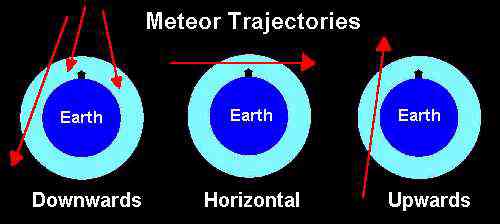
|
||
|
Spying an object travelling 'virtually horizontally' is no reason to think it's an alien spacecraft. And his statement regarding the object that "At arms length the sparkling trailing tail would have been three fingers long" is another example of cultural tracking. Since our 'primitive' rockets and shuttles use chemical engines and create considerable flame, smoke and noise, believers in aliens seem to think alien spacecraft will do the same. To us the object he saw for a mere one and half seconds resembles the likes of a fireball far more than a highly advanced alien spaceship. We suspect an enormous number of 'unsolved' UFO sightings cherished by UFO believers would be dismissed if they only did a little research into the behaviour of meteors. And by that we mean reading an astronomy book and not watching Bruce Willis save the world in the asteroid movie Armageddon.
Opie demonstrated a major misunderstanding of science in the quote above when he mentioned UFO sightings:
Discussing the public's perception of UFOs Opie says
Another flaw we see with UFOCUS NZ is their use of or acceptance of pseudoscience — the use of scientific sounding phrases that appear to give claims scientific credibility, when in fact they are bogus.
For example the following statements from one of their supplied articles sound impressive, but they're pure nonsense, meaningless:
Likewise this statement about a talk given by Suzanne Hansen in Australia, impressively entitled "The CE-5 Corroborative Evidence of Contact":
In a 'speech outline' for UFOCUS NZ's own 2007 conference, Hansen delivers the same speech (presumably) and we learn a little more:
Another article on the UFOCUS NZ site entitled 'Interventionism' puts forward the theory that "humans are the product of off-world Intervention", that is, aliens made us. It supposedly uses 'modern DNA evidence' to provide 'conclusive proof' that the theory of evolution is wrong.
An article on the UFOCUS NZ website relating the experiences of an alien abductee provides typical examples of pseudoscience. It's called 'Jeffrey Morgan Foss : Contact History':
And here's another silly claim from a different abductee on the UFOCUS NZ website:
UFOCUS NZ members may say in their defence that they didn't write or even endorse these reports of alien abduction, they even put a disclaimer to this effect on their homepage, but their inclusion on their website indicates that they wish visitors to read them and consider the views put forth. They are provided as a resource for those trying to understand their own "alien encounter". They obviously don't see any real flaws or contradictions in them. If they did they would highlight them or even remove the reports entirely.
One also finds that many people who believe in aliens also firmly believe in a lot of paranormal mumbo-jumbo. And remember that this fits in well with some of the features of a 'fantasy prone personality' — belief in psychic and other paranormal nonsense. At times it is hard to determine what they really believe is the cause of their encounters. One minute it is obviously aliens that is the source of their experience, the next it
"'The Reality of 'Contact' with Non-human Extraterrestrial Intelligences' by Mary Rodwell."
"Margaret could be describing an out-of-body experience (OBE) in the realms of the spirit world or astral plane. Alternatively, some abductees report encounters where entities 'draw' the person's spirit body from their physical body to communicate with them, which could explain the incident... Were extraterrestrial or spirit beings checking up on Margaret?" [21]
"UFOCUS NZ offers... Research into a wide range of UFO related and paranormal topics [emphasis added]" [22]
In fact UFOCUS NZ is little different from other groups of deluded believers in ghosts, spirits and astral planes, Bigfoot or the Loch Ness Monster, psychics and mediums, the Bermuda Triangle, the Face on Mars, the moon landing hoax and other conspiracies, homeopathy, energy healing and the biggest con of them all, believers in supernatural beings called gods. All these weird beliefs exist on the fringe and are contrary to reason and scientific evidence. Thus support groups like UFOCUS NZ need to keep believers isolated from the facts, from reality, from the daily onslaught of information that shows their beliefs are well past their use-by-date. And UFOCUS NZ does a good job in this respect. Articles and testimonies on their website confidently claim — without any supporting evidence — that aliens are here, and the many unsolved reports of sightings on their website all suggest that the sightings could have been aliens. There is no admission that science doesn't support them in their view. This is not a site for those interested in discovering the truth about aliens. This is a site for true believers.
Alien life may well exist elsewhere in the universe, maybe even intelligent life. Intelligent aliens with advanced technology may be exploring interstellar space, or may have done so in the past or may do so in the future. Some may even stumble across Earth on their explorations and we humans might still be around to witness their visit. But to date there is no actual evidence that aliens, intelligent or otherwise, even exist. And there is certainly no evidence that aliens have visited Earth, either in recent times or in the distant past. Not only is there no evidence of alien visits, there are enormous problems that would have to be overcome to even make interstellar or intergalactic travel feasible. As for the unusual events such as UFOs and weird experiences that some offer as proof of aliens, they can be satisfactorily explained by science as perfectly natural. Why should we suspect the existence of mysterious, devious, covert aliens over simple ignorance of the night sky and sleep disorders? Especially when we realise that science fiction is undeniably the real source of the alien imagery — what they look like, how they behave and why they're here. Why should we suspect that those that believe in alien visitation — but can provide no good evidence — have got it right, and scientists — that do offer good evidence for their views — have got it all wrong? Why should we accept that aliens are deliberately seeking out and divulging advanced knowledge to grief counsellors and hypnotherapists while at the same time making themselves invisible and improbable to the world's scientific community?
Believers in visiting aliens can answer none of these concerns. They are as convinced that aliens exist as medieval peasants were convinced that demons existed. And funnily enough, for the same reasons — ignorance of science and blind belief in a fantasy that causes them to misperceive, to misinterpret and to misunderstand natural phenomena.
Just as demons weren't really intruding on our lives in the past, aliens aren't intruding on our lives now. Groups like the Christian Church were wrong then, groups like UFOCUS NZ are wrong now.
Authors: John L. Ateo, Rachel C., Gordon S.
Readers' Comments:
Add a Comment
The following are mainly links to online articles from Skeptical Inquirer, the magazine of CSI — The Committee for Skeptical Inquiry. You can search for other articles on their site by putting key words such as 'alien abduction ufo Roswell' etc into their search box at the top left of the screen.
Abduction by Aliens or Sleep Paralysis?
Waking Up to Sleep Paralysis
Close Encounters with Alien Abductions
Abductive Reasoning
Alien Abduction Analysis
A Study of Fantasy Proneness in the Thirteen Cases of Alleged Encounters in John Mack's Abduction
An Alien Taxonomy
The Eyes that Spoke
Philip J. Klass' Skeptics UFO Newsletter
The Roswell Incident and Project Mogul
An Astronomer's Personal Statement on UFOs
That's Entertainment! TV's UFO Coverup
Faking UFO Photos for the Twenty-First Century
Exciting UFOs Become Bland IFOs
A Model UFO Debunking
UFO Mythology: The Escape to Oblivion
Massive Uncritical Publicity for Supposed 'Independent UFO Investigation' Demonstrates Media Gullibility Once Again
[The media] Out of Balance
"Alien Autopsy" Hoax
"Alien Autopsy" Film a Hoax Concludes Scientific Organization
The Truth Is, They Never Were `Saucers'
The Roswell Legacy
What Really Happened at Roswell
Over the Hill on UFO Abductions
"Incompetent Hypnotists" and "False Memories" Create Serious Problems For UFO-Abduction Research
Remembering Dangerously
A Case of Reincarnation -- Reexamined (Discusses false memories, hypnosis, fantasy-prone personality, confabulations, etc)
Exploring Mind, Memory, and the Psychology of Belief (Part1)
Exploring Mind, Memory, and the Psychology of Belief (Part II)
The Disease of Pseudoscience and the Hope for a Cure
Website for UFOs and other skeptical subjects
[1] Abduction by Aliens or Sleep Paralysis? — Susan Blackmore, Skeptical Inquirer May/June 1998
We would recommend all the following books for those that want to discover how scientists and skeptical thinkers view aliens and UFOs. You could try your local library, they may have copies available, or you may find one or two in second hand bookshops, but I wouldn't hold your breath. You will seldom see books skeptical of aliens and UFOs (or the paranormal, supernatural etc) on the shelves of your local bookstore. They tend to go with delusional bestsellers that are pro-alien, ones that are happy to maintain the mystery for the masses. Of course you will be able to get them all through Amazon.com.
Books that explain where the science stops and the fiction begins in popular science fiction TV shows and movies:
|
||
|
|
||
|
Go Natural Not Supernatural
|
||
|
www.sillybeliefs.com 
Last Updated Jul 2020 |

 is crucial. An aircraft, a planet, a weather balloon or a Frisbee is not a UFO once you identify it as being an aircraft, planet etc. You can see a strange object in the sky and correctly call it a UFO, but the very instant you realise it's a plane or a balloon it ceases to be a UFO and becomes an IFO — an 'Identified Flying Object'. If you state that you've seen a UFO, you're also stating that you could NOT identify what the object was.
 auroras, lightning, fireballs, eclipses, unusual cloud formations and tornadoes etc. Today we have added to the list enormously with aircraft, weather balloons, satellites, rocket launches, secret test flights, advertising planes, reflected city lights, searchlights, laser displays, fireworks, emergency flares, hang-gliders, kites etc. Coupled with this is our general ignorance of the sky, especially the night sky. Ancient man may not have understood what he saw in the sky but he did know what was normal and what was unusual. Most modern people today, urbanised or rural, seldom look at the sky and can't tell a planet from a star, don't understand the phases of the moon or the apparent nightly rotation of the stars. Many are confused if they ever spy the moon in the daytime sky or see a shooting star going straight upwards instead of down towards the ground. While today we may know what a planet or shooting star really is, ancient man would still laugh at what modern people in their ignorance now often claim to be UFOs. In the past ignorant and uneducated people thought that strange sights in the sky could be best explained by gods and demons. Today many people think the best answer is spacecraft piloted by aliens. Is this modern belief reasonable or is it just as fanciful as those from the past? Have we just replaced one delusion with another?
 So why are there no clear, unambiguous photos of alien craft? After all, for the last fifty years cameras have been very common, and now even more so, both still and video, even in the ubiquitous cell phone. And yet still there is not one photo or video that clearly and unambiguously shows an alien or alien craft. I've seen photos of President Kennedy and Benazir Bhutto being assassinated, videos of planes crashing into the World Trade Center, right down to photos of singer Britney Spears and the wife of Canadian Prime Minister Pierre Trudeau unintentionally showing that sometimes neither wears panties in public. These were all unexpected, once in a lifetime shots, and yet still people managed to take them. And there is no confusion as to what you are looking at. And yet when it comes to UFOs the one unifying feature of all the shots is that no one knows exactly what the photo has captured. The 'objects' are usually quite distant, almost always blurry, usually poorly exposed and there is normally only ever one photo taken. Often the 'object' wasn't even noticed until the film was developed. The only thing that these photos have in common is that there is 'something' in the image that no one can identify. It's not like a photo of a strange car that no one can identify, yet where obvious car features can clearly be seen. A photo where everyone knows they are looking at a type of car, yet no one can determine the make or model. These UFO photos don't show 'objects' that have any recognisable features, let alone features that are obviously artificially made. You can never see wings, engines, windows, rocket nozzles or manufacturer's logos. No aliens staring from windows, no personalised license plates or bumper stickers. Usually just a bright blob or blurry streak. An alien craft? I don't think so.
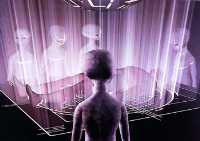 they woke up for a short duration and detected the aliens was probably due to an error on the alien's part. Maybe an alien trainee was allocated the 'knock out the human' task. Some go on to believe that once unconscious they were then abducted, stripped and examined on a spaceship and later returned to their room. Others believe that the aliens did all their 'inappropriate touching' in the bedroom.
 — sometimes referred to as 'night terrors' — although only in recent times has the perceived presence been described as an alien. The identity of this presence has changed not only throughout history, but also from culture to culture — fairies, goblins, dwarves, elves, angels, baby-snatching demons, succubus and incubus, the old hag, witches, Satan, ghosts and now aliens. The important thing to realise is that people having this experience normally never see these beings, they just have the feeling that something is in the room.
 — nudity, sexual intercourse, masturbation, genital examinations, pregnancy and breeding etc, and the popular aliens — the Greys — are themselves naked. If it's all true then these aliens must be from the 'Playboy' planet.
 the therapist may follow with, 'Was it a Grey alien perhaps?' The patient may have no idea what a Grey alien looks like but may agree with the therapist since he obviously knows about these things. 'Yes ... it could be', replies the patient. 'Does he have a large grey head with black eyes?' ask the therapist. 'Yes, I can see it more clearly now', replies the patient. 'Oh well, you've definitely seen a Grey then,' states the therapist.
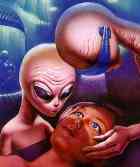 everything safe in the knowledge that they're going to wipe their memories later on. Abductees know and you and I know that alien 'memory wiping', if it exists, is unreliable. Some abductees claim they have been taken multiple times by aliens and that they are continuously observed. Thus the aliens would also know that on some occasions their memory wiping fails, so they would naturally hide as much as they could from abductees so that if their memory wipe fails, the abductee would have little to remember. It just doesn't make sense that aliens would eagerly divulge information about themselves that they don't want us to know. And more importantly, if they really wanted us to know about their technology and give us advice, they wouldn't abduct hillbillies, they'd abduct scientists and world leaders. Or better still, they wouldn't abduct anyone. They'd merely land at major universities worldwide and request meetings with the top academics and diplomats etc. The fact that they haven't done this would indicate that if they are 'among us', they certainly aren't here to make contact or help us improve our cell phone reception. Thus they would keep the abductees as isolated as possible from anything alien, especially once they realised that their memory wiping technology was unreliable when used on humans. They certainly wouldn't go out of their way to explain their master plan in minute detail, even though this is what the villain always does in the movies.
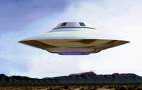 while often clear and sharp, are obviously fakes. Claimed alien artefacts always turn out to be natural or manmade. These people are the equivalent of the Christian that claims Jesus lives in their backroom. They're the nutcases of the UFO groups and we suspect that they do their cause more harm than good, since while they may attract other idiots with their fake photos and conspiracy theories, they tend to alienate those scientists and skeptics that might have been tempted to take the topic seriously. Their claims are not a good reason to believe in aliens.
 after civilisation first took hold certain priests did a rethink and told their people that the gods actually had the bodies of humans but the heads of animals. It all seemed to make sense at the time. Later still the priests said the gods actually looked completely human, with youthful and really attractive bodies adorned in togas and that they had moved to temples on mountaintops.
 Everyone thought this was quite reasonable. When the priests again re-evaluated their stance they said that there was actually only one god, and while he still worn a robe and lived on a mountaintop, he was quite old and had a beard. 'God only knows where that silly idea of multiple gods came from', cried the priests. Of course eventually people climbed the mountaintops so the priests were forced to explain that god had moved to somewhere with a better view and that he now resided above the clouds, and the people happily modified the stories they told their children and each other.
 Enter the age of aircraft and the priests were once again forced to change their story, that god was taking time-out, hence the reason he hadn't been seen of late, and had now moved off-world entirely. And so to the present day. Telescopes and space probes scan the heavens and while not actively looking for god, he is conspicuous by his absence. And surprise, surprise, enter the priests who now inform the people that not only does god not look like an old guy in robes, he doesn't even look human at all, or even have a shape. In fact he's more like a spirit. An invisible spirit. Oh, and he isn't even in the Universe so we can stop looking. He actually resides outside space and time altogether. Hmmm ... how convenient.
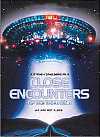 abbreviated as sci-fi or SF) has found new audiences. And these new audiences are huge. Think of 'Star Wars', 'Close Encounters of the Third Kind', 'Planet of the Apes', 'Alien' and '2001: A Space Odyssey'. Hollywood brings science fiction stories to a huge audience that would never read the books. And who hasn't watched an episode of 'Star Trek', 'Lost in Space' or 'Doctor Who' on TV?
 fiction. They're not stupid. In no way do they believe that Darth Vader and Luke Skywalker, Captain Kirk and Mr Spock or Doctor Who and the Daleks are real. They may never have even
heard of sci-fi aliens such as the Go'auld or the Borg. They may not know what Asgard beaming technology does or what a phaser pistol looks like. And we agree. In fact many believers will claim
fiction. They're not stupid. In no way do they believe that Darth Vader and Luke Skywalker, Captain Kirk and Mr Spock or Doctor Who and the Daleks are real. They may never have even
heard of sci-fi aliens such as the Go'auld or the Borg. They may not know what Asgard beaming technology does or what a phaser pistol looks like. And we agree. In fact many believers will claim
 they never read or watch science fiction and are not a fan of the genre. And based on the details in their reports of alien encounters that may well be the case. But it is unlikely that they are unaware of the basics. They are not ignorant of basic science fiction snippets about aliens and alien technology. No one is.
 larger than the outside suggests and that aliens more often than not carry some sort of ray gun. She knows what alien abduction means. She watched the promo for the blockbuster alien movie 'Independence Day' on 'The Holmes Show' (and complained that it wasn't real news). Likewise over the years she has sat through the many trailers for the 'Star Wars' movies and numerous episodes of Star Trek as we kids watched them in the background. Realise it or not, she has a superficial knowledge of what aliens look like, what their technology can do, where they're from and how they might behave if they visit us. While most people may never read a sci-fi book or watch a sci-fi movie, the idea of aliens is widespread in our culture. Even newspapers, TV documentaries, news reports and movies in general all make occasional reference to aliens. The media is awash with titbits about aliens.
 'intelligent' clouds of gas (and all still able to pilot a flying saucer it seems), but in more modern times even the evil aliens have returned to humanoid form; think of the aliens in
movies like 'Alien', 'Independence Day' and 'Predator'. Culturally aliens seem to be very in tune with humans as well. When society was concerned over the atom bomb, aliens were too, yet when we changed to worrying about the environment, suddenly that's what aliens were fretting about as well. Other visiting aliens are especially concerned that we find love and peace, often in other dimensions. These particular aliens must be the alien equivalent of Mormons and Jehovah's Witnesses. Time after time and report after report these aliens seem to mirror our stages of development.
'intelligent' clouds of gas (and all still able to pilot a flying saucer it seems), but in more modern times even the evil aliens have returned to humanoid form; think of the aliens in
movies like 'Alien', 'Independence Day' and 'Predator'. Culturally aliens seem to be very in tune with humans as well. When society was concerned over the atom bomb, aliens were too, yet when we changed to worrying about the environment, suddenly that's what aliens were fretting about as well. Other visiting aliens are especially concerned that we find love and peace, often in other dimensions. These particular aliens must be the alien equivalent of Mormons and Jehovah's Witnesses. Time after time and report after report these aliens seem to mirror our stages of development.
 sightings of flying saucer-shaped craft. This term was invented by a newspaper reporter and appeared to describe the disk shape of the craft, even though Arnold claimed the objects he saw were actually shaped like boomerangs. Arnold merely said their flight pattern resembled a flat stone or saucer skipping across a lake. People then claimed to see saucer-shaped craft because the newspaper told them this is what alien craft would look like. Their descriptions were matching the false newspaper report and not Arnold's actual sighting. No more boomerang craft were ever sighted, just saucer-shaped ones. Isn't it amazing how quickly all the aliens changed the design of their craft to match what the public was on the look-out for? People were following the media, not reality. This is suggestibility at work. It's where suggestions can be made — such as alien spacecraft are shaped like circular disks — and people adopt these ideas without hesitation as if they were proven facts. Highly suggestible people can be quite easily induced to distort events, to see things that aren't there and believe things that never happened. Fantasy becomes reality.
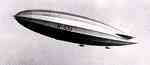 their time. Remember also that Jules Verne had written the enormously popular science fiction novel Around the World in Eighty Days in 1873. Thus it's not surprising that this was the best type of craft that average people could imagine aliens would be using. There was no suggestion that people were merely seeing human built airships as these were extremely rare and simply didn't exist in many places where they were sighted. Even NZ had a rash of UFOs resembling airships in 1909 even though none existed in the country. Many people in the US even claimed to have met the crews of some of these craft. While many of these UFOs or airships were believed to have been built by humans inventors, some were seen as extraterrestrial, and more often than not these human-like aliens seemed to have come from Mars. Of course we now know that airships and propellers could never work in the vacuum of outer space and that human-like aliens couldn't live on Mars, but Average Joe Citizen didn't know that then. It seemed perfectly reasonable to them.

 'recovered' memories of being abducted by aliens. Among other medical procedures, Betty remembered having a pregnancy test involving a large needle into her navel and Barney remembered having sperm removed. The aliens resembled what are now commonly referred to as the Greys, but at the time they were not a common alien image in science fiction.
 For both types, whether 'knowledgeable' about aliens or not, the 'alien encounter' reinforces their belief and for the disinterested believer the experience causes many to actively seek out accounts of others who believe aliens are visiting us. They read about other UFO sightings, study blurry photos of small dots above mountaintops, analyse how other abductees say they were treated by their aliens and discuss possible motives for them being here. Most don't appear to become avid sci-fi fans, ignoring books, movies and TV shows that don't relate in some way to their experiences of alien visitation and abduction. Some however do end up watching the most appalling examples of sci-fi — anything that features visiting aliens — like the TV series Roswell about teenage aliens or the latest Doctor Who series, where silly aliens are continually threatening Earth. Others immerse themselves in any TV series that features alien conquest of Earth or alien abduction like V, The 4400 and Taken and movies such as Fire in the Sky, Visitors of the Night and Signs. They generally seek out material that they consider 'factual' and supports their view that aliens are here. Books, magazines, articles, web sites, UFO support groups etc that support alien visitation. Since they believe they've already seen them, they're not trying to decide if they're here. They know they're here. All they want is information about why they're here, where they might be from, how they can protect themselves from them and do they need to? They are utterly convinced that their unusual experience revealed real aliens — a belief that is resistant to change — and thus many are not prepared to waste time with people or books that doubt their claims.
 if they wanted to write a story about beings from different parts of the universe interacting with each other, and with us, then they had to invent a way for them to travel almost instantaneously from place to place. Would you set off to visit your family for Xmas if you knew it would take 700 years to get there? Thus all sufficiently advanced aliens in the movies and on TV have invented propulsion systems capable of faster-than-light travel, commonly called warp drives, hyperdrives, stardrives etc or they travel from place to place almost
instantaneously by utilising 'wormholes' created by 'stargates'. These plot devices have been used so much by Hollywood that people now assume that they're part of real science, and that if scientists can theorise about them, then advanced aliens could certainly make them.
if they wanted to write a story about beings from different parts of the universe interacting with each other, and with us, then they had to invent a way for them to travel almost instantaneously from place to place. Would you set off to visit your family for Xmas if you knew it would take 700 years to get there? Thus all sufficiently advanced aliens in the movies and on TV have invented propulsion systems capable of faster-than-light travel, commonly called warp drives, hyperdrives, stardrives etc or they travel from place to place almost
instantaneously by utilising 'wormholes' created by 'stargates'. These plot devices have been used so much by Hollywood that people now assume that they're part of real science, and that if scientists can theorise about them, then advanced aliens could certainly make them.
 that claimed the moon landing was a hoax or claimed to show an alien autopsy were screened in prime time, repeated on several occasions and discussed widely in the print media and on radio. Yet the documentaries that showed them both to be false were given little exposure. Most people won't even be aware they exist. Then we have other pseudo-documentaries that claim aliens built the pyramids or crashed in Roswell, New Mexico. TV programmers are well aware that shows that involve mysteries and conspiracies generate far more interest than those that offer cold hard facts. A pseudo-documentary examining alien abductions or UFO sightings or crop circles will spend the majority of its time relating the stories of the believers in these things with very visual and emotional re-enactments, and little time, if any, examining alternative scientific explanations. Popular magazines are full of stories of claimed alien encounters, but you never see an article entitled:
 Another prominent member and creator of the UFOCUS website is Graeme Opie, an Air Traffic Controller. Another is a qualified radio technician. Their careers and qualifications appear to give them little or no specialised skills or training in UFO investigation. A special interest group of amateurs yes, but not a professional organisation. There are evidently no astronomers, no physicists, no biologists, no meteorologists, no psychologists, no aeronautical or astronautical engineers etc. Not even a token skeptic. They think it important to mention that Hansen was once a 'Management committee member of Tauranga Centre for Loss and Grief', that Opie has a 'Diploma in Personnel Management' and that another member is a 'musician' and a 'producer - collaborator of underground documentary films' (Why does that phrase suggest to me 'conspiracy theorist'?). Yet no mention that any of them are members of an astronomical society, skeptics group or any organisation that would assist them in evaluating UFO sightings and claims of alien abduction.
 SHOCK JOCK: How many UFOs have you seen?
 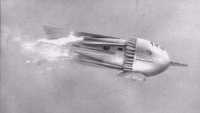 aliens doing impossible things. According to Opie these aliens are not just very advanced, they can actually break the laws of physics. But if they can do these impossible things, why do their spacecraft still blaze away like an old Guy Fawkes skyrocket or an alien spaceship from a 1940's 'Flash Gordon' movie?
 could be influences from the spirit world or a memory of past lives. Their serious attempts to link aliens with silly paranormal phenomenon such as the afterlife, ghosts, psychic powers etc immediately destroys their credibility. Any respect we might have had for their ability to rationally analyse these strange encounters vanishes. Here is a quote from a talk given by UFOCUS NZ founder Suzanne Hansen at the 2007 International UFO Congress and statements from the UFOCUS NZ website: