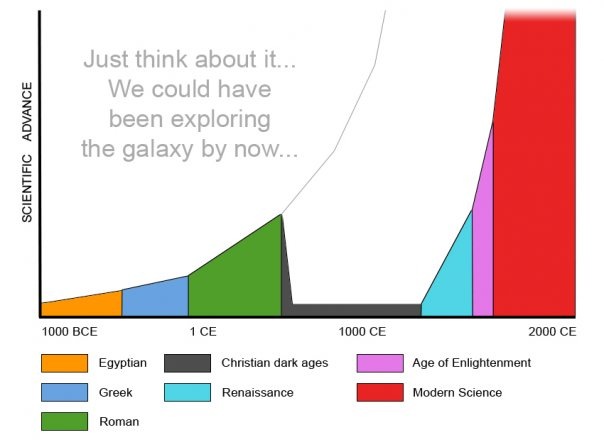
|
Comments:
-
Comment by Philip, 17 Jun, 2006
Hi, just had a brief look at your Ian Harris 'scam' article on your website. I have a problem (possibly shared with millions of others) that I do believe (in a sense!) that Santa is 'real'. I agree with your claim that "a belief in Santa does or does not necessariliy makes Santa 'real'". This begs the question "What could make him real?" One does not require a belief for something to be 'real'. Santa just is! Interesting site and I will read it.
-
Comment by the 'Silly Beliefs' Team, 17 Jun, 2006
Hi Philip, Thanks for your comment. I was going to attempt to answer your question, "What could make [Santa] real?", unfortunately I'm a little confused as to what you mean by 'real', as you also say, "I do believe (in a sense!) that Santa is 'real'."
If you really do believe Santa is real, then I agree with you. You do have a problem. ;-) You desperately need to read some books on science, history, psychology, critical thinking etc.
If you don't actually believe Santa is real, then you need to learn how to express your viewpoint better. If effective communication is to happen, everyone must use the same definition for words. I can only assume that when you use words like - problem, millions, believe, Santa, real - that they mean what the dictionary says they mean. If you're going to say that you don't mean real when you say 'real', how do I know what you really mean when you say problem, millions or believe?
Should I treat your claim, "I do believe (in a sense!) that Santa is 'real' " differently than the claim 'I do believe (in a sense!) that George W Bush is 'real'." If both these statements don't imply the same meaning then you need to rephrase them so that I know exactly what you mean.
Before I could explain what would make Santa real to me, I would have to be convinced that we are both using accepted definitions of words and concepts. This is my main gripe with Ian Harris (and others), that he takes well understood words and concepts and gives them new meanings that only he knows. He claims that God does not exist and talks of God instead. As you can see, this only leads to utter confusion for everyone else.
I know I'm confused.
-
Comment by Philip, 21 Jun, 2006
Thanks for your reply John. I will work on my response taking your comments into account.
-
Comment by Ian, 02 Aug, 2006
I have read with interest the feature purporting to expose me as a dumb hypocrite perpetrating scam. Rather than respond here to the anonymous author, I'd like to invite him to contact me if ever he's in Wellington. I'd really appreciate the chance to put a name to the article, a face to the name, and have a chat.
-
Comment by the 'Silly Beliefs' Team, 08 Aug, 2006
Thanks Ian, but my work doesn't take me to Wellington these days.
-
Comment by Philip S, 12 Nov, 2007
Good to find a skeptic website like yours in NZ. Liked this piece on Ian Harris, and found his response this weekend a bit pathetic really.
Any chance of doing a cover on the 'exorcism' or makutu lifting? This is seriously in need of a scam-bust, with a co-leader of a political party endorsing it. Or would it be culturally appropriate to re-instate witch burning as this was probably common with my ancestors?
-
Comment by the 'Silly Beliefs' Team, 15 Nov, 2008
Hi Philip. Thanks for your comment. Good grief!! Witchcraft in this day and age!! We hadn't heard of makutu until we read that article. Mind you we hadn't heard of taniwhas until a while back either. It's unbelievable that people in New Zealand in the 21st century can still believe in such crap. Why are modern people reverting to stone-age beliefs? And to think that educated people like Pita Sharples endorse it rather than saying outright that it's crap. We could do a bit on it I guess, calling it superstitious nonsense, but then we'd be called racist. Wouldn't want that.
Who am I kidding? Crap is crap, regardless of the colour of your skin. We'll see if we can find enough info to write a short piece on them. Maybe something will be on the TV news tonight. Otherwise we'll have to go with your suggestion and get some good old witch burnings going.
Update: We have now written about the exorcism in our blog — Of Makutu, Maori Curses and Witchcraft
-
Comment by Peter, 24 Jan, 2008
Hello John, Greeting from Australia. I read your article titled "Ian Harris". I didn't know who Mr Harris was prior to reading the article but I was familiar with that kind of Liberal/Reformed theology that he is promoting. A noteworthy exponent is Shelby Spong.
I'm a lapsed Christian and because my investment in the church was minimal it was easy getting out. My investment consisted only of time and the a few thousand dollars in books, CDs, DVDs and videos. However, if all of my friends were part of the church, if my livelihood depended on it, if I had spent several years and tens of thousands of years on a B.Div or B.Th then getting out wouldn't have been straightforward. My point is that Mr Harris may have a prohibitively large
investment in the church such that he has too much to lose. To strain the analogy: If the horse was expensive and if I only know how to ride that horse I may very well continue to ride it even if it is dead. Are you familiar with "When prophecy fails" (Festinger, Rieken, & Schachter; 1956)? I think a parallel is to be found in the psychology of the apocalyptic cult studied by
Festinger et al. The remarkable discovery of Festinger et al is that doomsday cults usually survive failed end-of-world prophecies. One of the main reasons for this strange phenomenon is the cost of admitting error is too high. If you've quit your job, given all your money to the cult and broken off with friend and family that questioned your apocalyptic beliefs then what's left to return to?
This may be the barrier to people like Mr Harris abandoning Christianity completely.
-
Comment by the 'Silly Beliefs' Team, 26 Jan, 2008
Hi Peter or G'day mate, thanks very much for your comments. It's always fascinating to hear other insights.
I'm familiar with Shelby Spong (although I haven't read any of his books) but not "When prophecy fails". You make an interesting point, what is the threshold that makes it too difficult to change your position? I guess it varies from person to person. I've certainly heard of people in closed cults that had realised it was false, but the brainwashing was so intense that they were convinced that they couldn't survive in the outside world. And so they stayed even though they no longer believed.
I'd like to think that if I realised the beliefs and goals of a group or organisation I actively supported were false I would have the integrity to leave, even if it meant starting over, making new friends etc. Even if I couldn't face returning to my family, friends etc I'd still go elsewhere to start afresh. The hypocrisy of living a lie on a daily basis, especially if my work involved actively promoting that lie to others would be more than I could stand. Or so I'd like to believe.
But then my mindset, my quest for the truth wherever it may lead would hopefully stop me from subverting my beliefs for the sake of some group I belonged to. Have you read any of the books by Dr Michael Shermer or Dan Barker, they were both fundamentalist Christians who realised their error and are now outspoken agnostics/atheists. At present I'm reading a very revealing book: 'Why I Am Not a Muslim' by Ibn Warraq (a pseudonym). He was a fundamentalist Muslim from Pakistan who eventually saw the flaws in their religion and is now an atheist. Renouncing your religion is a death sentence for Muslims. These people and many others were prepared to walk away from their religion even though they had invested much and often lost family and friends in the process. I'd like to think I would also have had that strength of character.
But perhaps you're right, 'the cost of admitting error is too high' for the likes of Ian Harris.
-
Comment by Peter, 26 Jan, 2008
You make an interesting point, what is the threshold that makes it too difficult to change your position? I guess it varies from person to person. My guess would be that its is connected with risk tolerance and that does indeed vary from person to person. I would conjecture that as the current pain and distress associated with staying approaches the anticipated pain and distress of leaving the choice becomes easier.
"I've certainly heard of people in closed cults that had realised it was false, but the brainwashing was so intense that they were convinced that they couldn't survive in the outside world. And so they stayed even though they no longer believed."
Yes, I too am familiar with that occurrence. If you are interesed in a scholarly approach to cults
then ICSA (http://www.icsahome.com/) is a good place to start.
"I'd like to think that if I realised the beliefs and goals of a group or organisation I actively supported were false I would have the integrity to leave, even if it meant starting over, making new friends etc. Even if I couldn't face returning to my family, friends etc I'd still go elsewhere to start afresh. The hypocrisy of living a lie on a daily basis, especially if my work involved actively promoting that lie to others would be more than I could stand. Or so I'd like to believe."
Like our tolerance for risk, I suspect that our capacity for self-deception
varies. Some people appear to be able to lie to themselves and repress or
sublimate that gnawing doubt more effectively than others.
"But then my mindset, my quest for the truth wherever it may lead would hopefully stop me from subverting my beliefs for the sake of some group I belonged to."
I think you have found the kernel of the matter. It eventually comes down
to your subjective value hierarchy. If you value truth and consider its
pursuit a virtue you will follow it wherever it takes you — even if it becomes
painful.
"Have you read any of the books by Dr Michael Shermer or Dan Barker, they were both fundamentalist Christians who realised their error and are now outspoken agnostics/atheists."
I am familiar with both authors (Shermer has a blog and I have seen one of Barker's debates with Christian apologists) but I haven't read their books. I understand that Shermer now operates a carpet cleaning business but he is struggling because he has been "black balled" by the Christians in his local area.
"But perhaps you're right, 'the cost of admitting error is too high' for the likes of Ian Harris."
I suppose what motivated me to respond to your essay on Ian Harris was a concern
to show that rational discourse — or even the direct contradiction of a failed prophecy in the case of the apocalyptic cultists — isn't necessarily sufficient to cause someone to renounce their silly beliefs.
-
Comment by the 'Silly Beliefs' Team, 29 Jan, 2008
Hi Peter, You're quite right, many religious people simply believe, and as you say, 'rational discourse' often won't shift their view one iota. It's not about reason, it's about faith. But all we can work with is reason, and while we won't convince the likes of Ian Harris to change their views, we hope that perhaps some people that are contemplating taking up this position, perhaps because they think it's an intellectually valid one, might be forced to reconsider.
-
Comment by Peter, 05 Feb, 2008
John, you said,
"many religious people simply believe, and as you say, 'rational discourse' often won't shift their view one iota. It's not about reason, it's about faith."
The notion of "faith" (as understood by Christians) is part of the problem (it causes arguments for atheism on the basis of the problem of evil and divine hiddeness to be unpersuasuasive) but I think it is a mistake to attribute the behaviour of Ian Harris to "faith". I think Ian Harris and his ilk are motivated and sustained not by faith but my a psychological need to maintain a long-standing prior commitment to a doctrine and its instituions. This was my point in referencing the example of the apocalyptic cult and its failed prophecy of doom. I don't think Ian Harris has any faith (assuming you have accurately represented his position).
I applaud all efforts aimed at attacking, exposing and undermining irrationality and superstition. That notwithstanding, I also believe that the sceptical/atheist "communities" are picking their targets poorly, allowing egregious cases of irrationality to pass without comment and are preaching to the choir in many cases. Furthermore, there is a general neglect to consider the psychology of the people that hold these preposterous beliefs.
Currently, I think the major social trends in irrationality and superstition are the Church of Scientology, Neo-Paganism and UFOs/aliens.
There is a good existing effort mounted against the CoS by people outside of the sceptical/atheist community but it would be beneficial if these people were aided by the sceptics amd atheists. The CoS should be a concern to secular humanists of all kinds because it is an exploitative cult that kills and it uses (misguided) cultural icons to attract members.
The other major threat — as I see it — is Neo-Paganism and the other "alternative spiritualities", i.e. that post-modern pseudo-revival of various folk religions and practices. This would include Neo-Druids, Wiccans ("Gardnerian" and "Eclectic"), shamanism, Crowlean Magick, Chaos Magick, etc. Consider the following:
Magic-Shapeshifting-Rosalyn-Greene
The reviews are enlightening and disturbing at the same time in there are fellow humans in the 21st century, from First World nations, that presumably have had the benefit of some education, sincerely believe that there are people that literally, i.e. physically, shapeshift into beasts of various sorts. Many also believe they can cast spells, yes cast spells like the wizards and mages in roleplaying games.
The other major trend in irrationality and superstition is aliens and UFOs and the inevitable overlap with conspiracy theory. Are you familiar with David Icke? David Icke is something of a Moses-figure for those that have an X-Files flavoured detachment from reality.
My point is that the sceptical/atheist/secular humanist communities would benefit from a "triage" approach to debunking. However, I am having doubts about the utility of our efforts in general.
"But all we can work with is reason, and while we won't convince the likes of Ian Harris to change their views, we hope that perhaps some people that are contemplating taking up this position, perhaps because they think it's an intellectually valid one, might be forced to reconsider."
That is an admirable sentiment. However, after almost a decade spent debating all sorts of superstitions under various pseudonyms on a multitude of online forums I have come to despair and frustration. I fear that most of us are essentially irrational. For every piece of irrationality and superstition that is stamped out another emerges to take its place. It appears that many of those people that have abandoned Christianity or resisted its administration by their parents aren't — as we would like to believe — rationalists/atheists/sceptics/secular-humanists but have instead adopted other silly beliefs such as Wicca or beliefs in alien anal probing. Many of the Neo-Pagan and UFO online forums are populated by young people (i.e. under 25s).
There is an emerging opinion amongst evolutionary psychologists (Daniel Dennett develops this idea with respect to theism in his "Breaking the Spell: Religion as a Natural Phenomenon") that our primitive neurology is to blame. Evolutionary psychology is taking us back to Freud's idea that people are essentially irrational and driven by unconscious drives and forces. What do you think?
-
Comment by the 'Silly Beliefs' Team, 07 Feb, 2008
Thanks for your interesting reply Peter. You said
"Currently, I think the major social trends in irrationality and superstition are the Church of Scientology, Neo-Paganism and UFOs/aliens."
In NZ the CoS have a very low profile. I've never met a member. Campaigning against them in this part of the world would be like speaking out against the tooth fairy. People would wonder why we bother. That said, I agree that their high profile members probably do tempt a few into their cult, especially in California. If I ever did meet someone interested in the CoS I would certainly point out how stupid it was.
"The other major threat — as I see it — is Neo-Paganism and the other "alternative spiritualities"
Yes these old beliefs seem to have taken on new life. I think that one reason that people gravitate to this New Age crap is that they don't want the dogma and the oppressive rules of the traditional religions but still want 'someone' looking over them. They hate the thought of going to hell, of being told when they can have sex and with whom, of giving 10% of their salary to the church, of whether they should hate homosexuals and want food is taboo. Far better a religion that lets them dance naked round bonfires, eat what they want and gives them the ability to control their lives through spells and potions. Like Harris they've learnt enough to realise that the traditional religions are bullshit and can be safely rejected, but like Harris (and as you say), psychologically they're still tied to different aspects of supernatural belief. They haven't rejected belief, they merely want one that better suits their modern lifestyle. While to you and me it is astonishing that educated people can believe in things like shapeshifters, this is no different from other educated people believing that god can take the shape of a burning bush or a Jewish carpenter. To me one is just as laughable as the other.
"The other major trend in irrationality and superstition is aliens and UFOs and the inevitable overlap with conspiracy theory. Are you familiar with David Icke?"
No I hadn't heard of David Icke, but after having a look at his webpage he seems like your typical conspiracy theorist. I suspect a lot of people are prepared to accept aliens and UFOs because they believe they have scientific respectability. They don't, but their claims are sprinkled with scientific terms and 'quotes' from quantum mechanics, relativity, astronomy, physics, genetics etc which make the general reader think that these reports are scientifically plausible. Most people can't tell the difference between science fiction and science fact. At the moment we're trying to put together an article debunking UFOs and alien abduction for our site, so hopefully something will appear in the near future. And psychologically I suspect that many people have simply swapped an all powerful god with an all powerful alien.
"However, after almost a decade spent debating all sorts of superstitions... I have come to despair and frustration. I fear that most of us are essentially irrational."
I think the trouble with debating these silly beliefs is that the only people wanting to debate them are the 'fundamentalists'. Thus you can get a skewed perspective, thinking most everyone is irrational, dogmatic and unwilling to change. Yet for most of history the world was controlled by religion and superstition, whereas today the western world is an increasingly secular place. The world has changed, and an enormous number of people now use reason to run their lives. Admittedly there is still room for improvement, but I sincerely believe that irrationality can be minimised, if not completely eradicated. In NZ religious types and those with fringe beliefs are in the minority, and decreasing. Whereas years ago it was the atheist that kept quiet in public about his beliefs, now it is the Christian that keeps his belief to himself. Science and reason now have such respect that it is the brave person that voices a silly belief at a dinner party these days. Of course there will always be fringe beliefs, we just have to ensure that they never again, like religion, take control of society.
I see three types of personality. The devout believer who will continue to believe no matter the evidence presented, the strict rational mind who won't be swayed by emotion or desire, and in between, the majority of people who entertain both irrational desires and rational beliefs. On a great many 'unimportant' topics that they have given little thought, they often go with the majority opinion. If challenged by a 'good argument' from either side, they can fall either way. We are wasting our time debating the 'devout believer', whether it be religion, aliens or astrology. They will never see reason. As you say, debating these people only leads to despair. But that enormous middle group, the undecided or superficial believer, can be swayed in their opinion. I personally have turned numerous people away from religion, convinced others that the moon landing wasn't a hoax, that the 9/11 attacks weren't a Bush conspiracy, that astrology is crap, that we're not being abducted by aliens etc. And even more rewarding, I've heard these people repeat my arguments to convince others. I agree that what sort of arguments we'll accept will be based on our brain. Some of us are more rational than others, but I think many of us can control our irrational side, like we can control our lust. We just have to work on those people that can utilise reason and ignore and sideline those with unshakeable flakey beliefs. There will always be witches and psychics and astrologers, just like there will always be rapists and murderers. We just need to educate those that we can and limit the actions of those that we can't. Although silly beliefs seem to abound, we are no doubt living in the most rational period of history ever. If we keep up the pressure it can only get better.
PS. I haven't read Daniel Dennett's "Breaking the Spell" yet although I have bought it. Hopefully I'll get to it shortly. And think of other books on the best seller list such as 'The God Delusion' by Richard Dawkins and 'The End of Faith' by Sam Harris. It would have been difficult to get these published a few years ago, let alone expect them to rate highly. Another sign that many people are embracing reason over superstition.
-
Comment by Peter, 09 Feb, 2008
Thanks for your encouraging response. You replied,
"In NZ the CoS have a very low profile. I've never met a member. Campaigning against them in this part of the world would be like speaking out against the tooth fairy."
That didn't occur to me about your specific situation. I write to you from Australia where they have some presence. They have a large "church" in a prime location in the Melbourne CBD. The CoS "Rondroids" can be found offering free "personality tests" on some of the high traffic streets of
the Melbourne CBD.
It would be good though to see the USA sceptics give more attention to the CoS.
"Yes these old beliefs seem to have taken on new life. I think that one reason that people gravitate to this New Age crap is that they don't want the dogma and the oppressive rules of the traditional religions but still want 'someone' looking over them. They hate the thought of going to hell, of being told when they can have sex and with whom, of giving 10% of their salary to the church, of whether they should hate homosexuals and want food is taboo. Far better a religion that lets them dance naked round bonfires, eat what they want and gives them the ability to control their lives through spells and potions."
I agree with that analysis of their motive.
"Like Harris they've learnt enough to realise that the traditional religions are bullshit and can be safely rejected, but like Harris (and as you say), psychologically they're still tied to different aspects of supernatural belief. They haven't rejected belief, they merely want one that better suits their modern lifestyle."
This is why I think the reasons for rejecting a belief are just as important as the reasons for adopting it. I would like people to reject Christianity, Islam, Hinduism, etc. not for self-serving hedonic reasons or because of some wacky reason such as a vision of their "Guardian Angel" but rather from a sober, dispassionate and intelligent understanding of the contradictions, explanatory weaknesses and inconsistencies in the doctrines and worldviews that underlie these religions. A rejection of mainstream religion based on an appreciation of the concepts of evidence, realist epistemology, the problem of evil, the problem of divine hiddenness, the origin of species via
evolution and naturalism marks an intellectual maturing. Such a person won't drop Christianity to become a Wiccan and this is the sort of "deconversion" we want.
"While to you and me it is astonishing that educated people can believe in things like shapeshifters, this is no different from other educated people believing that god can take the shape of a burning bush or a Jewish carpenter. To me one is just as laughable as the other."
I agree and it took me some time (which gave me some distance from my former beliefs) to appreciate this.
"No I hadn't heard of David Icke, but after having a look at his webpage he seems like your typical conspiracy theorist."
Typical conspiracy theorist! :) David Icke is the PT Barnum of conspiracy theorists. His core claim is that the world is run by a familial cabal of shapeshifting reptilians. Icke lists for us these reptilians, they include the British royal family, the Bush family and numerous celebrities! At the top of the usual list of "secret societies" that allegedly control the world (Trilateral Commission, Freemasons,Illumimati etc) are the reptilians!
"I suspect a lot of people are prepared to accept aliens and UFOs because they believe they have scientific respectability. They don't, but their claims are sprinkled with scientific terms and 'quotes' from quantum mechanics, relativity, astronomy, physics, genetics etc which make the general reader think that these reports are scientifically plausible. Most people can't tell the
difference between science fiction and science fact."
I think this application of a pseudo-scientific veneer is merely a product of the zeitgeist. We live in an age of science and technology so superstions have become flavoured with that theme. In earlier ages the dominant superstitions had different motifs eg. succubi and incububi, ghosts, vampires, demons, witches etc. The core of this irrationality appears to be thematically stable. I can only offer conjecture on this (I know of little actual research on the matter). I suspect that it is connected to (a) the complexity of the world, it apparent absence of design and its chaos and
a deep-seated desire to make some sense of it; (b) a refusal to accept the (relative) banality of the real world (a world of UFOs and alien abductions is interesting and exciting); (c) a desire for self-differentiation, for feeling special about having "secret information" that everyone else ("the masses") lack.
"At the moment we're trying to put together an article debunking UFOs and alien abduction for our site, so hopefully something will appear in the near future. And psychologically I suspect that many people have simply swapped an all powerful god with an all powerful alien."
I think there is a huge difference between "argument" and "persuasion". The scpetical community is generally good at presenting argumention and evidence with a view to refuting an irrational claim. I feel that the failing is in the area of persuasion — and area in which the purveyors of the nonsense that sceptics refute excel. Persuasion can be unethical and "dirty" i.e. unethically
motivated and predicated on informal logical fallacies. That is the persuasion of charalattans and hucksters. That is not what I am advocating. Persuasion can also be ethical and not dependent on getting your audience to swallow an informal logical fallacy. In the context of debunking this would be addressing the apparent psychological needs of the people that hold these silly beliefs.
Dawkins has done this in his essays and talks which address such matters as the "meaning of life" when he refutes theism. A similar approach should be taken by all sceptics, i.e. do the debunking (present the argument and/or evidence) then reach out and press the same buttons that psychics, mediums, conspiracy theorists, UFOlogists, Cryptozoologists etc press. This was the point of my initial email regarding Ian Harris. A critique of Ian Harris — assuming the raison d'etre of the essay is to dissuade people from Harris' style of pseudoreligiosity — is incomplete if it fails to address the underlying psychological and emotional motivations for Ian Harris' word games.
I hasten to add that we needn't know Harris' or the UFOligists motivations and emotional needs with certainty. We need only offer a list of probable factors based on well-known social psychological phenomena.
I think the trouble with debating these silly beliefs is that the only people wanting to debate them are the 'fundamentalists'. Thus you can get a skewed perspective, thinking most everyone is irrational, dogmatic and unwilling to change."
Thank-you for sharing this insight with me.
"I see three types of personality. The devout believer who will continue to believe no matter the evidence presented, the strict rational mind who won't be swayed by emotion or desire, and in between, the majority of people who entertain both irrational desires and rational beliefs. On a
>great many 'unimportant' topics that they have given little thought, they often go with the majority opinion. If challenged by a 'good argument' from either side, they can fall either way. We are wasting our time debating the 'devout believer', whether it be religion, aliens or astrology. They will never see reason. As you say, debating these people only leads to despair."
This is the conclusion of many Christian proselytisers and apologists also. Winfried Corduan — a Christian apologist — hints in his apologetical book "No Doubt About It: The Case for Christianity" that New Agers and those that have imbibed post-modern ideas (fact relativism, epistemic relatvism, subjectivism, social constructivism) are immune to reason, evidence and argumentation.
"But that enormous middle group, the undecided or superficial believer, can be swayed in their opinion. I personally have turned numerous people away from religion, convinced others that the moon landing wasn't a hoax, that the 9/11 attacks weren't a Bush conspiracy, that astrology is crap, that we're not being abducted by aliens etc."
What have been your successful arguments or tactics in each of these cases (you needn't detail the actual arguments)?
"we are no doubt living in the most rational period of history ever. If we keep up the pressure it can only get better."
I hope you are correct.
"PS. I haven't read Daniel Dennett's "Breaking the Spell" yet although I have bought it. Hopefully I'll get to it shortly. And think of other books on the best seller list such as 'The God Delusion' by Richard Dawkins and 'The End of Faith' by Sam Harris. It would have been difficult to get these
>published a few years ago, let alone expect them to rate highly. Another sign that many people are embracing reason over superstition."
I have read "The God Delusion" (TGD), "God is Not Great" (GING) and parts of "The End of Faith" (TEOF). I have mixed feelings about these books. My biggest complaint about TGD is its absence of originality and the failure of Dawkins to acknowledge the sources of the arguments he presents as his own. His central argument against the "God Hypothesis" namely, the argument from the complexity of God belongs to J.J.C. Smart yet Dawkins doesn't credit Smart. Philosophical and scientific atheism has a heritage and it wasn't invented by Dawkins. GING consists of anecdotes and arguments from incredulity against theism. Hitchens anecdotes are interesting and he has a gift for rhetoric but it is philosophically negligible. TEOF elicits in me an unsettling series of emotions. When I read Harris I become uneasy. His commitment to naturalism, realism, humanism and atheism isn't clear. He suggests that some beliefs are so malignant that those holding them may have to be put to death (I can give you the page ref.). In his end-notes he alludes to the desirability of a "rational mysticism".
So I am not altogether pleased with the "New Atheists". That notwithstanding, I take your point about the intellectual climate which makes book such as these best-sellers.
-
Comment by the 'Silly Beliefs' Team, 13 Feb, 2008
Thanks for your comments Peter. Some very good points, especially
"A rejection of mainstream religion based on an appreciation of the concepts of evidence, realist epistemology, the problem of evil, the problem of divine hiddenness, the origin of species via evolution and naturalism marks an intellectual maturing. Such a person won't drop Christianity to become a Wiccan and this is the sort of "deconversion" we want."
What a wonderful world it would be if everybody developed this clearness of thought.
I quite agree with your point that skeptics/scientists are good with argument (often complex argument) and often fail with persuasion. Scientists such as Sagan and Dawkins have correctly said that there is plenty of awe and mystery in the real universe without having to invent more, especially when the crap in our holy books and David Icke's imaginary world etc is greatly inferior to the real thing. To me, looking up at a star filled sky and having an appreciation of what I'm looking at is mind blowing. This is a failure with our schools, they teach the facts, the argument, but fail to get people enthused. They fail to persuade as you say. I love some science fiction, especially the likes of Star Trek, Stargate etc. I've read a few books such as The Physics of Star Trek, The Biology of Star Trek, The Computers of Star Trek, where scientists discuss the science in the show, explaining what is real, what is plausible and what is probably impossible. People I've spoken to that love science generally rubbish these books however, unable to see a valuable connection. But for me it brings what can often be very dry science alive when it discuses it in relation to characters and situations that I can relate to. There are other books such as The Science of the X-Files, The Science of Harry Potter, The Science of Jurassic Park and The Science of Superheroes, also rubbished by most people, but many people, especially teenagers, love these stories and the books could be a great way to get them hooked on real science, to push their buttons. But many scientists think it belittles them or their profession by associating themselves with fiction, in the same way that many astronomers refuse to discus alien abductions or the hoax moon landing. They are just maintaining the gulf between scientists and the layperson, whereas the purveyor of silly beliefs will happily visit you at home to discuss your concerns.
Scientists and skeptics etc have to learn how to talk with people rather than just talk at them. I agree that you have to push people's buttons to get them involved, simply quoting facts will turn many off. Schools shouldn't just teach us how to do something, they must engage us, convince us why we would want to do it. The local astronomy club had a 4 session introductory course a year ago and I went along. They were turning people away it was so popular, but by the second session over half never returned, even though they had paid for the full course, and the next two sessions saw further reductions. The public wanted to learn about space, but the club members couldn't engage them at their level, describing things that were unnecessary and confusing while omitting the basics. I saw a movie called 'A Flock of Dodos' which looked at the debate between evolution and Creationism, and it reached the same conclusion. It supported evolution but asked the simple question "Who would a member of the public prefer to have a beer with? The evolutionist or the creationist?" Most would pick the friendly and easy to understand creationist over the arrogant and confusing scientist. Most religious people that I know, while deluded in my view, are very nice people, while some scientists I know, while also very nice, can be very annoying. One, a microbiologist, believes scientists like Dawkins shouldn't be allowed to write books on popular science because he simplifies it. Well of course he does, or else plebs like me couldn't understand it. And scientists lament that the public is often ignorant of science! His scheme would make it far worse. Another friend, a marine biologist, criticises Dawkins' books on both evolution (The Selfish Gene) and religion (The God Delusion) although she has read neither. With attitudes like this it is no wonder that Joe Public is drawn to the charismatic evangelist or CoS member or New Age healer with their simple stories and willingness to relate at their level. It's a real shame that most scientists don't have the people skills that evangelists have, that they can't educate and entertain at the same time. That they can't push the right buttons as you say, the buttons for curiosity, amazement, awe and fulfilment, which the natural world has an abundance of.
You asked
"What have been your successful arguments or tactics in each of these cases (you needn't detail the actual arguments)?"
Hmmm... tricky question. I guess I've discovered that people often hold the same belief but for different reasons, so I tend to let them put forward the specific reason they believe. Otherwise you can be presenting arguments for aspects that they don't care about, that they think are unimportant or that they may even agree with you on. Probably every debate I've had has been swayed by different arguments. And you have to keep your argument simple, even if it's a complex scientific principle, you have to try and explain it simply. Don't use buzzwords and don't assume people have read the same books you have or have studied it at the same level. You won't convince people that their argument breaks the laws of thermodynamics if you can't explain what that means, in terms they can understand. Far too many people lack the ability to adjust their explanations to the level of the person they are talking to, and if you don't know their level, start simple and work up, based on their responses.
With religion I've found that most people are generally ignorant of the difference between what their priest tells them and what religious scholars believe. They don't realise that the Bible doesn't mention Eve eating an 'apple', that Satan is always shown as a snake yet God didn't remove his legs as punishment until after he had tempted Eve, that there are two different versions of creation in Genesis, that Jesus wasn't born on Xmas Day or in 1 AD, that there was no mention of 'three wise men', that Mathew, Mark, Luke and John didn't write the gospels, that there are an enormous number of contradictions and errors in the Bible etc etc. Many are even unaware that Jesus was a Jew and not a Christian and that Jesus wasn't actually his name! When you can convince people of these things many will then think, "Well, I wonder what else I've been mistaken about?" They lose that initial confidence and real discussion can begin.
As you'll be aware, there are a million and one different things you can debate about religion, but I normally let the other person present their argument then attempt to show why it doesn't match what the Bible actually says or goes against logic, science, history, ethics etc. Religious people normally only discuss their religion with other believers and so the flaws in their thinking are never made obvious to them. I find they seldom have a sensible answer and they respond with, "Well OK, I didn't know about that, but what about this then... " I like to keep things simple. I never describe things as the 'teleological argument' or the 'ontological argument' because people switch off. I love simple analogies that people can relate to. I like to get people to work through things themselves rather than just telling them the answer. Like you can ask them which do they think is more complicated, a simple bacteria or God? They'll naturally say God. So you then ask, so by how much? Twice as complicated, a thousand times? They normally reply astronomically more complicated if not infinitely so. Then you can ask, so which is more likely to just pop into existence or to have existed forever, an extremely simple bacteria or an infinitely complex god? Because they've helped develop the argument themselves, the honest, rational person must now see that bacteria are far more likely than god. This is normally where they change to the next argument, but the seed of doubt has been sown. On things like morals people often go on about the usefulness of the Ten Commandments but when challenged can seldom quote more than 3 or 4. And it can be pointed out that they break many of those that they don't know, such as 'Respect the Sabbath'. Even if they say they never work on Sunday and always go to church, you simply point out that the Sabbath is Saturday, not Sunday. And the Bible actually has 613 commandments, not just 10. They just don't realise how ignorant they are about religion.
With conspiracies one of the best tactics is to make people realise how many people would have known about the conspiracy if it was real, often thousands, and how impossible it would be to keep them all quiet, or kill them all. Take President Clinton and Monica. Two people couldn't keep a simple blowjob secret and yet we are expected to believe that thousands of people can keep their mouths shut about the moon landing and 9/11? With the race to the moon we have to remember that it was prompted by the cold war between the USA and the USSR. Can we really believe that the USSR monitored NASA's flights and transmissions and yet failed to blow the whistle when they noticed they never really went? Another good one is to ask hoax supporters, "If the Apollo 11 moon landing was a hoax, why risk being caught out by 'pretending' to go back 6 more times, and why fake an accident in space - Apollo 13?" Most supporters of the moon landing hoax have no idea that we went to the moon 9 times and landed 6 times. They reply, 'But I didn't know that. The program I saw didn't mention that.' Exactly, these people only highlight things that support their conspiracy and suppress everything else. (FYI — Apollo 8 & 10 both went into lunar orbit but didn't land. Remember the argument is that man can't even get to the moon, let alone land. Apollo 11 to Apollo 17, except Apollo 13, all went to the moon and landed. Apollo 13 went all they way there but didn't land.)
With astrology one of my favourite arguments is to explain how the star signs are all one month out (due to the precession of the equinoxes.) No matter what sign you think you are, you're wrong. If you think you're a Virgo, you're really Leo. Since this is an undisputed fact, even among astrologers, although obviously they seldom acknowledge it, there is no good argument against it. It's hard to claim that you're a typical Virgo if you grudgingly agree that technically you're a Leo. Another is why should the stars above on the second you were born affect you? Shouldn't the moment of conception be your star sign? And why don't fraternal twins have identical personalities and destinies? What about people born in places that can't see the zodiac? Do they have free rein or is there a secret horoscope for them, based on other star signs?
As for aliens, like most of these beliefs, the lack of evidence is the best argument. No conclusive photos, videos, artefacts or believable encounters. For the majority of people their exposure to science fiction aliens on TV and in movies has blurred with what science says about them. While aliens are not impossible, people just don't comprehend the vast distances involved, the vast time spans or the physical laws that would have to be broken to make frequent trips here or to create alien-human hybrids etc. As for people that actually believe they've seen alien craft or been abducted, this is all psychological. Throughout history people have been seeing and feeling weird things. The only difference is that today some people have replaced demons, witches and gods with aliens. Their brain created a mystery in search of an answer, and science fiction filled in the details. Science fiction is the source of aliens, not science fact.
In these debates I've found that all of these people usually exhibit one common attribute regarding their favourite belief — ignorance. When questioned about the origins of the Bible or astrology, about why there can be no astrological force or why we can't travel faster than light, or where all the passengers went to if the Twin Towers were hit by drones, their answers demonstrate ignorance. The 'fundamentalist' can't be swayed, but many others can because they have adopted their flawed belief simply because it was the only detailed argument they heard (eg the TV program on the moon landing hoax), or it is the best argument they've so far encountered. Rational people that hold false beliefs can be swayed with better arguments.
You mentioned that
"I have read "The God Delusion", "God is Not Great" and parts of "The End of Faith". I have mixed feelings about these books. My biggest complaint about TGD is its absence of originality and the failure of Dawkins to acknowledge the sources of the arguments... Dawkins doesn't credit J.J.C Smart..."
The arguments might be old hat to you and I but I suspect that for a great many people that have read TGD the arguments are new, surprising and forceful. I agree that Dawkins doesn't go out of his way to detail the history of his arguments, nor does Hitchens, Harris etc, but these are not philosophy text books for a university course, these books are aimed at the layperson who doesn't give a hoot about the minor details. In fact minor details would put them off. Also I suspect that there are probably no philosophical arguments that weren't first put forward in antiquity. I'm forever impressed at the ideas that ancient Greek and Roman philosophers came up with, and I recently read Thomas Paine's 'The Age of Reason'. It's hard to believe that these ideas against religion were being expressed so long ago.
A few years ago I read 'Atheism and Theism' by J.J C. Smart and J.J Haldane and while technically very competent, it's obvious why it has never appeared on the Best Sellers list, or even in your typical bookshop. Likewise most all the other books written about atheism over the years. They were mainly written for academics, and hence the general public is ignorant of their very existence. For some years now we've had two levels, books on 'Popular Science' for the layperson and university text books on science which are often incomprehensible to the layperson. I tend to see the books by Dawkins, Hitchens, Harris, Dennett etc as creating a new section of books called 'Popular Atheism', as opposed to the far more detailed and formal university text books on atheism. Most of the world's readers will get all their science knowledge from 'Popular Science' books and now people have a chance to examine religion in the same way, through books written for the layperson. The very success of these authors — on science, religion, philosophy etc — is I believe because they don't complicate their arguments by cluttering them with minor details. They might not be minor in the eyes of academics, especially in providing a formal proof, but if they are not necessary in sketching out a convincing argument, then leave them out. If Dawkins wrote with the same formal detail of university text books, the general public would never read his books.
If the layperson is to be armed with arguments against religious belief then it is only through books such as these that this will occur. And these books are excellent primers. They enable and may even encourage people to read more deeply on the subject. There are certainly omissions, places where they could be better argued and I don't agree with every statement, but they are definitely where I would advise people to begin.
Overall I enjoyed 'The God Delusion', 'God is Not Great' and most of 'The End of Faith'. It's just refreshing to read books written from an atheistic perspective. I know Christians say all science books are atheistic driven, but again this is just ignorance of atheism. Like you though, Harris and his take on mysticism didn't impress me, but I'm prepared to take his good arguments on board and ignore those I find lacking. Too many feel they need to embrace an author as well as his arguments, but it's about the argument not the author. In this sense I find many people who are anti-Dawkins accuse him of arrogance and consequently refuse to read his book. They are attacking their perception of the man rather than his argument. Yes he confidently states there is no god, but do people call the Pope or their local priest arrogant because they just as confidently claim there is a god? I suspect that many people that vehemently criticise Dawkins without reading his book do so because they, consciously or otherwise, fear his conclusion. That god is a delusion.
Well I better go and do some real work. Thanks again for your comments.
-
Comment by Matt, 15 Feb, 2009
Hi John, I thought you might be interested in this, I'm currently engaged in a debate with Ian Harris regarding an article he wrote last month and published in the Dominion Post and ODT.
I had two letters to the editor published about this, unfortunately the first is not posted online so here it is:
"Ian Harris' attempt to unhitch religion from superstition (Features, Jan 3) is hilarious. Mr. Harris must realise that there is no more evidence for the existence of his god than there is for planetary positions influencing human lives."
Rev. Alan Goss decided to set me straight [with this letter]:
A reverend's view of God
"Matt's comment about columnist Ian Harris's view of God could be misleading (Letters, Jan 7). As Harris has clearly stated in his previous columns, God is not an object, a thing that "exists". The theistic notion of God as a supernatural being exercising his will from the heavenly places is now questionable. That other-worldly view of God might now be classified as a superstition. Harris sees God as a creation of the human imagination, a symbol of our highest values and aspirations helping us to get our lives together in this world."
Rev ALAN GOSS, Napier
To which I responded:
"Metaphorical theology aside, the Rev Alan Goss (Letters, Jan 12) has completely missed my point. Your columnist Ian Harris spent half his recent column attacking one belief system only to advocate faith in another. Monotheistic religions are no less fictional than astrology or polytheism and all have their roots firmly based in superstition."
Yesterday Harris spent his entire column defending his views and mocking my understanding of god as a concept. This is not online yet, I'll keep my eye out for it and let you know, if you are interested. I am formulating a response to this article now, and will let you know if it gets published.
I have found your dissection of Harris on sillybeliefs.com extremely useful and it gave me an understanding of Harris' belief system that I did not have before. Please, keep up the good work!
-
Comment by the 'Silly Beliefs' Team, 16 Feb, 2009
Thanks for supportive comments Matt. It's good to see that others are giving Harris a hard time, since he really does write a lot of rubbish. Your letters were spot on. I see people like Harris and Rev Goss as suffering from a major case of denial. They realise their religion is false but just can't let it go. I accept that it may be psychologically difficult for them to completely reject what were cherished beliefs, especially if they were heavily indoctrinated as children or what ever. However, they can't expect the rest of us — either believers or non-believers — to swallow their silly sleight of hand with definitions of god and religion as reasoned argument.
I especially had to giggle at this statement made by Harris: "Faith then gathers up the best factual knowledge about the world in a particular era, blends it imaginatively with the best current understanding of the word "God", and moulds both into the way people of faith interpret and live their lives."
This is no more than a description of how Harry Potter's J. K. Rowling or the scriptwriters for SpongeBob SquarePants come up with their stories. Rowling gathers "factual knowledge about the world in a particular era, blends it imaginatively with the best current understanding of the word "magic", and moulds both into" a fictional story for children. The only difference between the entertaining Harry Potter and SpongeBob stories and the story that Ian Harris pushes in his fortnightly columns is that he's oblivious to the fact that his is fictional as well. And that few people enjoy his story. You'll never convince the likes of Harris or Goss that their view is bogus, but hopefully by publicly pointing out the flaws in their fairytale we might stop others from joining them.
-
Comment by Jack, 16 Sep, 2009
'If God Did Not Exist It Would Have Been Necessary To Invent Him.' I first heard this statement when I was a teenager and it has stayed with me ever since. It came from a book of speeches made by Lord Cobham who was Governor General of N.Z. at the time. He was a wise and kindly man who was much loved by the people. Lord Cobham went on to say that we need God to give us a standard to aspire to and I think that sums it up fairly well.
Think about it. The greatest people who ever lived did one thing. They made the world a better place. Everybody can help to make the world a better place simply by making good decisions about how they live their life.
Today we live in a world of incredible knowledge and yet it is plagued by wars, poverty, crime, greed, family abuse and general unhappiness. The more society tries to distance it self from the Christian Faith on which it was founded the more trouble it is getting into. What is needed is Wisdom and wisdom can be found in the Bible. It gives us a very simple set of rules to guide how we should live and relate to one another and yet much of the world chooses to ignore them or manipulate them to their own purposes.
The Ten Commandments are a very simple set of guidelines on how we should live our lives. If they were upheld in society and taught to all children there would be very few problems in our world.
1 "You shall have no other God but me"
2 "Do not worship false idols"
3 "Do not take the Lords name in vain"
4 "Remember the Sabbath day and keep it Holy"
5 "Honour your Father and your Mother"
6 "You shall not murder"
7 "You shall not commit adultery"
8 "You shall not steal"
9 "You shall not bear false witness against your neighbour"
10 "Do not envy your neighbours possessions"
Of course although they are simple rules very few people can manage to live by them all the time but we can try. If we know the rules then we know when we have broken them. We know within us that we should do what is right but we are tempted to do what is wrong.
Ist commandment.
Nobody can define God but a phrase that I like is "Believe in God whatever you perceive him to be." If you do not believe in God then believe in what he represents. The Bible makes it very plain that God represents love, kindness, forgiveness, wisdom and a comforter in times of trouble.
I believe that Jesus Christ came to earth to show us how we should live and if we try to model our lives on his we will never have cause for regret.
Our first and most important relationship after God is with our family. Families are built on love and the Bible gives us a very good definition of Love. "Love is patient, love is kind, it does not envy, it does not boast, it is not proud. It is not rude, it is not self seeking, it is not easily angered, it keeps no record of wrongs. Love does not delight in evil, but rejoices with the truth. It always protects, always trusts, always hopes and always perseveres."
A pretty tall order but certainly something to aim for in our lives.
Second Commandment.
We must be aware of worshipping material possessions. They do not give lasting happiness. Money or material possessions cannot buy love. Many young people today have never known what it is to grow up in a family where there is love, harmony, laughter and life. Money does not provide discipline, encouragement, guidance and a good example as they grow up.
When we feed our children a diet of crime and violence via television and the news media it is only natural that some will see that as the way to live.
Third Commandment.
We should not use "God or Jesus" as swear words. It is disrespectful.
Fourth Commandment.
We all need a "Day of Rest". It refreshes and revitalises us for the week ahead.
Fifth Commandment.
Respect your parents. Take note of their advice and also learn from their mistakes.
Sixth Commandment.
The commandment says "Thou shalt not kill" but every day there are murder films and people killing one another on television and in the news.
There are only two reasons why people will not commit a crime. The first is that their principles prevent them and the second is that they are frightened of being caught. Calling for harsher sentences depends on the second case but has not proved very successful. Instilling good Christian principles in our children not only gives them a guideline as to how they should live their lives but also takes away the desire to do what is wrong.
Seventh Commandment.
The cause of many broken homes and unhappy families.
Eighth Commandment.
We need to respect other peoples possessions and that they have worked and saved to obtain them. (Same as for Sixth Commandment)
Ninth Commandment.
Do not lie. You will never be trusted if you make a habit of lying.
Tenth Commandment.
Do not be envious of other people's material possessions. It will only make you unhappy.
The world today revolves around money. Everybody wants it and nobody ever has enough and yet if we manage our money well we can live quite comfortably. Successive governments have encouraged gambling through raffles, lotto and casinos when they should have been encouraging people to save and invest their money wisely.
The Bible tells us to give one tenth of our money to God. I believe if we give to good charities we are giving to our neighbours which is in effect giving to God. New Zealanders have a reputation for being friendly, out going and willing to help those in need. We live in a beautiful country which has been built up by our ancestor's hard work and foresight. Many of them lived and worked by the principles that are shown above and I believe that New Zealand will only continue to prosper if we adhere to those principles.
Finally if you would like to see a good example of Christianity in action try watching "Hour of Power" on Sunday morning at 8am on Channel 3.
-
Comment by the 'Silly Beliefs' Team, 17 Sep, 2009
Firstly, I agree with what appears to be your basic point, that we need ethical standards for society to prosper, but I don't believe you have set forth a good case that your god has provided these standards.
You start with 'If God Did Not Exist It Would Have Been Necessary To Invent Him.' Sorry, but your Lord Cobham stole this quote from Voltaire, breaking the eight commandment. I always interpret that saying as follows. The intellectual elite realized society needed ethical standards, yet the ignorant peasants knew nothing of ethics and philosophy, so ethical guidelines must be hidden in a religion, the same way we hide medicines in sweets for children and pets.
You go on to say that 'Everybody can help to make the world a better place simply by making good decisions about how they live their life.' I agree, but these decisions are made with the help of philosophy, not religion. Making decisions implies you have choices, but your god removes choice. They're not called commandments for nothing. Following your god is submitting to his commands, obeying his wishes whether they are ethical or not. Witches were killed in the past and homosexuals in the present because good Christians were obeying their god. Blind obedience to an authority is not a basis for ethical behaviour. Look at Nazi Germany.
You claim that 'The more society tries to distance it self from the Christian Faith on which it was founded the more trouble it is getting into.' Sorry, but history doesn't support this view. For most of the last 2000 years Western civilisation believed strongly in the Ten Commandments, and yet not only were they 'plagued by wars, poverty, crime, greed, family abuse and general unhappiness', it was a time that no sane person would wish to return to. Slaves were bought and sold, witches were burned, women and children were treated as possessions, and Christians persecuted Christians. It was only after the Enlightenment when religious answers were rejected that society truly made great progress. We now live in a time never before seen in history where citizens in Western societies are safer, healthier and with more freedoms and equality than ever before. Only romantics believe that the past was a golden age.
You opt for teaching and enforcing the Ten Commandments, yet this would require removing what we now consider to be a basic human right. Our right to freedom of religious belief and freedom from religious belief. This right would need to be squashed, since you're now suggesting we must all develop a firm belief in the Judeo-Christian god. All non-Christians, be they Muslim, Hindu, deist, animist or atheist must switch to believing and worshipping in your God. How would you feel if Muslims insisted, for the good of society, that you throw out the Bible and follow their commandments, or that atheists insisted that you weren't allowed to believe in any god whatsoever?
Can't you see that teaching the Ten Commandments to all children would be forcing a belief system onto everyone? Certainly you can highlight the positive nature of some commandments, like don't kill and don't steal. But you're not advocating just following these ones, you want the entire ten, nearly half of which revolve around worshipping a god and have nothing whatsoever to do with moral behaviour towards our fellow man. Children should instead be taught ethics, where the different ways of treating your fellow man can be discussed and debated, including those put forward by various religions. Most children will naturally adopt those standards of behaviour that are shown to be beneficial to both them and society. No force of compliance will be involved, no threat of punishment issued. Unfortunately most religions fear philosophical debates, just as they fear the teaching of any religion other than their own, such as comparative religion classes. They don't want children to discover that the ethics considered worthy in Christianity were known and accepted long before the Bible was written. They don't want children to discover that the many silly and ridiculous claims, not to mention barbaric events, that their parents have told them make up the other false religions, are also present in their religion.
I find it worrying that many Christians believe that the only way people can display a loving and caring attitude towards others is to have them forcibly adhere to their primitive commandments. That they believe that without blind obedience to these laws they will be unable to act ethically with others, and that this fear of punishment from a vengeful god is the only thing that is keeping them in line. That if they were suddenly to lose this fear or belief they would immediately become lying, stealing, adulterous killers who don't respect their parents and always work on Saturdays designing and selling false idols. I try and act in an ethical manner towards others because I believe it is the right thing to do, because I want to and because it makes me feel good. Are you seriously only being good to others because God tells you to? If I could convince you tomorrow that god didn't exist, would you stop being good to others? It appears that Christians aren't good because they think they should be, they're good because god threatens them. They're saying that they didn't know how to behave until they were exposed to the Ten Commandments. The thing I'm proud of is that I feel that I'm good to others simply because I believe that is the right way to behave. I don't need the threats.
I'm always a little offended when by implication Christians insist that I am immoral, that I don't love and care for others, that I lie, steal, cheat and might even kill if I thought I'd get away with it. They do this by insisting that only Christians following God's commandments can be moral and good, since God is the source of morality, and anyone that rejects God must be rejecting morality. Since I don't even believe in their god, and I certainly don't follow their primitive commandments even though I'm aware of them, I must therefore be without morals. To believe otherwise, to concede that I might somehow be moral, would be to accept that morality can come from sources other than their god.
OK, let's look at the actual Ten Commandments. You state that 'much of the world chooses to ignore them or manipulate them to their own purposes.' Yet you have also redefined and distorted the Ten Commandments to make them appear to gel with 21st century humanistic ethics. You also say that 'We know within us that we should do what is right but we are tempted to do what is wrong.' Speak for yourself. I am not tempted to murder, steal, lie or commit adultery etc. Again, I am concerned that these states of turmoil are continually playing out in Christian minds.
'You shall have no other God but me'. I'm sorry, but I don't see what your comments on love have to do with the first commandment. It also has nothing to do with defining God. Nothing about love is mentioned, only jealousy and insecurity. This is an order, a threat from a vengeful god. It's a demand that you submit to his control or else. If you even think of worshipping a god other than him, then look out. Worshippers are given no choice to consider the merits of other gods, and there must be other gods or else this commandant, the first and seemingly most important, would be meaningless. Potential worshippers would rightly say, 'What do you mean "other" gods? Do mean there are gods other than you, and we have a choice?' This commandment is nothing but a blatant threat from a vicious but insecure tyrant.
Worshipping false idols. Again, I see nothing in this commandment about worshipping material possessions. That would be commandment 10. This is an order that merely serves to reinforce the threat in the first commandment, that you are not to believe in the other gods. You are not to waste time and resources or perform rituals that might suggest you are praying to other gods.
No blasphemy. You can't be disrespectful to something that you don't believe exists. Muslims believe it is disrespectful to show any representation of god, yet that doesn't stop Christians from hanging bloodied and bleeding statues of Jesus all over the place. Which reflects back on commandment 2. Why isn't the worship of Jesus at the expense of God seen as worshipping a false idol? If Jesus is the son of god, then you're worshipping someone other then god. If Jesus was just god in disguise, why can't people see this and go back to worshipping god?
Also, if simply the act of being disrespectful is the sin, I feel equally offended and dismayed when people say 'Thank God' when a plane lands safely or a missing child is found. I feel this is disrespectful to the pilot and police.
Blasphemy is only offensive to Christians, and is merely a means to silence non-believers.
Keep the Sabbath holy. But the Sabbath is Saturday, not Sunday. How many Christians refuse to work on Saturday and keep it holy? This was introduced because Genesis claims that after creating the universe and life in six days, god rested on the seventh. But why would an all-powerful god need to rest? A perfect being could not get tired and need to rest like mere humans do. As you said starting this piece, it appears man has invented god, naively giving him human attributes rather than godly ones.
Respect your parents. Sorry, but respect must be earned, it can not be commanded except from a dictator. Should a child who is being abused by his parents respect them? This commandment is demanding servitude, not respect.
'Thou shalt not kill'. I agree, morals and fear are generally the reasons people refrain from crime. I also agree that instilling ethical principles into children would reduce crime. However I disagree that Christians have a monopoly on how to behave ethically. History has innumerable examples of devout 'moral' Christians behaving in disgusting, inhumane ways to others, and more often than not, their victims were fellow Christians, not non-believers. What this commandment actually meant when it was written was that Jews should not kill other Jews. It did not forbid them from killing outsiders, especially if they questioned their religion. Nor did it forbid them from killing their own when they felt they had committed an offence. God and the Bible insist that we should kill the likes of homosexuals, witches and disobedient children. Nor does it seemingly prevent Jew or Christian from waging wars or supporting the death penalty. The great majority of those fighting and killed in the last two world wars were Christians and Jews. Where was the sixth commandment then?
Furthermore, insisting that only 'good Christian principles' will lead to good behaviour is to imply that the majority of the world's population is immoral. It means that all Muslims, Hindus and the thousands of other religions that exist now and throughout history were incapable of being moral. If however you accept that followers of other religions and non-believers can be good people, and lead moral lives without knowledge of the Christian god and his Ten Commandments, then you are acknowledging that morals are independent of your god.
No sex outside marriage. The Bible has many examples of husbands having sex with women who weren't their wives, often at God's insistence. One reason for this is that adultery applied more to the women than the men, since wives were the property of men. Adultery was seen as someone misusing another man's property, that is, having sex with another man's wife. The husband could have sex with any woman he wished as long as she wasn't married. This wasn't adultery. The wife, being the man's possession, did not have the same freedom. If modern Christians were to follow this commandment as it was written by God, then husbands could still sleep around, and their wives would have no say in the matter. Also when God wrote this commandment, God allowed men to have several wives. Now Christians insist that God only allows one wife, that she is not a possession and that the husband is committing adultery if he even thinks about another woman. They have reinterpreted the commandment to suit their changing morals.
Respect other peoples' possessions. And yet the Bible is fill of examples where God and the Hebrews were forever raiding the cities and lands of others and, after slaughtering the men (breaking the sixth commandment), stole what ever they could lay their hands on. And not just material possessions (breaking the second commandment according to you, and the tenth commandment), they also stole the women and children, so that they could rape the virgin women, and keep the children as slaves. Again, this commandment simply meant that you shouldn't steal from your fellow Jew, it wasn't meant to apply to everyone. Even Jesus had his minions steal a colt for him to ride into Jerusalem on. He could turn water into wine and part the Red Sea, but he couldn't conjure up a ride to impress the locals without resorting to theft.
Do not lie. This commandment does not say you shall not lie. It merely says you shouldn't give false information about your neighbour to others. You can lie to him and to others as much as you wish, as long as you're not lying about him. And if someone isn't your neighbour, or even part of your tribe, you can say whatever you wish, true or false.
And even if this commandment was about not lying, the Bible has God supporting lying on several occasions. For example, in 1 Kings 22:21-23, God encourages one of his minions to lie so that God's plan might be fulfilled. Even Jesus lied, for example when he told his followers he would return before all of them had died. Also, the fact of the matter is that everyone lies, society and relationships would collapse if everyone were brutally honest all the time. In one study psychologist Richard Wiseman found that 'most people tell about two important lies very day and that a third of conversations involve some form of deception.'
Do not envy your neighbours possessions. And yet as I've already said, the Hebrews not only envied their neighbours possessions, such as their land, cities and virgins, they went in and stole them, often with God's assistance.
You say that 'the Bible tells us to give one tenth of our money to God', and that 'giving to good charities... is in effect giving to God.' But your money never gets to god. It's similar to the recent complaints that the majority of the money that people donate to charities never reach their intended target, instead being filtered off by organisers and administrators. And it's far worse with religious donations. I guarantee that not once has god turned up to collect the donations intended for him, or even sent a memo explaining how he wants the funds used. I contend that 100% of donations stay with the church organisers and administrators, and only a fraction of this reaches the needy. Think of the wealth of Bishop Brian Tamaki and the expensive Mediterranean cruise his church sent him and his wife on. The churches that are demanding 10% of their followers' income are usually taking money from the people in society that can least afford it. Jesus would be ashamed of whom they are targeting and what they are doing with their wealth. Again, think of the obscene wealth of the Catholic Church. A tour through the Vatican is a tour of moral decadence. You're not giving to god, you're funding the lifestyle of your local pastor, minister or priest, and after they've taken their cut, you're funding maintenance and rates on their buildings. Then lastly, some of the needy people that gave in the first place might get a pittance back.
You claim that many of our ancestors 'lived and worked by the principles' of the Ten Commandments and that NZ 'will only continue to prosper if we adhere to those principles.' You also state that society was founded on the Christian Faith, and that 'What is needed is Wisdom and wisdom can be found in the Bible'. I believe this is misrepresenting history. Certainly Christianity has been a major part of western society for 2000 years, but the ideas that have led to modern civilisation were developed long before Christianity. Agriculture, science, medicine, philosophy, justice and democracy were not first set forth in the Bible. If anything, the rise of Christianity greatly hindered progress, and not until the recent Enlightenment did the likes of science once again triumph over religion. The wisdom claimed to be found in the Bible was found to be either wrong, or if true, was knowledge gleaned from more ancient civilisations. Let's remember that the laws of our present legal system derive largely from ancient Roman and Germanic law, which in turn came from the Greek concept of nomocracy, the belief that laws come from man, not gods.
One argument that tries to distance itself from the embarrassing horrors of the Old Testament is that Christians don't follow it anymore, they only follow the New Testament, the bit that has Jesus in it. Yet let's remember that the Ten Commandments are part of the Old Testament. If the morals of the Old Testament are suspect or should even be ignored, then so can the Ten Commandments. If the Ten Commandments are still valid, still law, then so is the entire the Old Testament. You can't just cherry pick the passages that suit your modern purpose and blindly ignore the rest, like the ones that say we should kill homosexuals and that we can own slaves. The argument that certain commandments or "Law" from the Old Testament have been rescinded no doubt convinces other Christians but just raises more questions for us non-believers. Does not Jesus himself clearly say:
"Do not think that I have come to abolish the Law or the Prophets; I have not come to abolish them but to fulfill them. I tell you the truth, until heaven and earth disappear, not the smallest letter, not the least stroke of a pen, will by any means disappear from the Law until everything is accomplished. Anyone who breaks one of the least of these commandments and teaches others to do the same will be called least in the kingdom of heaven, but whoever practices and teaches these commands will be called great in the kingdom of heaven. For I tell you that unless your righteousness surpasses that of the Pharisees and the teachers of the law, you will certainly not enter the kingdom of heaven. (MT 5:17-20)
Thus Jesus is confirming that God's commandments, of which there are some 613 in the Old Testament, not just the 10 that you quote, are still valid. None lose their authority until the earth disappears, which I don't believe has yet happened. Of course I'm sure that you can quote something from Jesus, or someone professing to know the thought's of Jesus, that suggests that many of God's embarrassing commandments have been revoked. But this just illustrates that God got it wrong initially and that the Bible is contradictory and muddled, able to support whatever view you wish to take, as long as you pick and choose your quotes.
Yes, there are some good morals expressed in the Bible, but there are also many more immoral ones. Why is there no commandment against having sex with children? Or slavery? I suspect you and I would both agree on how we should behave in society and treat our fellow man. Our ethics are no doubt very similar. We only disagree on where we each believe we got this ethical code from, and on how we should transmit it to others, especially children.
Your stance seems to be, and let's be frank here, to forcibly turn everyone into god-fearing Christians. To teach all children, be they Christian, Muslim or atheist, that following the Ten Commandments is the only way to lead a good life. The majority of the world's population is non-Christian, and to believe that we would all ditch our ethical beliefs and adopt the ways of Christianity are a little naïve. Especially since Christians can offer no proof that their beliefs are the correct ones.
I repeat that I agree with you that we need ethical standards for society to prosper. However I believe this is best achieved by teaching ethics, not forcing a particular religion on children. Note that this argument works as well against Christians as it does for Muslims.
-
Comment by Matthew, 19 Sep, 2009
Hi team, you did a great job of taking the words right of my mouth with your response. Using the bible as your guide to morals is a dangerous and convenient thing for most people — they can pick & choose the bits they like and interpret the 10 commandments to mean whatever they would like them to mean. Morality is an incredibly complex business and to say that you can live by a set of 1 or 2 sentence rules without further expansion on them is really kindergarten stuff. Honour your parents — what if your father is Hitler? You shall not murder — what about man slaughter? Don't work on the sabbath — but I'm a fireman and there is a fire? The list of exceptions and 'sub rules' could go on for pages.
The 10 commandments were written at a time by a man for quite a useful purpose — to keep a crowd of unhappy people under control for a wee bit longer. If god wrote them then we must assume he is an idiot or was in quite a bit of a hurry (or has a wicked sense of humour). I prefer the 10 commandments in the book 'God Delusion'.
As I side note I've always enjoyed asking christians what they think god did on that 7th day when he rested. Some of the answers are hilarious. Personally I think he played chess with Santa Claus and the Connect Four with the Easter Bunny :-)
-
Comment by Jack, 19 Sep, 2009
Hello John, thank you very much for going to so much trouble to explain your position with regard to God. You went to much more trouble than I ever expected. I actually ended up on your website because I was looking for information about Ian Harris and wondering if he would be interested in my article. I think perhaps not. I wrote the article about 8 years ago in an effort to explain why I am the person I am. I just fired it off to you and perhaps it wasn't altogether appropriate as you write in a very different style. I think perhaps you analyse and I generalise.
I went to Sunday school when I was 7 and learnt the 10 commandments and I believe they have stood me in good stead throughout my life but I am fairly liberal with my interpretation of them. I see God in different ways at different times. I have a good friend who is an atheist and I know he is a good man. I said to him one day "I see God as the spirit of goodness and decency that is in you" and he didn't argue with me. I also see God in the innocent eyes of a baby, the power of a thunderstorm and a friend to talk to. No doubt a lot of Christians wouldn't agree with me but I think God is big enough to accept my perspective.
I know that a lot of terrible things have been done in the name of Christianity but then I think would Jesus agree with that? Usually the answer is NO. A couple of years ago we went for a trip around England and although I marveled at the magnificent Cathedrals, I felt very sad for the poor people who had chipped away at rocks (for all their life in some cases) to build them.
With regard to child abuse, I don't think that anybody who truly believes that Jesus said "suffer the little children to come unto me" could ever abuse a child and that goes for Catholic Priests as well. In other words I don't believe they are true Christians.
Nevertheless a lot of good things have been done by Christian people over time. World Vision is basically a Christian organisation and has done a huge amount of work in third world counties. I know the money gets to them because we have received letters and photos of sponsored children and knew somebody who visited their child.
The Christian Blind Mission performs over half a million cataract operations per year as well as a lot of other eye care and health support in poor countries. I couldn't help thinking at the time of the big tsunami that a huge amount of assistance was poured into those Muslim countries but would they have been forthcoming if it had been N.Z. that had been affected. Not that I am particularly anti Muslim or anything else but I wouldn't like to think of my grandchildren living in a Muslim state.
I am sure you are not tempted to "Kill" but the fact remains that one or two people a week in this country are. Clayton Weatherston is a case in point. An intelligent man who should have known better. Perhaps if he had attended a church where he was reminded on a regular basis that he should "do unto others as he would have them do to him" or that "Blessed are the Meek" that poor girl might be still alive. With the amount of crime and violence that is shown on T.V. an alien landing in N.Z. could be forgiven for thinking that New Zealanders "worship crime".
Many people have had their lives "turned around" by a relationship with God. I heard John Banks (Mayor of Auckland) talking one morning about how he had grown up in a family where booze and crime predominated. He was taken to a Salvation Army Sunday School and that put him "on track" for the rest of his life.
Alcohol is the cause of a huge amount of family problems, road accidents and crime. I could take you to a large Brethren church in Palmerston Nth where they regularly have 2-300 worshippers (many of them young people) who never drink. The Presbyterian Church discourages drinking. We enjoy a drink but are very aware of what it can lead to.
So there you have it my friend. If you don't want to believe in God that is your choice but I do encourage you to watch "Hour of Power". They have some very interesting "guests" most of whom are working to "make the world a better place".
-
Comment by the 'Silly Beliefs' Team, 23 Sep, 2009
Hi Jack. Thanks for your reply. I would make a couple of comments. You stated that 'a lot of good things have been done by Christian people over time', but I could easily argue that these good things don't make up for the terrible things Christians have done. Also, equally good things have been done by Muslims, Hindus and atheists. Good actions don't require Christianity or even a god. You mentioned the likes of World Vision and the Christian Blind Mission. I look at what motivates people to do good things. When asked why they are working for Christian organisations overseas or donating funds, Christians often reply along the lines of, 'God wants me to help the poor and disadvantaged', or, 'God says we should give 10% of our income to the church and to helping others'. It's never, 'I want to help the poor' or 'I want to donate money', it's always 'God TOLD me to...' It's like the Nazis at the Nuremberg trials. They all claimed that they didn't want to kill the Jews, but Hitler told them to. You can't judge them for their actions since they were merely following orders. Bullshit! They knew what was right and what was wrong. In a similar sense Christians are claiming that they're just following orders, meaning that they don't know what is right and what is wrong. They're not helping people because they think it's necessarily the right thing to do, they're doing it because God tells them to. And if they do things that later turn out to be wrong, like burning witches, then take your complaint to God, not them. They were just following orders.
Christians often refuse to even acknowledge that are good or bad. When Christians behave nobly or they rescue a child from an inferno, they often refuse to take the credit, saying that God is merely working through them. That's like saying, 'Look, personally there is no way I would have risked my life to save that snotty kid, but bloody God took control of my body and ran into the fire. Geez... I could have been killed'. Conversely, when they behave atrociously, they say that they're being controlled by the Devil. Are Christians just mindless puppets that have no notion of good or bad? It's high time they accept responsibility for their own actions. Stop giving the credit or blame to invisible sky fairies. Likewise when you said to your atheist friend, "I see God as the spirit of goodness and decency that is in you", I know you don't mean to be, but I would be offended by that. To me this says, 'I think you're a worthless, immoral husk of a human being, but even though you deny his existence, for some reason God is working through you to make you appear to be good and decent.' You refuse to believe that your friend could be a naturally decent person and believe that god must be manipulating him, seemingly for your benefit. This Christian notion that people can't recognise good and bad behaviour and act accordingly worries me. It says that Christians are personally at a loss to determine what is right and wrong and rely either on precise commandments from the Bible or by having God forcibly kept them on track like a robot. You often hear Christians complain that if there was no God to keep people on course, then any action would be possible, meaning theft, rape, murder and sex with small animals would be common place. It worries me that many Christians honestly believe that if there were no God watching them, then they would be doing these things in an instant. Are Christians the most immoral group of people on the planet, merely held back by their fear of an imaginary god?
You said that 'With regard to child abuse... I don't believe they are true Christians.' I disagree. This is like saying parents that abuse their children or doctors that abuse their patients aren't real parents or real doctors. Their abuse does not mean they aren't parents, merely that they are bad parents. They remain parents no matter how badly they behave. Likewise Christians that abuse children are still Christians, bad Christians. Are we to say the great many Christians who burnt witches or killed others in the inquisitions and crusades weren't really Christians? If anything, they would deny that you were a true Christian since you've watered down God's power and authority to such an extent that now God is merely 'the innocent eyes of a baby, the power of a thunderstorm and a friend to talk to'.
You're right that crime is a problem and some people are willing to kill. However the sad fact is that our prisons are full of Christians, not atheists. And yes, some people have changed their ways after 'finding' God, but this is probably because they want to change their behaviour and improve their life and the only people that knock on their doors wanting to discuss a new way of life are Christians. When was the last time an atheist couple knocked on your door wanting to discuss ethical behaviour without the need of a god? Likewise, look at he large number of NZ prison inmates now converting to Islam, solely because they are the ones pushing their beliefs in prisons, not atheists.
You mentioned your reservations about Muslims. I know Muslims who are good, caring, decent people, and like most Christians, I believe most Muslims are. The problem arises when the person, be they Muslim or Christian, looks to their holy book for guidance on how they should treat their neighbour rather than simply doing what they know as a human being is the right action.
People need to ask themselves, are they good to their family, friends and neighbours simply because they fear some powerful authority, be that God or the police, or are they good because they genuinely want to be?
-
Comment by Angus, 10 May, 2010
Hi Guys,
I have just met your website sillybeliefs.com, and have read your stuff about Ian Harris.
His final "Honest to God" column appeared in the Dominion Post (Wellington, NZ) on Saturday November 14, 2009. I attach a scan if you missed it.
Please keep up the good work — perhaps that ought to be capped up.
-
Comment by the 'Silly Beliefs' Team, 10 May, 2010
Hi Angus, thanks for the update. I note that the article said, 'In response to a reader focus group evaluation for The Dominion Post, the decision has been taken to end the column'. What does that mean exactly? It's about as vague and non-committal as his take on religion.
His fortnightly 'Honest to God' column also ran in the Otago Daily Times until early 2009, when it started running fortnightly under the weekly "Faith and reason" banner. So while The Dominion Post readers may have tired of his nonsense, Otago readers unfortunately are still subjected to his silly view of Christianity.
-
Comment by Anonymous, 05 Jun, 2011
There is no God and Jesus is his only son.
-
Comment by the 'Silly Beliefs' Team, 05 Jun, 2011
You're quite right, there is no god. And of course any son of an imaginary being is imaginary too.
-
Comment by Anonymous, 27 Jun, 2011
Mr Harris is not as 'secular' as he says he is: secular people don't keep the word 'God' up their sleeves to play like a card at the opportune moment. Surely being secular means precisely that you don't hold on to concepts like 'God', or even try to reinterpret them. He represents the last generation of so-called 'liberal' theologians, who were always so accommodating of the world that they had no means to critique it, and were invariably quite conservative politically and socially. 'Liberal' theology was always parasitic on more orthodox Christianity: it got its energy from criticizing orthodox Christianity. But now that orthodox faith is on the wane, liberal theology is dying with the host. Anyway, as I once heard an atheist philosopher say: the trouble with modern theology is that 'it's not worth disbelieving.' And if Mr Harris says that Christianity is a matter of 'creating' God, you can bet that God will end up looking like Mr Harris.
-
Comment by the 'Silly Beliefs' Team, 28 Jun, 2011
Thanks for those comments, and yes, we agree.
-
Comment by Bill, 06 Sep, 2011
I think you do Ian Harris a serious injustice by cherry picking his writing. In one of his recent articles he pointed out that many atheists first describe a God that they cant believe in, then announce their disbelief, apparently unaware that these days there would be many Christians who similarly dont believe in that just described unbelievable God. In this opinion he is in good company. Einstein several times explained that although he could not accept a personal God — ie one who could be cajoled into changing the laws of nature on request — he was unable to accept the position of atheism because it assumed there were no mysterious forces behind the universe. As far as Einstein was concerned, the atheist was unable to "hear the music of the spheres".
I read an article from Ian Harris this morning where he points out that since these forces are beyond definitive description that even when Christians start with the same definition of God they will have worked their definitions in their minds to the point where the end product has a human construction. Here is a challenge to the silly belief team. My favourite definition of God is the Bible definition "God is Love" Since love has no easily defined meaning outside human relationships — and since love or compassion are apparently helpful constructs for any human society I can think of — why is it that my God — (this Harris type construct which I believe is worth following at all costs) is not worthy of belief? Now my challenge. If this is silly — what would you put in its place? Surely you are not advocating that love or compassion has no place in your world ... or is it just you have worked out the music of the spheres and have decided it is better to remain tone-deaf.
-
Comment by the 'Silly Beliefs' Team, 11 Sep, 2011
Hi Bill. Firstly, we don't believe we misrepresent the stance of Ian Harris, least of all by cherry-picking his writing. We haven't seen any of his articles for ages, but we would disagree with the article you mentioned, that 'atheists first describe a God that they cant believe in, then announce their disbelief'. This appears to imply that atheists deliberately invent silly gods and then go on to provide a description of them, a description that can't help but be unbelievable. This of course is false, atheists merely reiterate the descriptions offered by believers. Also true atheists don't just disbelieve in a 'God' (with a capital G), they disbelieve in gods, which of course includes any and all gods, including the Christian god.
So how do atheists view gods, where do we get our descriptions? From the believers themselves. For example, this is Christian theorist Richard Swinburne's definition of God: 'A person without a body (ie a spirit), present everywhere, the creator and sustainer of the universe, able to do everything (ie omnipotent), knowing all things, perfectly good, a source of moral obligation, immutable, eternal, a necessary being, holy, and worthy of worship'. Of course this is not an all-encompassing description of 'gods', but merely a description of his god, the Christian god, as he sees it. Numerous other religions wouldn't recognise their gods in that description. In addition to how Christians define their god, we are referred to their holy books for evidence of what their god is like, what he's done, what he wants us to do and what he will do in the future. These are not straw man descriptions that atheists invent just so we can then show how silly they are or how barbaric or despotic this god appears to be.
Atheists only consider the claims that we have been told repeatedly over the centuries, such as: the Christian god created the universe, Adam and Eve, talking snakes and donkeys, and slaughtered all life on the planet (minus Noah and his cargo). Atheists only consider the morality of the following statement because we are told Jesus said it: 'If anyone comes to me and does not hate his father and mother, his wife and children, his brothers and sisters — yes, even his own life — he cannot be my disciple.' (LK 14:26) Why don't Christians tell us that 'Jesus is Hate'? Atheists also wonder whether this god was all that intelligent when we're told that he couldn't think of a way of forgiving mankind that didn't involve torturing and executing his own son. If these descriptions of the Christian god make him unbelievable, then Christians should never have pushed these beliefs onto us for our consideration. Their evangelism and sincerely towards their beliefs have brought about their downfall, just as rational examination of ancient Egyptian, Norse or Aztec beliefs has relegated them to history. Atheists have no need to invent silly gods and religious claims, the religious do this for us.
Furthermore, rather than atheists deviously defining a fictional god that they can disbelieve in, it is far more obvious that in reality it is Christians that deliberately define a god that they can be comfortable believing in. Gone is the small-minded and barbaric god of the Bible, replaced by a narrowly defined all-loving god, and often this god is not even mentioned, replaced instead by his son. But does the Bible support this notion of an all-loving god?
God initially loved Adam and Eve, but then banished them to a life of hardship over a misunderstanding of his own making. God showed compassion toward Job while slaughtering his entire family. God went out of his way to save Lot and his family, while slaughtering the entire inhabitants of two cities, and then returned to kill Lot's wife just to show he meant business. God saved Noah, his family and boatload of animals while slaughtering every living thing on the planet. God sends his beloved son to earth just so he can have him tortured and killed. God commands his followers to kill witches, homosexuals, atheists, heathens, disobedient children, victims of rape etc. God sends the majority of humans to hell for eternal torment, and the few he saves happily stand around cheering this terrifying spectacle. Jesus promises to have anyone who hasn't believed in him executed in front of him when he returns. The list of immoral, barbaric, disgusting and far from loving acts committed and commanded by the god of the Bible goes on and on, and yet Christians preach their religion as if these things never happened, pretending if challenged that these horrible acts were committed by some old god that has been superseded. Indeed, many Bibles only contain the New Testament to help avoid the embarrassment that is the Old Testament. But even the New Testament has many parts that Christians choose to suppress. There are many ways Christians could describe god based on the Bible: God is Evil, God is Torture, God is Homophobia, God is Xenophobia, God is Intolerance, God is Misogyny, God is Genocide etc. But Christians ignore all these apt descriptions of their god and instead offer just one: God is Love. Only by suppressing the many unsavoury attributes of their god and focusing solely on a contradictory attribute can they embrace a description of a god that they would want to believe in.
Atheists don't need to invent attributes of the Christian god to believe he is both immoral and imaginary, but Christians must distort and suppress their god's history and attributes to maintain their belief in him.
As for Einstein, we are familiar with many of his statements dismissing a personal god, which convincingly dismisses Judaism, Christianity and Islam, and which incidentally also dismisses any god defined as 'God is love', but we are unfamiliar with his dismissal of 'atheism because it assumed there were no mysterious forces behind the universe'. Atheists, and especially atheistic scientists, acknowledge that there are many mysterious forces in the universe, and by mysterious we mean 'unknown'. When Einstein spoke of mysterious forces, eg elements of quantum mechanics, he felt that they could be discovered, and spent his final decades looking for the answers. He did not define mysterious forces as forces of god that we are wasting our time investigating. Every century Christians confidently crow that certain 'forces are beyond definitive description', and yet every century that list of mysterious forces gets smaller and smaller. A few centuries ago, it would have referred to things like lightning, disease, gravity and earthquakes. It seems they desperately want to believe that their god is hiding some things from us. Each discovery to the contrary finds them scrambling to highlight an obscure feature of the universe that we can't yet explain, like what was happening 13 billion years ago, or what's inside a proton, as if most people could care less. To Christians it matters not what science can now explain, they desperately focus instead on what it is still uncertain about.
Atheists freely admit ignorance of many of the outstanding mysteries of the universe and life, it is the religious that have for millennia rushed to tell us the answers: their god did it. It is the religious that still talk about the 'music of the spheres', as if this ancient notion, rather than gravity, explained the orbits of the planets.
A further point about Einstein, it's amazing that both atheists and theists use his quotes to show that he supported their stance. While Einstein was obviously a brilliant man, we feel that the truth should be reached by examining the evidence, not just the opinions of famous people. Let's remember that Einstein was wrong about the expanding universe, wrong about elements of quantum mechanics, wrong about continental drift, wrong about the practicality of nuclear energy, and from an ethical viewpoint, wrong in the way he treated his intellectually disabled son. Just because people make a brilliant breakthrough in a specific field doesn't mean that we should blindly accept their opinions on numerous other topics as being equally valid.
OK, finally, to your challenge. You say that your 'favourite definition of God is the Bible definition "God is Love"'.
Frankly we're not sure what 'God is Love' even means. Especially from someone whom we assume holds a view similar to Harris, that god and the supernatural aren't real. Taken at face value, does it mean that this god is the source of love? Or does it mean that while not the source of love, this god nevertheless is required to tell us how to feel and offer love? If neither is true, and since god doesn't really exist, neither can be true, what need do we have for this imaginary god?
Instead of 'God is Love', what would be wrong, or right, with someone proclaiming, 'Zeus is Love', or 'Fairies are Love', or even, 'Jedi Knights are Love'? Why are these claims not just as valid, or as empty, as your claim? Would you agree with a young Jedi Knight that his belief in The Force and his abhorrence of the Dark Side was 'worth following at all costs' and 'worthy of belief'? Or would you argue that humans can feel love without believing in Jedi Knights? If you wouldn't support a Jedi Knight's stance, why should he, or we, support your similar stance, that of connecting an emotion to an imaginary being? What's the difference between following the Christian god and following Zeus? Why is one worthy and not the other?
But as we've already mentioned, why do you chose this one attribute of your god and ignore all the others? What about god is all-powerful, god is all-knowing, god is jealous, god creates evil? The object of your statement is god, and you go on to tell us something about this god. The primary fact seems to be that a god exists, and secondary is the fact that this god is love. Let's say we accept this fact about god, why should we completely ignore all the other known attributes of your god? Especially if some of these claimed attributes conflict with each other or are nonsensical? Why is this not like a Neo-Nazi saying 'Adolf Hitler loved children, painting and dogs'? Would you not reply, 'Well, that may be, but he also had a few not so admirable qualities that you seem to be overlooking. Important attributes that provide a much more accurate description of his life and times.'
In an attempt to describe your god, you ignore the claim that he created the universe and all life, you ignore that he was omnipotent, omniscient, omnipresent, the father and killer of Jesus Christ, that he created and oversees Heaven and Hell, that he's going to destroy the world on Judgement Day and numerous other attributes that are truly god-like. Instead you go with the simple claim that your god is love. This to us seems extremely trivial in comparison. It's a claim that we could honestly make of many human beings, and even many animals, and yet we don't think of them as being god-like. We love them and they love us in return, but we don't think for a moment that because we can feel and offer love that we are equal to the god of the Bible. We wouldn't for a moment describe this ability to feel and offer love as a god attribute.
Simply describing god as love, is like describing a jet fighter as a machine with little wheels. This may be true, but it equally describes a child's scooter. It ignores the crucial attributes of high-speed flight and devastating weaponry. It's these attributes that define a jet fighter, not its little wheels, and likewise it's things like creator of the universe and omnipotence that defines God. Simply focusing on an emotion, on love, while ignoring any god-like attributes, means you could be talking about anyone from my cat to Julia Roberts in 'Pretty Woman' . If it's the emotion of love that you are enamoured with, why do you feel the need to attach it to an imaginary being? This is what we don't grasp, why an imaginary god needs to be mentioned at all.
You go on to say that 'love has no easily defined meaning outside human relationships', and talk about love and compassion being helpful in human society. It's debatable that some other species don't experience love and compassion, but let's leave that aside. If you're right that love and compassion has no meaning outside human relationships, then that makes your god of love superfluous, and the emotion meaningless to him since he's not human. What need of your god if love and compassion is something felt and exhibited solely between humans? You talk of love and compassion, of human relationships, but then you add, 'why is it that my God... is not worthy of belief? How do you suddenly and inexplicably jump from human love to your god? What leads naturally from one to the other? How does a real human emotion relate to an imaginary god?
To answer your question: 'why is it that my God... is not worthy of belief?', it's simple, we don't think any fiction, any fantasy, is worthy of belief. Love and compassion are worthy things to believe in, because they are real. But love and compassion don't become any more powerful or any more real by pretending that an imaginary being is their source, or that we need that god to tell us how to express love and compassion.
What are you promoting, belief in your god or love? What's driving you, what are you encouraging people to follow? Why is your god seemingly necessary before love can exist? You seem to be implying that atheists can't feel and give love. You challenge us with: 'Surely you are not advocating that love or compassion has no place in your world... what would you put in its place?' Where have you shown an intimate connection between gods and love? What rationale have you used to believe that because atheists reject belief in the supernatural and gods, we also reject love and compassion? You have expressed a version of that Christian saying: 'Know god, know love. No god, no love.' The fact is the great majority of humans now and throughout history have never believed in your 'God', and yet humans have always known love and compassion. Love is indeed a wonderful thing, we just don't understand why you insist that we must connect it to your god before we can experience it? It's almost as if you're only professing love and compassion because your god wants you to? It's appears little different to that bogus Christian belief that only Christians can be moral, since God is the source of morals. Atheists it is claimed can't be moral without a belief in the Christian god. But atheists can obviously be moral without gods, often more so than Christians when we look at history. Why is it not equally obvious that people can feel love without gods? Rather than 'God is Love', why can't you proclaim instead, 'My wife is love', or 'My family is love', or even, 'I am love'. Why is the emotion of love not the important thing to proclaim? Why can't you feel and offer love on your own volition? Why give your god the credit? Why do we infer from your quote that people are incapable of love without your god, just as others insist people are immoral without god? The fact is that we atheists seemingly have a great advantage, we can give and experience love whenever we want to, we don't have to wait for a memo from some god first.
Your challenge is bogus since we have never suggested that the world needs to be rid of love and compassion. Neither have you shown that ridding the world of a belief in mythical gods would take love and compassion with it. But since god and love seem to be one and the same with you, we do have an answer as to what we would replace a belief in god with. We would put in place essentially the same thing that you and Harris have put in place, a humanistic philosophy that dismisses the existence of the supernatural, its gods and its demands on humanity. A belief that gives humans the freedom to decide what is right and wrong, and on how we should behave. A belief that we alone shall decide who to love and show compassion towards, not some imaginary god.
We understand how truly religious people can follow gods, because obviously they believe their gods are real, but we don't understand how others can be equally committed to these same beings that they argue are pure fantasy. To us this is nonsensical. It's like me saying, 'Mickey Mouse doesn't exist, yet Mickey Mouse is giving me a lift to the rugby'. You and Ian Harris appear to be saying a similar thing, 'God doesn't exist, yet God is Love'.
It's like a 'Star Wars' fanatic saying to me as I struggle at some difficult task, 'Use the Force Luke... I mean John'. I would reply, 'You know it's not real... right?'
-
Comment by Anonymous, 01 Dec, 2011
I don't really believe in God *gasps*. I just pretend to go along with those who do unless I am in a mood to piss them off.
If God were real he would have healed me of my health issues since God is suppose to be good and how is it good for me to be sick and suffer? It is completely contradicting so I will just continue to tolerate being alone in this planet.
I DO believe however in positive and negative energies that can effect each and every one of us.
Scientists have tested strands of human DNA which they have volunteers see emotional video clips and tested several times that the DNA reacts whenever the emotions flare up without any time delay whatsoever.
And did I mention that religion (and a lot of modern science) are both religions in a way designed to keep you trapped in their system unless it's uniquely designed to make you ask questions and think your own conclusions to incite you to research more on the topic such as some Global Warming sites do that instead of pushing you towards their answer since we know very little about the workings of climate long-term. Some churches and sciences ACTUALLY do that where they encourage you to walk out and research more about the topic being discussed before going on to the next subject for a better understanding in your own terms but they are a rare gem these days.
Most scientists (70 something percent) have had it up to here *shows with hands* with the political funding but the mainstream media will not let you know because they are being controlled what to say/do through you guessed it: Political funding and the promise of higher view counts.
Quite a handful of scientists have gotten fired from their jobs or had to resign for standing up to the big greedy corps so they won't *lose their life*.
-
Comment by Bill, 13 Apr, 2012
I am a little puzzled. Is this an article intended to demonstrate that atheists are very protective of the God they don’t believe in (and the same God that modern liberal Christians no longer believe in)?
If you are calling Ian Harris names because he does not believe in an Old Testament God, then presumably we have to call any modern scientist a non scientist because he no longer believes in the four element only theory of some of the Greeks. Theology is growing up as science is growing up.
In any even many of his ideas (which you claim you share) go right back to Jesus teaching. The notion that God represents compassion sounds awfully like God is Love which is a New Testament expression which fits beautifully with Paul and Jesus’ notions that the expression of love is the most important principle. Eg Paul — the greatest of these is love and Jesus — Love your neighbour as yourself.
That in Jesus day there were some primitive ideas which related to primitive notions of what caused disease, primitive views of the Cosmos and a primitive mythology about how it got there and what it means. It was incidentally the state of the art science of the day as well. That some have never moved on applies in science as well as religion. But just because idiots believe in astrology does not mean we should rubbish astronomy. Likewise when Geering or someone similar points out how educated Christians are now talking about God, why should we get impatient that he is no longer a flat earther? Churches have invited me to give talks on science and religion (and I find I am not alone in accepting evolution despite what fundamentalists and atheists think I and the local congregations should believe) and Geering is now almost old hat in Trinity College — the local Methodist Theological College.
You are disappointed that Harris returns to his Church despite his enlightened beliefs. Tell me then where should I have taken the last month’s food bank food parcels which I collected from my two Churches this morning and delivered to the Methodist Mission (Lifewise) Should I have taken them to Rationalist House where as far as I know despite thinking enlightened thoughts, they have no such equivalent organisation. The tax receipt I got from my donations to Christian World Service arrived yesterday. What a pity it wasn’t for the refugee camps the atheists operate which are where again?
PS For some light relief you might like to Google my "Battle of the Bards" where I debate such matters in doggerel with Atheist Rose.
-
Comment by the 'Silly Beliefs' Team, 15 Apr, 2012
Like you Bill we're also puzzled. Why do many Christians labour under the fallacy that atheists do in fact believe in their god? We're told that we're just angry with god, or annoyed with god, and consequently want nothing to do with god. They can't grasp that we truly don't believe in their god, we are merely estranged from god, in some sort of childish denial. Now you suggest that we are protective of this god we don't believe in. Perhaps you would be kind enough to explain what we've said that leads you to this false conclusion, so we can clarify it.
Likewise, we are not 'calling Ian Harris names because he does not believe in an Old Testament God'. We applaud Harris for not believing in that god. We challenge Harris because, after clearly stating that the supernatural god of the Bible doesn't exist, he goes on to say that he still believes in this God that doesn't exist. If you remove the supernatural god from the equation, then most of the Bible stories turn into fairy stories. You can't dismiss the god of the Bible and yet continue to talk as if he is still real. This is like someone who is broke, but keeps writing out cheques, knowing full well that there is no money to honour them. Harris et al. freely admit that there is no god, by any standard definition of god, and yet continue to push the idea of god.
You suggest that believers in god and scientists are similar, and that because scientists can change their minds and revise their conclusions then so too can believers. You claim that 'Theology is growing up as science is growing up'. We disagree. Science is indeed advancing, that's because we are in effective making it up as we go along. In ancient times theories as to how the universe worked were mostly wrong, but as more data was received and the scientific method was implemented, theories slowly improved and began to reflect reality. Scientists are on their own, and by trial and error over centuries they are gradually learning how things work.
So are you admitting that believers, just like scientists, have been making it all up as they went along? That the stories recorded in ancient holy books of how the universe came about have slowly been revealed as false, and must now be replaced with more believable religious stories? The problem we have with this is that it is accepted that science is solely a human endeavour, that we make mistakes and revisions and only slowly improve our theories because we are working on our own, with no otherworldly help. Religious believers don't have this handicap of having to discover the answers on their own. Religious answers are not a human endeavour. In ancient times their god revealed all the answers, all they had to do was write them down. Believers insist that their god exists and that his word is the truth, and logically we all know that the truth NEVER needs to be corrected, updated or revised. There is no good reason whatsoever that truthful accounts of the origin of the universe and life and the history of the world as recorded in god's holy books would ever need to be edited. Corrections imply errors, but errors throw doubt on the claim that a perfect god provided these accounts in the first place. If you insist that theology and science are both slowly revising their view of the world, then, like scientists, you must be agreeing that gods are playing no part in this exercise, that it's all natural, not supernatural?
To admit that religious ideas are having to change to match modern knowledge is to admit that they were wrong in the first place. Scientists have willingly ditched belief in the ancient Greek four element theory, but believers can't do they same for their ancient beliefs while still calling themselves believers, without labelling themselves hypocrites.
Being a scientist doesn't imply a specific belief, eg that the world is flat or that evolution happened, it implies a method of inquiry. A scientist can revise, adopt and reject many different theories and still be a scientist. He can change his mind and remain scientific. Being a believer in god is completely different, there is no wriggle room. It's not a method of inquiry, it's a clear belief in one thing: there is a god. Of course believers can change their minds as new evidence surfaces, just like scientists, and reject their previous belief in god's existence. But unlike scientists, on changing their mind they can't continue to call themselves believers.
There are a few theologians who are atheists, but we imagine that most are believers to some degree. We do agree that some theologians are growing up, that their research is revealing that the god that they're studying never existed. Unfortunately, like a scientist still wanting to believe in the four elements, they are unwilling to let him go completely. Theology shouldn't need to grow up, it already has all the answers. We've been told how the universe was created, where hail is stored, that the earth rests on pillars, that bats are birds and that Noah and his family were the only humans to survive the great flood. Why should many theologians now insist that all this is wrong, and yet still refuse to ditch the silly book that documents these myths? And let's remember that if the Old Testament is fiction, then the New Testament makes no sense. If the founding stories are false, then so are the stories built on them. Jesus, if he even existed, was chasing a fantasy.
You throw up that well-worn religious claim that 'God is Love which is a New Testament expression'. Let's remember that when Jesus said love your neighbour, he was specifically referring to Jewish neighbours. Back then God had no feelings of love towards anyone but his chosen tribe. Jesus had no concern for anyone but his fellow Israelites, and specifically forbade his disciples to preach to non-Jews. It was only after the death of Jesus that Paul would go on to invent a new religion that included the whole world. Paul created Christianity, not Jesus. We've already set out why we believe the 'God is Love' claim is meaningless. Rather than repeat ourselves, please read our argument here (Comment #30 above).
You acknowledge that in Jesus' day there were some primitive ideas, and that 'some have never moved on applies in science as well as religion'. We would say that there were many, many primitive ideas, not just some, and would disagree that some science, like religion, has continued with primitive ideas. Primitive religious ideas are still believed by the great majority of humans, thousands are employed to promote it, billions are spent to support it and numerous places of worship exist in every town worldwide. Please tell us what primitive scientific idea is still supported and promoted on anywhere near this scale? It's misleading to suggest that science, like religion, is still struggling to reject primitive notions. You go on to say that 'just because idiots believe in astrology does not mean we should rubbish astronomy'. We see this as no different to saying: 'just because idiots believe in religion does not mean we should rubbish science'. Educated Christians can talk all they want about God, but when they insist that the god that Jesus believed in didn't exist, and yet still call themselves Christians, they spin a story suitable for inclusion in 'Alice's Adventures in Wonderland'. To say that god didn't exist but that they still believe in the son of that god is irrational.
Churches invite you to give talks on science and religion, because like Harris et al., they desperately seek a way to retain their primitive belief in god while still accepting a scientific worldview. I doubt these same churches ever invite an atheist to give talks on science and religion.
We're disappointed that Harris is unable come to terms with what he has learnt about his god, and attempts to convince himself that all is not lost, that something can still be salvaged of his religion if he still keeps saying that he believes in God.
As for your talk of food parcels, you make the false implication that atheism, like Christianity, is a movement set up to help the poor. Atheism is simply a lack of belief in gods, nothing more, nothing less. Asking if atheists have food banks is as meaningless as asking if people who don't believe in fairies have set up food banks. You will know that there are many secular organisations that exist to help the poor, and that many atheists contribute large amounts to those in need. Take atheist Bill Gates of Microsoft fame for example. It is very deceptive to imply that only Christians donate their time and/or money to alleviate the suffering of the needy. We should also remind you that if it weren't for religious wars, many of those refugee camps you talk of wouldn't be needed. Many food parcels wouldn't be needed either if the poor weren't giving their last dollar to their church or the TAB, confident that their god would provide for them. Your Jesus would be ashamed of the obscene wealth held by churches worldwide while many of their followers continued to suffer.
Of course the fact that there is still a need for assistance from mere humans, both believers and atheists, merely highlights the failure of a loving god. Jesus claimed he was going to fix all that suffering 2,000 years ago. Seems he was wrong. You say God is Love, but you're actually giving food and money. Obviously your Christian organisations want something less ethereal than love, preferring something that makes a real difference in a world without gods. They're like Harris, still sticking with god, but knowing that in the real world, it's really up to them.
-
Comment by Bill, 15 Apr, 2012
Thanks for at least reading what I had to say. A few minor points.
My comment about atheists wishing to protect the God they don’t believe in is my way of saying you appear to think that Harris (and me for that matter) are not realising that your notion of the God that you happen to ridicule is the one we should believe if we are to be Christian. I find this interesting but quaint. I first encountered intelligent modern Christianity with people like Charles Coulson (who was at different times a professor of applied mathematics, chemistry, physical chemistry and quantum Chemistry — who was a successful scientist and top quantum chemist and at the same time vice president of the Methodist Church in the UK).
He explained very clearly what Christianity was all about and showed how it did not contradict modern science. I have also studied Einstein whose rejection of atheism was specific and who had a view of God as a way of talking about the mystery behind the Universe.
As it happens I am not even sure that you would pass elementary Bible knowledge. You say for instance that it is clear that when Jesus talked about loving your neighbour he was talking about Jewish neighbours. How can you say that when he was asked who is your neighbour, he told the story of the good Samaritan. In case you missed this in Atheism 101, Samaritans were the so called heretics in Jesus’ day.
I am also bewildered by your lack of appreciation about what is taught in mainstream theological training. Ian Harris is mainstream for many of us. David Bell, the Principal of the Methodist Trinity Theological school specialises in the interface between science and religion. I am sure there are still some fundamentalists around but it is not what is generally taught.
The other thing which appears lacking in your view of religion is the way in which religion plays a sociological and historical role in the shaping of society.
The history of health care would for example show you how religion was instrumental in establishing the hospital system. Robert Raikes with his Sunday School movement set up the basis of public education. Yes I am sure that atheists do good works but in Auckland at least they appear to have minor impact on the social problems of Auckland. On the other hand the Churches like the Salvation Army, the Methodists and the Anglicans have a strong social outreach programme. Some of these outcomes are directly related to the way these groups developed which is why a number of historians have claimed that the development of Methodism helped avert the equivalent of the French Revolution in Britain. If we had a different history perhaps the atheists too might have set up schools, hospitals and welfare programmes. But unfortunately we are stuck in the real world where history depends on what happened not what theoretically might have happened (in a parallel universe??)
-
Comment by the 'Silly Beliefs' Team, 16 Apr, 2012
Thanks for your reply Bill. Let's deal with the distracting comments first.
You claim that we lack an understanding of how religion played a 'sociological and historical role in the shaping of society'. To the contrary, we've read about the crusades, the inquisitions, the witch trials, the Jewish pogroms, Christian supported slavery, the untold religious wars, the Dark Ages that held back progress for a thousand years, and I'm presently reading about the many court trials that are ongoing trying to get Christians to face justice over raping little boys. We've also had to deal with elderly extended family members terrified as to what their imminent death will bring, as dictated by the church. So we are very familiar with the impact religion has had on society throughout history, and overall it is nothing to be proud of. I'm sure that if you and us both had access to a time machine and could travel into the past, there would be an astronomical number of religiously motivated events that we would both try and prevent from happening.  People have often wondered what the world would be like today if the science and philosophy of the Greeks had continued and the tolerant pagan religions of the Romans hadn't been replaced by the intolerant religion of Christianity. (Click on the image to view one possible answer.) But as you say, 'unfortunately we are stuck in the real world where history depends on what happened not what theoretically might have happened'. Christianity did take us down the wrong path and now, once again, we're setting off in a new direction, guided by science, philosophy and our own humanity, not some god's whims. People have often wondered what the world would be like today if the science and philosophy of the Greeks had continued and the tolerant pagan religions of the Romans hadn't been replaced by the intolerant religion of Christianity. (Click on the image to view one possible answer.) But as you say, 'unfortunately we are stuck in the real world where history depends on what happened not what theoretically might have happened'. Christianity did take us down the wrong path and now, once again, we're setting off in a new direction, guided by science, philosophy and our own humanity, not some god's whims.
You say 'I am sure that atheists do good works but... ' How is this different to the claim, 'I am not a racist but... '? In Auckland is it only guilty Christians that donate to food banks, give to charity and help the poor in Africa? Do your food banks have signs that read: Donations by Christians only! When atheists donate to charity, they don't seek out atheist food banks or atheist charities, or even consider making it known that they are atheists. And we think you'll find that the largest provider of schools, hospitals and welfare programs in NZ is by far a secular government, supported by a growing atheistic population, not the churches. Sure you can say Christians started Sunday Schools, but we can remind you that Christians destroyed the ancient books of pagans and the works of the Maya. The loss of knowledge isn't even remotely comparable to that gained in Sunday School. Also, in England for example, only Christians of a certain denomination were allowed entry into universities (or Parliament), and so like Jesus, love thy neighbour meant only your neighbour that was of the same religion as you.
Up until recent times most everyone in the Western world were Christians, in some places they had to be by law, so whether they did good or bad, whether they were scientists, doctors, teachers or politicians, no matter what they did, it can be said that a Christian did that or invented this, or raped that woman. For someone to look back into history and say Christians fought against slavery is misleading when one neglects to mention that the ones they fought against, that owned the slaves, were also Christians. By default, just everything that was done, good or bad, in recent history was done by a male Christian, since non-Christians and women were denied access to education and important jobs. Therefore it's as meaningless to say a Christian did something as to say it was done by a human. It must also be noted that many things that were discovered or implemented were done contrary to Christian beliefs, eg the work of Sir Isaac Newton and Galileo. Their efforts remained because the church couldn't deny their validity or usefulness.
Also, to counter your examples, we could legitimately argue that religion was instrumental in the rise of atheism and our secular democracies. Religion is bringing about its own demise.
Like many Christians you seem to labour under the myth that atheism is a form of religion, a real organisation made up of members, guided by a set of morals, and operating in the community just like Christianity. We repeat, atheism is simply a lack of belief in gods, nothing more, nothing less. It's not a philosophy on how we should live our lives and treat others. There is no central organisation, we don't have offices or food banks, there are no members, this 'group' is as ethereal as God. Atheists are simply individuals who have no belief in gods, similar to no belief in trolls or leprechauns, what they do beyond that and how they behave can be vastly different. If atheists do good, they do so because they want to, but apparently if Christians elect to do good, they do so because they're told to. If you say Christians can do good on their own volition, then what need of your Bible?
As for Einstein, he very clearly explained that he did not believe in the existence of any personal god as described by Christians, Jews, Muslims, Hindus etc. It is disingenuous to pretend that he was religious and somehow supports your stance as a Christian. And as we've already pointed out, Einstein was wrong on several scientific matters, and is in no way an expert on Christianity. Likewise your Charles Coulson, his scientific qualifications mean nothing regarding his opinion on god. In his mind he may believe science and religion are not in conflict, but he has failed to convince the great majority of his fellow scientists, or Christians for that matter. Think about it, you've only been asked by churches to discuss the conflict between science and religion because they all think it's real. And it certainly is. You've already dismissed all the supernatural accounts in the Bible that give rise to this conflict. You can't claim there is no conflict by simply ignoring the conflicting bits.
And you're right, we do only have a basic knowledge of the Bible, after all we're not Christians and it's not important to us, but nevertheless this limited knowledge still tends to be far greater than your typical Christian, something your typical Christian should be embarrassed about. In 2010 we read an article that revealed 'A new study shows that many devout Americans know less about religion than do atheists... '. We believe that that conclusion applies in NZ as well. I then took the 32 question Internet survey and scored 100%, far in excess of Christians.
You challenge our claim that Jesus shunned those that weren't Jewish, quoting the good Samaritan story. You will also know that the Samaritan religion was closely related to Judaism, with both claiming to be the true inheritors of Abraham and Moses. Heretics in the eyes of Jesus, but more closely related to the Israelites than anyone else on the planet, eg the Romans or Egyptians. That said, Jesus told his disciples: 'Do not go among the Gentiles or enter any town of the Samaritans. Go rather to the lost sheep of Israel'. MT 10:5-6. Of course this sectarian intolerance from Jesus blatantly contradicts your Bible quote, but this is one of the major problems with the Bible, you can cherry pick passages to make your chosen character appear to match your vision of him. Devout Christians know all the quotes that make Jesus and God sound wonderful, and are woefully ignorant, or deceptively silent, on all the contradictory quotes. The embarrassing contradictions are the result of the Bible being written by many authors with different agendas over ongoing centuries.
In reality Bill, Athesim 101 is not, to the genuine surprise of Christians, all that concerned with Christianity. If one determines that no gods exist, one doesn't haven't to go into detail about who lived next door to Jesus. You no doubt have rejected the religion of the ancient Egyptians without knowing who the wife of Osiris was, or where Ra comes in the order of things. Like all religious believers, you have rejected thousands of religions without knowing anything about them, whereas we've rejected Christianity after learning a considerable amount in comparison. It never fails to amaze us the number of Christians that have called us ignorant and yet they are far more ignorant about the Islamic religion, for example, and yet they've already rejected it out of hand. Since you seem to be suggesting that without considerable Bible study we are ill qualified to judge its veracity, how can Christians dismiss other religions without comparable study? Pray tell?
But none of this tit for tat jockeying has any bearing on the topic at hand, whether it is misleading for non-believers to continually talk about God and hang out in churches as if they still believed. We say that these points are distracting since they are irrelevant to what we wrote about Harris and what you took issue with. We accuse Harris of fudging the issue and claim that by definition, denying the existence of God means he is an atheist, not a Christian. He may think Jesus was a real man and a wonderful bloke, but that doesn't make him a Christian. A Christian is a believer in and follower of Jesus Christ, a divine being, the Son of God that died on the cross and rose again. Harris believes none of this, so at minimum Harris is a fan of Jesus of Nazareth the man. And yet Harris maintains his connection with mainstream Christianity, it churches, its Bible, its devout believers and their worship of Jesus the god, maintaining the illusion that he believes as they do.
We can understand that Harris might be fascinated by the philosophy of Jesus (the good bits), just as people are about the thoughts of Socrates, Thomas Paine, Charles Darwin and Bertrand Russell, but people have never built 'churches' to these people, declared themselves devout followers, or designated a day each week to worship their memory. But if Jesus is stripped of all the supernatural nonsense, how is he in any way different to these men and somehow worthy of such extraordinary devotion? This is what we don't understand, that Harris et al. can insist Jesus was not God, that God doesn't even exist, and yet they still speak of him in god-like terms, so much so that it is often difficult to grasp that they (and you) aren't believers.
Perhaps you can explain why, that if Jesus isn't God then why surround him with all the god talk? Why can't you separate the philosophy from the religion? We can relate to the philosophy of the South Park creators, but we don't build edifices to them or speak of them in reverent tones. Why can't you guys do they same with Jesus, if indeed it is merely his philosophy of life that you embrace?
Right, to your on-topic point. You may find the notion quaint that the widely accepted definition of God bears no resemblance to your God, but most everyone else finds your stance irrational. We've already told you how the general public views God, and this includes most Christians, most Churches, most scientists, historians, philosophers and us, but we will repeat it. Christian theorist Richard Swinburne's defines God as: 'A person without a body (ie a spirit), present everywhere, the creator and sustainer of the universe, able to do everything (ie omnipotent), knowing all things, perfectly good, a source of moral obligation, immutable, eternal, a necessary being, holy, and worthy of worship'. Of course people will quibble about one or two of these points, but the great majority will agree that this is a reasonable definition of the Christian God, the God of the Bible, the God that Jesus believed in and gave his life for, and, according to certain parts of the Bible, the God that was his father.
However Harris and you seem to define God along these lines: God doesn't exist. God is love. Which to us leads to the conclusion that therefore something that doesn't exist is love. Which to us makes no sense.
You and Harris et al. acknowledge that the supernatural being called God, as defined above, doesn't exist. And we agree with you. You are as atheistic as we are. However you confuse the hell out of everyone by insisting that while God doesn't exist, God is Love, a saying that any Christian can identify with, a saying that would suggest to mainstream Christians that you do believe in their vision of God. However when you talk of God you obviously don't mean what everyone else means when they talk of God, but you fail to grasp that people don't understand this. They don't understand that you are now talking of something new of your invention, and while it's not in any way what normal people understand as God, you decide to call your new concept 'God'. This is as confusing as an engineer inventing a new form of engine that runs on hydrogen, not petrol, and yet he calls it a 'petrol' engine. If you want to impress on people that your concept of the Christian God is conceptually different to the norm, then why, why, why do you mislead people by calling your denial of God's existence: God? You know that you are in disagreement with mainstream Christianity, so why aren't you brave enough to clearly state this major difference of opinion? Instead you suggest unity with your Christian brethren by asking them: Hey, why are we arguing, we all believe in God and Jesus, right? Look, we're even debating with these atheists!
If scientists discover a new element or zoologists a new species, they don't confuse everyone by giving it the same name as an existing element or species. Something different demands a new name to identify that difference. You guys have developed a new concept of Christianity, one where the creator God doesn't exist, one where Jesus of Nazareth is deluded, and dies talking to a being that doesn't exist. Any person of average intelligence, with no qualifications in physics, applied mathematics, chemistry, physical chemistry or quantum chemistry, should immediately grasp that your revised version of Christianity is so far removed from mainstream Christianity that it must have a new name to identify it. Just as Paul's religion became Christianity to indicate its major difference to Judaism from which it originated, your version of religion, one that has no supernatural God, one that is atheistic and humanistic, needs a new name and set of terms. It's time to come out from behind the apron of Christianity and make your own way in the world, and stand, or fall, on your own set of convictions.
It's time to call a spade a spade. Supernatural gods don't exist, and all the silly supernatural myths in the Bible are just that, myths, and in this it seems we are in agreement. So why are you still clinging to the Bible stories, when we all agree that the amazing stories that make the Bible what it is, the six day creation, a naked Eve and a talking snake, Noah's Ark, a man walking on water, turning water into wine and raising people from the dead, and even rising from the dead himself, are all false? Remove these and what's left? Deluded people that slaughtered their families and neighbours and gave their lives and foreskins to a fantasy? Near the end there are a few ethics worth adopting, but nothing that previous civilisations hadn't already discovered, and these are utterly overshadowed by barbarity, cruelty and injustice. Surely you're not saying that we should cling to the Bible and our churches and images of crucified men solely because a deluded rabbi said we should love our neighbour? Surely you're not just cherry picking the Bible for a few good ideas to live your life by, while ignoring all the nasty ones, such as Jesus telling us that we must hate our family or telling us that he would execute anyone that didn't accept him as king?
Why is it that an atheist can love his neighbour without believing in Jesus? Atheists can see the positive message in the Stars Wars movie without having to believe in the Force, the Dark Side and Wookies? Why can't Christians do the same with the Bible, do good without believing in a man writhing in agony on a cross pleading with an imaginary being?
Our problem is twofold Bill, why you guys deliberately elect to confuse the matter of God, insisting that he doesn't exist while still talking as if he does, and why you embrace a character that, even if he did exist, you must agree was deluded about God's existence.
 Return to Article
Add a Comment

|


 Support Science Not Superstition