
|
 Support Science Not Superstition
|
|
|
|
Ian Wishart Christian Fundamentalist
Add a Comment
Are these beliefs of his real or are they merely a delusion? Are his arguments for Christian fundamentalism valid? Should we all be reverting back to a literal belief in the Bible? No. It's all a scam.
|


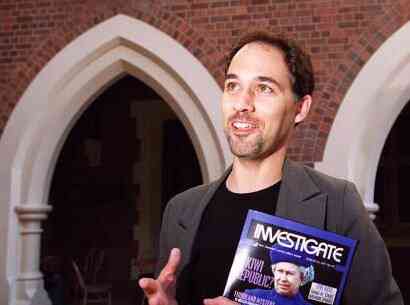 Are Christian fundamentalists like Ian Wishart right when they say there are no errors in the Bible, that Adam and Eve really existed and Noah's flood really happened? Is he correct in saying that atheism is a religion and that science is faith-based? Does he really have proof that Jesus was resurrected?
(Click the Investigate magazine cover to view a larger image. Please note that this cover is a spoof of Investigate magazine. And while it should be obvious, the pictures of Jesus, Adam and Eve etc in this article aren't real either.) Unlike most Christian fundamentalists who rant from street corners, assail you in supermarket carparks or disturb your privacy by going door to door, Wishart is kind enough to document some of his arguments in his Investigate magazine, even though he assures us that "Investigate is not a 'Christian' magazine. It is a current affairs magazine published by Christians." [10] This, coupled with pushing his fundamentalist beliefs on Radio Pacific, means that Wishart has become something of a minor celebrity in the NZ Christian fundamentalist sphere, even appearing on TV to argue against evolution. His arguments for Intelligent Design (ID) will not be looked at in this essay, they deserve one of their own. So we decided to take a random selection of Investigate from the last three years, and a couple of other sources, and see if his arguments made any sense, or were they, like the spiel coming from the ignoramus on the street corner, just bullshit. This essay will look at typical arguments, courtesy of Wishart, put forward by fundamentalists worldwide and will demonstrate that they are all false. It is obvious that Wishart and other fundamentalists are suffering from a delusion no different than believing in Zeus, Apollo, Osiris, Shiva, Maui, Thor or the Tooth Fairy.
This essay isn't written like a murder mystery, where you need to read the whole thing to find out who the killer was. We'll tell you right now who the killer was. It was God. To that end each section in this essay can be read in any order. Each tackles a specific claim that Wishart has made in Investigate, normally in a column he calls 'Tough Questions'. And again, you don't need to read the whole essay to discover our view of Wishart's arguments. They're all bullshit. They may be printed in a fancy glossy magazine but they're nothing new. It's the same old rubbish that Christians have been pushing for years, sometimes thousands of years. While our science and technology pushes us towards the stars, and our humanist philosophies help create a just society, fundamentalists try and drag us back to a primitive time of superstition and one of punishment, servitude and death at the hands of imaginary gods.
We're all Religious Fundamentalists Ian Wishart is obviously intelligent and well read, which begs the question as to why he has regressed into a religious fundamentalist. But Wishart would probably take this as a compliment, so I'd better define what the widely accepted meaning of religious fundamentalist is, and why I believe Wishart has corrupted it. Dictionaries define fundamentalism as: FundamentalismSo by religious fundamentalist I mean someone who takes literally the passages written in their holy books. They are convinced that these books are infallible, that they contain no errors whatsoever. Every claim is true no matter how outrageous it may seem. What is written in these books must never be changed and can never be shown to be wrong. Never. Why? Because they were inspired by God, a perfect being incapable of error. They are the ultimate authority. For Ian Wishart this inerrant book is the Christian Bible, made up of the Old and New Testaments. Wishart knows full well that this is what people mean when they use the word fundamentalist. Look at the following statement where Wishart describes becoming a fundamentalist and also clearly acknowledges that atheists and a skeptics are not fundamentalists: 'I didn't begin my journey as a fundamentalist, I began as an atheist and a skeptic... I'd been well and truly turned off fundamentalists in the early 1980s - imagine my surprise to find I am one!... As for the supernatural, I was a skeptic until God struck me in a way I couldn't weasel out of, forcing me to come to terms with this dimension.' [17]It's interesting to note that nearly everyone that now professes a strong belief in God, or something equally wacky, such as psychics, ghosts or ESP, all claim that they were originally atheists and/or skeptics. I sincerely doubt that most were, but it seems to give them more credence with their fellow Christians, that even with the resources of atheism and skepticism at their disposal, the Power of God vanquished them both. Note also that Wishart admits he is no longer a skeptic — 'I was a skeptic until God struck me'. I guess it is impossible to be a true skeptic and religious at the same time. Christianity or skepticism, one had to go. But back to Wishart's use of fundamentalist. He also acknowledges that people often see this term in a negative sense, as an insult: 'Heck, I've even taken a liking to it myself as a means of describing diehard secular humanists: atheist fundamentalist fruitbats.' [1]Realising that we're going to continue to call him a fundamentalist in this negative sense, Wishart tries to deflect this criticism by claiming that actually we're all religious fundamentalists: 'You see, there is no one in your home or office who, deep down, is not a religious fundamentalist of some kind'. [1]It seems that even I, a hard core atheist, am a religious fundamentalist at heart. It should be pretty obvious that if your argument reaches the conclusion that atheists are religious fundamentalists then there is something seriously wrong with your reasoning. Even Wishart realises this and attempts to hide this flaw by deviously redefining the meaning of fundamentalist: 'But what does 'fundamentalist' really mean? It means someone with a strong worldview. Someone who is confident that they understand the world and their place in it, and therefore not somebody likely to be swayed from that worldview easily. A fundamentalist is someone who believes in the reality of objective truth.' [1]It seems Wishart believes he has some right, no doubt God-given, to corrupt arguments by simply changing the meanings of words. To demonstrate how easy it is to come up with completely bogus conclusions consider the following: A paedophile is someone who cares greatly for young children.This is technically correct, and therefore you can follow with this: Thus at a shallow level every single caring parent is a paedophile.This shows how by careful selection of words, by fudging their meaning, and without actually lying, you can appear to say something insightful, but which is actually complete rubbish. But let's continue with Wishart's fundamentalist definition, that fundamentalists aren't 'likely to be swayed from [their] worldview easily.' I agree that scientists, for example, are confident that they understand a lot about the world and our place in it, certainly not everything, or anything near it, but a lot, and that they are unlikely to be swayed from that view easily. But the fact remains that they can be swayed, and have been swayed numerous times throughout history. They won't be swayed easily and the evidence will need to be robust, but if new evidence indicates a particular scientific theory is false, they will reject it in an instant and happily embrace its successor. There are of course fundamental facts of science that scientists continually refer to and which are set out in science books. But these are not set in concrete and scientists will change them tomorrow if need be. For example up until 2006 every modern science book described Pluto as a planet. It has now been re-designated as a dwarf planet. All future books will be edited to show this change. If you compared a science textbook of today with one from a century ago, you would find new chapters on evolution, relativity, cosmology, genetics, plate tectonics, quantum mechanics etc. And even those chapters that did carry over from the old books would be so heavily edited as to be almost unrecognisable in many cases. Wishart has redefined fundamentalist in such an all-encompassing way that it will now fit most people. So while scientists, historians, philosophers and ordinary atheists like me do fit Wishart's new improved definition of fundamentalist, can it be applied to the very subject we're discussing — religion? So called religious fundamentalists certainly have a strong worldview, but could they be swayed from this worldview with new evidence? No, because then they wouldn't fit one of the widely accepted characteristics of religious fundamentalists. To be a religious fundamentalist means you can't be swayed from your worldview. They're absolutely convinced that their holy books are literally true and that no amount of evidence could convince them that parts of them were in error. Remember that a perfect being who can't make mistakes inspired them, therefore it's impossible that anything would need to be added, deleted or corrected. Take the Koran (or Quran) for example, Islam's holy book. Muslims claim (incorrectly) that not a single word of Arabic has changed in it from when it was first written circa the 7th century CE. As for the Bible, while there have been numerous translations from its original Hebrew, Aramaic and Greek, there have been no additions or deletions since around the 4th century CE. Although even then, the most recent book that was included in the Bible, possibly 2 Peter, was written two centuries before, around 130 CE. We've had no updates since then. Regardless of the mountain of knowledge that has been gained over the centuries, and in direct contrast to science and history textbooks, no new chapters have been added to the Bible, none have been deleted, and not even one verse has been modified to reflect new knowledge. Of course many Christians do now reject as false many verses and even whole chapters and books, Genesis for example, and some do modify their Bibles in a minor way to reflect this, but these Christians are never referred to as fundamentalists (except now by Wishart). Wishart is adamant that the Bible is literally true, that it contains no errors: 'It's easier to be a Christian if you accept the Bible and its claims at face value. It claims to be without error, and it is'. [2]Wishart is not someone that indicates he could be swayed from his worldview, no matter what evidence was produced. So while most people on the planet can now be defined as religious fundamentalists using Wishart's definition, people that we used to refer to as religious fundamentalists, can't. Wishart has so corrupted the meaning that it fits everyone except himself. But his devious attempt to neutralise an insult fails. Regardless of his silly wordplay, the rest of us still know what a religious fundamentalist really is and we will continue to call him one.
Bible inerrancy. As strange as it seems, that's what Christian fundamentalists believe. That's what Wishart believes. That the Bible, made up of the Old and New Testaments, is inerrant. It contains no errors, it is infallible, and it's literally true. Remember that fundamentalists believe that the Bible was inspired by God, a perfect being incapable of error, thus it's inconceivable that there could be anything that would need to be added, deleted or corrected.
There are no erroneous facts of history, no mistaken facts of science, none of geography, of culture, logic, reason, mathematics etc. There are no contradictions. No matter what type of error that you can think of, there are no examples of it in the Bible. Could this really be true? No, of course not. The Bible is rife with errors. But first, does Wishart actually believe that the Bible is literally true, that it contains no errors? Most certainly he does. Here are a few of his assertions: 'Science has not proven the Old Testament is wrong. Not even in one little paragraph.' [2]Since there have been numerous books detailing Biblical errors we obviously can't recount them all, but this doesn't matter, since only one, single, measly error needs to be demonstrated to completely demolish the argument of no errors. Remember that fundamentalists don't say that the Bible is 99.999% error free or mostly error free, but 100% error free. It must be completely error free because if even one error was found, you couldn't be absolutely certain there wasn't another, and another, and another. You wouldn't know which part you could trust and which parts you couldn't. Which parts were inspired by God and which merely invented by man? Which parts carried God's authority and which didn't? Which parts of the Bible are factual and which parts are mere fiction? And it's not just atheists and skeptics who see a problem if there is even one error in the Bible. Here's what John Wesley, the founder of Methodism, said: "If there be any mistake in the Bible, there may well be a thousand. If there be one falsehood in that book, it did not come from the God of truth." (Journal, Wed., July 24, 1776)Wishart has reached the same conclusion: 'The Old Testament is without error. Philosophically, to believe that it has error is to believe that we worship a God who cannot communicate accurately with humankind.' [5]If the Old Testament has errors, why should we believe the New Testament? Why indeed, since there are plenty of errors to be found. This would suggest that the Bible was either written by primitive desert nomads ignorant of science etc or a God who is a crap communicator. Although contradictions are the most prolific type of error in the Bible, let's first look at some of the factual errors. These are errors of science, history, geography etc. "The rabbit, though it chews the cud, does not have a split hoof; it is unclean for you." (LEV 11:6)In fact rabbits do not chew the cud, and do have a 'split hoof'. Rabbits may appear to chew their cud, but in fact they are chewing fecal pellets. To put it simply, they are eating their own shit. They need to do this because of their digestive system. Wishart may well argue that the original text probably said this, but later translators didn't understand about coprophagy (the eating of excrement) and changed it to chewing cud. Wishart has said: 'The OT, properly understood in the language of its time, is without error.' [6]These are weasel words. Regardless of what it may have originally said or how the Hebrews understood it in the language of their time, it's an indisputable fact that Bibles today claim, incorrectly, that rabbits chew their cud. The question is not whether this is an error — it is, but why did God let translators introduce this error into the Bible? After the first draft did he wipe his hands of it? Was he actually embarrassed about the eating shit part and decided that ignorance was bliss? And what sort of God would design animals that have to eat their own shit in the first place? "These are the birds you are to detest and not eat because they are detestable: the eagle, the vulture,... the stork, any kind of heron, the hoopoe and the bat." (LEV 11:13-19)Contrary to what God thought, bats are mammals, not birds. Of course, like the chewing cud bit, it's perfectly understandable how primitive man got it wrong, thinking that all flying things are birds. But if the Bible was inspired by God and not by man, why did God get it wrong? "The kingdom of heaven is like to a grain of mustard seed which...is the least of all seeds, but when it is grown is the greatest among herbs and becometh a tree." (MT 13:31-32)There are smaller seeds than the mustard seed, such as the orchid seed; and mustard plants don't grow into trees. "Look at the birds of the air; they do not sow or reap or store away in barns, and yet your heavenly Father feeds them." (MT 6:26)If that's the case then my neighbour is God! She feeds them breadcrumbs every morning. In fact most birds in the wild work bloody hard at finding food. Hummingbirds must feed all day just to stay alive and birds such as penguins and albatrosses must cover enormous distances to find food. Many, many birds working their little beaks off fail to find enough food for themselves and their offspring, and die, and birds that sit around waiting for the heavenly Father to feed them are definitely dead. Contrary to what Jesus thought, there is no divine soup kitchen for birds in the wild. "Again, the devil took him to a very high mountain and showed him all the kingdoms of the world and their splendor." (MT 4:8)No matter how high the mountain is, you can never view the earth's entire surface, never see 'all the kingdoms'. This sentence only makes sense if the writers of the Bible thought the world was flat. Oh that's right, they did! In the next example we have an error in mathematics: "He made the Sea of cast metal, circular in shape, measuring ten cubits from rim to rim and five cubits high. It took a line of thirty cubits to measure around it." (1KI 7:23)As we all learnt in school, the circumference of a circle can be calculated by multiplying its diameter by pi. This gives 31.4 cubits not 30, meaning that God thought pi equalled "exactly" 3 and not 3.1415926... Every school kid knows that you need to express pi to at least two decimal places to be useful, as did the ancient Greeks. Exactly 3 is not accurate enough, even thought there have been legal attempts in some places in the US to change pi to exactly 3 to match the Bible. This demonstrates that some fundamentalist Christians do believe that pi equals 3, and that it is not merely an approximation. 'And he said to them, "I tell you the truth, some who are standing here will not taste death before they see the kingdom of God come with power."' (MK 9:1)This is Jesus telling his disciples that he would return before all of them died. Some of them would witness the Second Coming. Yet they all died without even so much as a phone call from Jesus. If you're not convinced that the early Christians thought the Second Coming was imminent, here's another quote from Jesus: "Behold, I am coming soon!"... Then he told me, "Do not seal up the words of the prophecy of this book, because the time is near... "Behold, I am coming soon! My reward is with me, and I will give to everyone according to what he has done... "I, Jesus, have sent my angel to give you this testimony for the churches... He who testifies to these things says, "Yes, I am coming soon." (REV 22:7-20)Not only are these claims false, we're still waiting. If someone owned you money and promised that you would receive a cheque in the mail 'soon', and 2,000 years later your descendants were still waiting by the mailbox, wouldn't it be time to admit you've been conned?
"And the stars in the sky fell to earth, as late figs drop from a fig tree when shaken by a strong wind." (REV 6:13)Unlike the writers of the Bible — primitive desert nomads — we now know that this would be impossible. Stars are colossal compared to the earth, and not even one star could fit on the earth, let alone a third of all visible stars. A star couldn't even get close to the earth without destroying it first. "He shakes the earth from its place and makes its pillars tremble." (JOB 9:6)The earth is built on pillars. I guarantee you didn't learn that science fact at school. Or that stars sing together in some sort of choir. Maybe our radio telescopes aren't listening to the right frequencies? And remember that these are direct quotes from God. "Tremble before him, all the earth! The world is firmly established; it cannot be moved." (1CH 16:30)The earth is firmly established and can't be moved? But I thought it rotated once a day, and orbited the sun, which in turn orbits the galactic centre, which in turn is moving? Not only is the Earth moving, it's moving very, very fast. "Who shut up the sea behind doors when it burst forth from the womb, when I made the clouds its garment and wrapped it in thick darkness, when I fixed limits for it and set its doors and bars in place, when I said, 'This far you may come and no farther; here is where your proud waves halt'?" (JOB 38:8-11)Doors and bars control the sea? Another well-established scientific fact I suppose. "Do you send the lightning bolts on their way? Do they report to you, 'Here we are'?" (JOB 38:35)We've known for some time now that lightning is a natural electrical discharge, rather than a talkative bolt from God. "Have you entered the storehouses of the snow or seen the storehouses of the hail, which I reserve for times of trouble, for days of war and battle? What is the way to the place where the lightning is dispersed, or the place where the east winds are scattered over the earth?" (JOB 38:22-24)Yet again, snow and hail are quite natural. How can the claim of storehouses for snow and hail, and supposedly lightning and wind, be anything other than errors? "What is the way to the abode of light? And where does darkness reside? Can you take them to their places? Do you know the paths to their dwellings?" (JOB 38:19-20)God seems to believe that darkness is something that is emitted, given out like light, rather than being merely an absence of light. It also seems that both light and darkness have their own dwellings on God's housing estate. I wonder if they're neighbours? "Who endowed the heart with wisdom or gave understanding to the mind?" (JOB 38:36)Another primitive, and erroneous belief, that the heart is the source of wisdom. "And God said, "Let there be light," and there was light... God called the light "day," — the first day (GE 1:3-5)Light was created on day one, yet the sun, the actual source of our light, was not created until day four. Thus there can't have been any light until day four. If God created a source of light without the sun, what do we need the sun for? Also the moon is not a source of light. It appears to shine only because sunlight reflects off it, and then only some of the time. That's why you can't see it during a 'new moon' phase. So God actually made one great light and one great mirror. Note that God even made the vegetation, which requires sunlight to live, before he made the sun. His construction sequence wasn't all that well thought through. "Then God said, "Let us make man in our image, in our likeness." (GE 1:26)Note that God clearly says 'Let us make man in our image, in our likeness' and 'like one of us'. The use of us and our clearly implies that there is more than one god, thus the later claim that there is only one God is an error. If there is only one God, then these verses are in error. Either way an error exists. Of course some may reply that God was simply talking to angels or his mate Satan, not other gods, but there are many passages that support multiple gods. For example: 'God takes his stand at the Council of El, and surrounded by all the other gods, he delivers his judgements. "How much longer do you intend to continue with your injustices,... I ask you now: Are you not gods, are you not all the sons of El, the Most High?" (Psalms 82)It is quite clear that in the first books of the Old Testament there were many gods fighting for supremacy, that God was initially only the god for one tribe of people, the Hebrews, and no one else. He chose them to be his people and other gods chose other tribes. All the other peoples had their own gods, which the Hebrews considered just as real as theirs. Remember the encounter between Moses and the Egyptian Pharoah: "So Moses and Aaron went to Pharaoh and did just as the LORD commanded. Aaron threw his staff down in front of Pharaoh and his officials, and it became a snake. Pharaoh then summoned wise men and sorcerers, and the Egyptian magicians also did the same things by their secret arts." (EX 7:10-11)This is a straight playoff between the Hebrew god and the Egyptian gods, and clearly the Egyptian gods were just as powerful as the Hebrew god. Mind you, for someone that can create the universe, it seems like a pretty pathetic trick, one that all the gods seemingly knew how to perform. But if there is only one god who has created everyone, as Christians insist, then he is by default the God of everyone, not just the Hebrews, and he would have clearly set people straight on this fact. The fact that God chose or was allocated the Hebrews, clearly shows that he was competing with other gods for members. At the beginning of the Bible God is just a minor god, one among many, but by the end he is not only the most powerful, he claims to be the only god that has ever existed. He has tried to write his competitors out of history, so why leave in the references to other gods and the story of your climb up the corporate ladder? That's one major error if you ask me. "So the sun stood still, and the moon stopped,... The sun stopped in the middle of the sky and delayed going down about a full day." (JOS 10:13)If this isn't an error, then why didn't every other group of people on the planet record it happening? No matter where you were on earth, you would notice these historic events, which had never happened before and have never happened since. From a scientific perspective, as with innumerable events recounted in the Bible, the problems with this are enormous. It simply couldn't happen. The fact is that history would say it never happened, and that science would say that it is impossible. Therefore it's a Biblical error, another that will be denied by Wishart. He'll insist that science hasn't proved the OT is wrong since no science experiments have been performed that prove the earth didn't suddenly stop spinning and go into reverse. This is probably quite true, in the same way that scientists haven't bothered doing experiments to prove that Greek gods didn't toss lightning bolts from Mt Olympus. There's plenty of reliable science that makes it unnecessary to test silly things like this. From an historical perspective, fundamentalists will claim that just because no one else mentioned these events, it doesn't mean they didn't happen. That's as silly as claiming that just because no one mentioned a hot dog stand operating at the base of Jesus' cross, doesn't mean there wasn't one. We can't write history based on what people don't tell us. Oh, and if the earth did suddenly stop spinning (at around 1670 kph at the equator) and go into reverse, the inertia alone would probably have killed everyone, not to mention that the deceleration forces involved would have destroyed the planet, leaving nothing to put in reverse. Since you're reading this, we can be sure it didn't happen. Many creatures also used to appear in the Bible that we now consider mythological. You won't find them in modern Bible translations simply because they have been edited out. For example Psalms 22:21 in the King James Bible mentions unicorns, but that's now been changed to 'horns of the wild oxen'. But the original biblical writers thought these creatures actually existed. Some examples are: Cockatrices - Jer. 8:17, Isa. 11:8. 59:5 (a serpent hatched from the egg of a cock who could kill with a glance)I know that fundamentalists will insist that earlier translations were a mistranslation and that the modern versions are correct. We now know that unicorns don't exist and therefore they assume that the original writers must have meant something else, something real, and something not mythical. But we don't correct other historical documents in this way, we simply acknowledge that this was the extent of their knowledge at that time. If Plato or Cleopatra wrote that they thought the world was flat, we would faithfully recount their opinions. But if a Biblical character suggests the world is flat, fundamentalists immediately say we must have misinterpreted him. If the Bible is continuously reinterpreted to match new knowledge, then all the silly errors evaporate away. "They came to Philip, who was from Bethsaida in Galilee, with a request." (JN 12:21)Oops. Bethsaida was in the province of Gaulontinis, not the province of Galilee. Even the village of Nazareth would seem to be an error, since archaeologists now tell us that it didn't even exist during the 1st century, the time Jesus supposedly lived [20]. Ancient historians and geographers don't mention it before the 4th century. It's not mentioned in the Old Testament or the Talmud which names 63 Galilean towns. Josephus wrote about 45 cities and villages in Galilee and stayed in a village one mile from modern-day Nazareth, but never mentioned it. The fact that Nazareth exists now means nothing. Paris exists now; it didn't then. And while we're at it, the likes of Capernaum and Bethany were also unknown outside the gospels before the end of the first century. Mark also appears to be ignorant of Palestinian geography: "Then Jesus left the vicinity of Tyre and went through Sidon, down to the Sea of Galilee. (MK 7:31)The Sea of Galilee is to the east of Tyre whereas Sidon is to the north. Sidon simply isn't on the way to the Sea of Galilee; and no sane person in an age without motor vehicles would take such a silly route. It simply demonstrates that who ever wrote the gospel of Mark was unfamiliar with Palestine and made an error. Even the writers of the King James Bible realised this and changed it, but it has since been changed back in later translations. "When they were in the house again, the disciples asked Jesus about this. He answered, "Anyone who divorces his wife and marries another woman commits adultery against her. And if she divorces her husband and marries another man, she commits adultery." (MK 10:10-12)Again, who ever wrote the gospel of Mark was unfamiliar with Palestine in the time of Jesus. Only men could obtain a divorce, thus it is inconceivable that Jesus would mention a woman divorcing her husband. This is one example of later writers putting words in Jesus' mouth in an attempt to have Jesus support their cultural beliefs. 'Jesus replied, "The hour has come for the Son of Man to be glorified. I tell you the truth, unless a kernel of wheat falls to the ground and dies, it remains only a single seed. But if it dies, it produces many seeds." (JN 12:23-24)Jesus believed that seeds weren't living things, that when they fall from a plant they die, and from this dead seed a new plant springs forth to produce more seeds in turn. Of course we now know that this ancient belief is false, that seeds are definitely living, and that dead ones produce nothing. But then I guess Jesus was a carpenter and not a botanist. 'And God said, "... I have set my rainbow in the clouds, and it will be the sign of the covenant between me and the earth... I will remember my covenant between me and you and all living creatures of every kind. Never again will the waters become a flood to destroy all life. " (GE 9:12-15)Rainbows are a natural occurrence that can happen whenever you mix sunlight and water. Noah would have seen plenty of them prior to building the ark. They are not a post-it note that God put in the sky after the flood to remind him not to commit mass murder again. That's enough sampling of factual errors. Of all the errors in the Bible, the great majority are Biblical contradictions. This is where one verse says one thing and another verse elsewhere in the Bible contradicts the first verse. For example: "And Solomon had forty thousand stalls of horses for his chariots, and twelve thousand horsemen." (I Kings 4:26)So, how many stalls did Solomon have? Was it four or forty? Maybe both verses are wrong or maybe one is correct, who knows, but it's quite obvious that they both can't be true statements. At the very least one must be an error. Some may now say that it's a pretty simple error, to mix up 4 and 40, especially if one of the authors wrote their piece years later. And who really cares exactly how many stalls he had, it was a lot, OK? I agree, it's an unimportant error in the scheme of things. But remember the claim of fundamentalists like Wishart is that there are no errors. None at all. Zilch. Zero. Nada. Nary a bean. They're not arguing that there are no major or important errors that change the theme of the Bible. They're arguing that there are no errors, not even silly, little, unimportant ones. Here are a few more examples of contradictory passages in the Bible. Now remember it doesn't matter whether you think they are important passages or not. It doesn't matter whether you think they can probably be explained away as a simple misunderstanding or a mistranslation. All we're interesting in is determining whether there are passages in the Bible that give contradictory messages. If they're contradictory, then at the very least one must be an error. It doesn't matter which one. We're not interested in why any errors may have occurred, but simply are there any errors. Are we punished for our parents' sins? "For I the Lord thy God am a jealous God, visiting the iniquity of the fathers upon the children unto the third and fourth generation." (Exodus 20:5) (Repeated in Deuteronomy 5:9)Does God tempt people? "Let no man say... I am tempted of God: for God cannot be tempted with evil, neither tempteth he any man." (James 1:13)Has anyone seen God? "No man hath seen God at any time." (John 1:18)When was Jesus crucified? "And it was the third hour, and they crucified him." (Mark 15:25)Did Michal have children? "Therefore Michal the daughter of Saul had no child unto the day of her death." (II Samuel 6:23)How many generations were there from David to Jesus? 28 generations, with mostly different names to Luke's version, including the fact that Solomon is the son of David. (Matt 1:6-16)These are just a small fraction of the contradictions that have been discovered in the Bible. For those that are interested, there are links to many, many more errors at the end of this essay. Christian fundamentalists believe that every one of these errors — contradictions and errors of fact — can be resolved with a little thought, well ok, a lot of thought. They call this creative thinking 'harmonisation'. Hundreds of problems have been harmonised in numerous books; one book evidently attempts to explain over 500 apparent conflicts. It should be noted that these solutions only convince other Christians, not skeptics. The process of harmonisation is revealing in itself, since it means that Christians admit that there are hundreds of passages in the Bible that appear to contradict other passages and/or science, history etc. Even Wishart admits this: 'As a Christian, I know that the Bible does not conflict with itself when correctly interpreted.' [16]He admits that the Bible, as read by ordinary Joe Christian, contains apparent conflicts that need to be 'correctly interpreted'. It makes you wonder why an all-powerful god couldn't write a book that his followers could understand, without the need for an interpreter. But I guess that's the problem with all holy books written by primitive man, you have to keep 'reinterpreting' them to match new knowledge. And of those conflicts that they can't resolve, they insist there is a solution, but that we will have to wait for future knowledge to reveal it. How convenient. Another method they use to hide these problems from modern Christians is to simply remove them from the Bible. Edit them out. Here for example are the passages about Solomon's horse stalls in 'The Holy Bible: New International Version' from the International Bible Society: "Solomon had four* thousand stalls for chariot horses, and twelve thousand horses." (1KI 4:26)Note that the Kings passage which should read 'forty' has been changed to 'four' to match the other passage. Modern Christians won't see a problem because it has been deviously edited out. The International Bible Society must feel a little guilty though, because in the small print of the notes they reveal that the original Hebrew word was actually 'forty'. Here's another example: "Ahaziah was twenty-two years old when he became king." (2KI 8:26)The second passage should say 'forty-two'. Once again they admit in the small print that they have changed the passage to remove the contradiction, but don't explain why they feel justified in doing this. And of course most Christians wouldn't even notice many of the original contradictions since the conflicting passages are in different parts of the Bible. So the older Bibles, the King James Version for example, actually contain many more errors than modern translations because translators are progressively editing them out. Changing a word here and a phrase there to weed out obvious errors and to make a verse vague enough to be open to new interpretation. Vague verses are easier to harmonise with others. So I hope by now that I've convinced you that there are undeniably many errors in the Bible. You may not be convinced that all my examples are real errors, but remember, a fundamentalist insists that there is not one single error in the Bible. Thus fundamentalists must be able to explain every single 'apparent' error that has been identified by Biblical scholars and skeptics. It doesn't matter if you've convinced yourself that you can explain away hundreds of problems. If one error remains, the Bible is flawed. Wishart believes that the Bible is inerrant. Some people believe they have been abducted by aliens. Others believe their house is haunted. Some believe that the Tooth Fairy swaps teeth for money. None of these people have credible arguments.
Another ridiculous claim that Wishart makes (and many other Christians), is that 'atheism is a religion' [7]. Here's another similar example from Wishart: 'a philosopher named David Hume, whose writings established what we now know as the religion of secular humanism.' [8]Atheism, secularism, humanism. These words are all used interchangeably by Christians to imply one meaning: non-believers in God and Jesus Christ. They all identify the enemy. The heathens. They're words used as insults. And as for the description 'secular humanism', there are some non-religious people that call themselves secular humanists, yet personally I think the phrase secular humanism is redundant. It's like referring to a dead corpse. It can't be a corpse if it's not already dead. Likewise humanism already implies secularism. Wishart's word games are just a childish ploy. But now they add another term to the mix — religion. Atheism, secularism and humanism are all religions. Anyone that can say this with a straight face is either very ignorant of what 'atheism' and 'religion' actually means, or is of the belief that it is perfectly acceptable to redefine words in the support Christianity. Maybe lying is OK if souls are saved? Religion in its everyday use means a belief in gods and the supernatural. Atheism on the other hand means no belief in gods or the supernatural. These two concepts contradict each other. People that don't believe in gods cannot honestly set up an organisation that, by definition, does. Think about it. If the statement 'atheism is a religion' was really true, this means that an atheist is a religious person. Could you honestly describe an atheist as religious? And if 'atheism is a religion' then why can't secular (or atheist) organisations get tax exemptions like churches do? Of course some people quote things such as 'He worked religiously at his job' to indicate a devotion to something. The word religion doesn't always mean that gods are involved. This is true, but in Wishart's article that discusses the Christian God, Jesus, Satan and the fact that atheists don't believe in these beings, it's being dishonest to then mention the word 'religion' and insist that it has nothing to do with God. If someone tells you they are very religious, not many people would assume that they are talking about their devotion to work. Likewise if someone says 'I don't believe in religion', not many people would expect them to continue with, 'therefore I don't believe in atheism, since atheism is a religion'. To say that 'atheism is a religion' just doesn't make sense. (For more on atheism as it relates to religion, see the essay on Agnostics.)
Many, including Wishart, even imply that science is a religion: 'your belief is a faith-based one even if you are an atheist scientist.' [1]Christians seem to think that since religion is firmly rooted in a belief — a belief in God, then any field of thought that involves a belief of some kind, such as atheism and science, must also be a religion. But merely holding a belief is not the definition of religion. It is not the belief, but what the belief is about, ie God, that defines religion. It is too simplistic to leap from belief to religion. For example, I have the belief that I am a male. That belief is not a religion. Yet by Wishart's logic it would be. Many, including Wishart, also confuse the word belief with the word faith. Christians claim both belief in God and faith in God. Belief and faith are seen as interchangeable. Wishart assumes this must be the case in all fields. Since scientists and atheists have beliefs, they must also have faith, and since faith is integral to religion, science and atheism must also be religions. This claim fails simply because science is not faith-based, and will be discussed fully in the next section. For now just take it as another bogus argument from Wishart. So clearly atheism and science aren't religions, and don't suffer from its failings. But what's the purpose of Wishart's subterfuge? Why do Christians even sully the word religion by trying to connect it to atheism and science? I believe it's because today society puts great trust in science. They respect its findings, whereas religion is looking more and more like a fairytale. Scientific claims, more often than not, are astonishingly accurate, and are backed by an extraordinary amount of evidence. However religion, specifically the Bible, is increasingly being shown to be false, and the evidence that supposedly supported it is rapidly disappearing. Many people consequently have great confidence in science and little confidence in religion. What Wishart attempts to do by claiming that science is a religion, is to suggest that science and religion are essentially the same, that they both have the same foundation of belief and faith. Their strengths and weaknesses are the same. If you have confidence in one, you must therefore have confidence in the other. Wishart implies that we can trust religion for the same reasons we can trust science. But if we distrust religion, for the same reasons we must distrust science. If one fails, they both fail. Science can not claim superiority over religion, because it is a religion. But science can most definitely claim superiority over religion, because it's clearly not a religion. And neither is atheism, secularism or humanism. This childish attempt to drag science down to the flawed level of religion fails miserably.
Another common ploy that Wishart uses again involves corrupting the meaning of a word. This time the word is faith. Here are two typical comments from Wishart: 'Pushed to its extremes, science relies on faith just as much as Christianity does, more so in fact.' [2]It's well accepted that Christian belief in their worldview, fundamentalist or not, is a matter of faith, as Wishart clearly states above. It's also well accepted that blind faith is a very shaky foundation to base a belief on, with everyone preferring their beliefs to be supported by evidence, reason and logic, rather than faith alone. Even Christians are furiously looking for reasons to reinforce their faith. What Wishart attempts to do is to convince us that by accepting that the scientific worldview is also a matter of faith, science is therefore also based on a very shaky foundation. Thus if we are suspicious of religion because we are expected to believe it on faith, Wishart insists that we should be equally suspicious of science, even more so for some reason, since it too is faith-based. But once again Wishart is fudging the truth. Both science and religion can, technically, be called faith-based, but only if you hide the fact that there are two types of faith. Let's call them everyday faith and religious faith. Dictionaries provide two definitions for faith as follows:
FaithThe first definition would be what I'd call everyday faith. Confident belief in the truth, value or trustworthiness of a person, an idea, or a thing. This confident belief could be faith that a scientific theory is correct, faith that your parents will help you when needed, faith that the justice system will treat people fairly. This is not blind faith unsupported by evidence or reason. On the contrary, there could be an enormous amount of evidence supporting your faith in a scientific theory. Likewise your faith in your parents. For many years they have consistently and without fail come to your assistance whenever you needed help. They have told you they will continue to do so. Based on this evidence you have good reason to have faith in their continued support. The same with your faith in the justice system. It is based on the evidence of its past performance. You can examine case after case, weighing up how they treated various citizens and conclude that they treat people fairly. These beliefs are not conclusive proof that your theory is correct, that your parents will always help you or that justice will always be fair, but you have very good reasons to believe that these beliefs are most likely true. So while you may say you have faith in these everyday things, this faith, this belief, is soundly based on evidence and reason. The second dictionary definition of faith is religious faith. This type of faith is what people are talking about when they say they have faith in God, faith in Jesus and faith in the Bible. Religious faith is just the opposite of everyday faith. Religious faith is most definitely not a belief that is supported by reason or evidence. Religious faith is the ability to still believe in something even when there is no good reason to believe it, and no evidence to support it. What's even more worrying is that religious faith is the ability to still believe in something even when, not only is there no evidence to support it, there is actually evidence and/or reasons that contradicts your belief.
Here's how two academics define faith in regard to religion: 'Faith is belief without, or in spite of, reason.'It's confusing that we have two different meanings of faith, and Christians, either deliberately or through ignorance, take advantage of this confusion. In reality though, one would be better to stop referring to everyday faith, and simply call it reason instead, since everyday faith is based on reason. Religious faith is devoid of reason. So Wishart's claim that both science and religion are faith-based is deceptive, and should be more accurately stated as: Science is reason-based and religion is faith-based.What we now have is science and reason verses religion and faith. Wishart's claim that science is faith-based is only true if he is honest and states that this faith is based on reason, whereas the faith used to believe in Christianity is religious faith, which abhors reason.
The fact is that Christians have always been at war with reason and the knowledge it leads to. Throughout its history Christians have been required to replace reason with blind faith, as the following quotes demonstrate. First some quotes from the Bible which encourage blind faith over reason and evidence: 'Now faith is the substance of things hoped for, the evidence of things not seen' (Hebrews 11:1)Now some from other authors: "Celsus, author of the earliest surviving attack on Christianity which dates from around 178 CE, criticised the new religion as a lure for dim-wits: 'Taking its root in the lower classes,' he complained, 'the religion continues to spread because of its vulgarity and the illiteracy of its adherents. It thrives in its purer form among the ignorant.'In the 5th century Emperor Constantine needed a religion to unite the Roman Empire. He chose Christianity because it had: "purged itself of all its troublesome intellectuals. It was already an authoritarian religion which encouraged the faithful to have blind faith in those holding positions of power".Martin Luther, leader of the Reformation in the 16th century, described reason as "the devil's bride" and "God's worst enemy". He wrote that: "There is on earth among all dangers no more dangerous thing than a richly endowed and adroit reason, especially if she enters into spiritual matters which concern the soul and God. For it is more possible to teach an ass to read than to blind such a reason and lead it right; for reason must be deluded, blinded, and destroyed."Other gems from Luther are: "Reason is the greatest enemy that faith has; it never comes to the aid of spiritual things, but more frequently than not struggles against the divine Word, treating with contempt all that emanates from God."Another obvious example that shows that God doesn't want man to use reason is in the first book of the Bible, Genesis. He forbids Adam and Eve to eat from the Tree of Knowledge. He wants them to remain naked and ignorant. Not that there's anything wrong with naked. It's the ignorant bit that we have a big problem with. And it's not just Christians that discourage using reason in regard to God. Muslims also are instructed not to be too inquisitive about God: "Reflect upon God's creation but not upon his nature or else you will perish"If you think Christians may have changed their ways since Martin Luther, think again. Reason is still the enemy and must be avoided. Look at this revealing statement from Wishart: 'It's easier to be a Christian if you accept the Bible and its claims at face value.' [2]In other words, don't start thinking about what the Bible claims, don't try and use reason to understand it, just accept it at face value. Wishart's thinking hasn't changed from Christians in the 16th century. His plea to just blindly accept the Bible reminds me of that lazy hypnotist on the TV comedy 'Little Britain': Look into my eyes, not around my eyes, look into my eyes. You will believe the Bible. You will not question the silly bits or the numerous contradictions. You will believe... believe... believe...So for Christians, faith is preferred over reason. Yet most everyone in their daily lives rely on reason, logic and evidence to conduct their affairs. Whether in their career, buying a used car or evaluating climate change, we use reason to make the right choices. We don't blindly accept the spiel from the used car salesman on faith. Not even the Christians. Yet when it comes to religion, Christians and the Bible tell us that we should ditch our old reliable friend reason and use faith instead. But why? Why don't Christians continue to rely on reason if it's such a powerful tool? Well they do in fact, every chance they can. Every time that Christians can utilise reason and scientific evidence to support the Bible they do so. Christians actively hunt through science books and papers looking for facts that they can misconstrue as evidence for the Bible and Creation. The fact is that no other avenue of inquiry, including religion, has the reliability and predictive power of science to describe the physical universe. Thus Christians grasp science with indecent haste when it appears to support their beliefs, and accuse it of being erroneous, close-minded and faith-based when it doesn't. Whenever science claims something that contradicts the Bible, Christians counter this by stating that we can't ultimately rely on scientific claims because they're faith-based. They're saying that science is inherently unreliable because it's faith-based. Of course we've already determined that it's not, but let's just assume it is for the moment. But remember that religion is most definitely faith-based. So if all faith-based beliefs are inherently unreliable then so is religion. Rather than build religion up to the reliable level of science, they have merely tried to drag science down to their level of unreliability. They have shot themselves in the foot. Like small children they are saying to scientists, "Of course religion is crap, but so are you. Yes I know religion has no firm foundation, but neither have you. So there! We're both the same." The fact is that Christians only resort to faith when reason fails them. Of course reason hasn't really failed them, they've merely elected to ignore it. They ignore reason when they encounter talking serpents or talking donkeys or men walking on water or burning bushes that don't burn or the claim that day and night existed before the sun was created or that stars fell to earth. Reason would say that these things never happened, that they are fantasies, therefore Christians say reason must be discarded and replaced with faith. A faith that says these silly things really did happen because the Bible says they did. And remember that Christian theologian and philosopher St. Thomas Aquinas believed that any discrepancy between science and the Bible was due to errors in science rather than errors in the Bible. So what have we discovered? It's that when people say they have faith in science or their parents, what they really mean is that they have good reasons to trust science or their parents. And that when people say they have faith in the Bible, what they really mean is that they have no good reason to believe it's true, but they'll continue to believe it anyway. We have discovered that to have faith in science and faith in Christianity is two completely different things. We can now see that Wishart's claim that 'Pushed to its extremes, science relies on faith just as much as Christianity does, more so in fact', is utter rubbish. Science doesn't rely on faith to diagnose bodies with MRI scanners or land robotic rovers on Mars in the way that Christians need faith to believe in talking donkeys. It never amazes me the way some people are prepared to twist language to falsely bolster their silly beliefs.
Along the same theme, let's look at this quote from Wishart: 'Believing in the truth of the Bible is no different than believing in any other kind of truth, even scientific truth. The pursuit of science, in fact, is supposed to be the pursuit of truth. What makes scientific truth more important than religious truth?' [6]What utter bullshit! Truth is truth. You don't get different kinds of truth. This silly idea that truth is not absolute but relative to different groups is know as Relativism. At its extreme someone could claim that while 2+2=4 may be true for us, it's not for them. For them 2+2=5 is true and they would insist that their truth is just as valid as our truth. Morons. You can certainly say that there may be different paths to the truth, but there is only one truth at your destination. You can't have religious truth and scientific truth. You can have religious claims and scientific claims, but there is only one truth. Science and religion can both make claims, but once the truth is determined, it is simply called the truth. Not religious truth or scientific truth, but simply the truth. Even Wishart acknowledges this as he goes on to say: 'But you and I are both making religious truth claims. We cannot both, however, be right. If I am right, then your own belief must be wrong, by a process of logic. And vice versa.' [6]So Wishart's question, 'What makes scientific truth more important than religious truth?' is bogus. It's based in relativism, even though he doesn't subscribe to it. Yet he is prepared to couch his question in these terms to delude his fellow Christians, to win the argument. The words truth and important are misleading. What he should ask is this, "What makes scientific claims more reliable than religious claims?" And the answer would be that science can rigorously support its conclusions. Religion can not. Belief in scientific claims is based on the scientific method — evidence, reason and logic. Belief in religious claims is based on gullibility — swallowing the superstitious ramblings of ancient texts and actively ignoring scientific and historical evidence. Wishart's different attempts to make science and religion appear equal is disingenuous.
Atheist Wars vs Religious Wars Do you know how many people have been killed in atheist wars? Perhaps you're not familiar with all the deaths that atheists have caused? Let Wishart explain: 'More people have been killed in conflicts caused by secular atheists than in all religious wars combined. People go to war over control of resources, left verses right, over freedom verses totalitarianism etc.' [10]Why would a Christian want to highlight how many people atheists have killed? It's simple. It's to draw our attention away from how many people Christians have killed, because most people are well aware that an enormous number of people have suffered and died at the hand of God and God's followers throughout history. By comparison atheists look like saints, so Wishart wants to highlight the true murderous nature of atheists. But has he got a case? Let's look at a few of God's exploits first. His most famous act of genocide was the flood of Noah when he killed every living thing on the planet, except for the handful in the Ark. Not just every man, woman and innocent child, but every animal, fish and plant as well. Then he wiped out Sodom and Gomorrah, even the innocent babies, and then killed Lot's wife for daring to watch his murderous rampage. He killed every single innocent firstborn in Egypt, humans and livestock, over a tiff he was having with the Pharaoh. He slaughtered personally or ordered killed 12,000 people of Ai, 10,000 Moabites, 10,000 Perizzites and Cannanites, 120,000 Midianites, 50,070 at Bethshemesh, 70,000 people from Dan to Beersheba, 185,000 Assyrians, 24,000 Israelites on one occasion and 14,700 on another, not to mention the peoples and cities in which he killed 'many' or destroyed completely. And this is just a small sample of God's murderous interaction with mankind. The disgusting, barbaric nature of God as detailed in the Old Testament is beyond belief, and the Bible should be reclassified as 'horror', not religion. Then of course God stopped interacting with his playthings directly for some reason, but this didn't stop his followers from killing and torturing in God's name. Consider the many wars fought between Jews, Christians and Muslims. When they weren't fighting the other 'People of the Book', all descendants of Abraham, they were fighting amongst themselves in the name of religion, right up to today, such as Sunni Muslim against Shiite Muslim in Iraq and Catholic against Protestant in Northern Ireland. Religious wars must also include Hindus, Buddhists, Aztecs and innumerable other religions throughout history. And let's not forget the many Christian crusades and inquisitions, including the infamous Spanish Inquisition, religious massacres, pogroms, and the slaughter of heretics and witches. Many have even described the West's 'war on terror' as a war between Christianity and Islam. There's no denying that killing in the name of religion has an appalling record, yet now Wishart wants us to believe that atheists have killed far more people than all religions combined. Even if this were true, all that this would mean is that atheists have now surpassed the murder tally originally held by Christians and others. This is nothing that Christians should be proud of. But it's not true; it's blatantly false. It's all misleading crap. He mentions 'religious wars' and thereby implies that the other type must be 'atheist wars'. In all religious wars people died because of conflicting religious beliefs. No one has died in secular wars over a conflict regarding atheism. While there is an enormous number of religions to fight with, including your own, there is only one atheism. If atheists go to war with each other it is never over atheism. Wishart even acknowledges this with his statement, "People go to war over control of resources, left verses right, over freedom verses totalitarianism etc." No mention of going to war over atheism. Even wars that weren't fought for religious reasons, eg WWI and WWII, were nevertheless almost totally fought by and controlled by religious believers, not atheists. Even if you say that Russia's official stance was that of atheism, many (if not most) of its soldiers still believed in God. And in any case, the atheist Russians were on our side, fighting the Christian Germans and Christian Italians. Why were the atheists fighting with the Allies against Christians? Were we on the wrong side? And Wishart is wrong stating that Hitler was an atheist, he was a Catholic. Atheists do not persecute Jews, Christians do. Why would an atheist want to persecute Jews? Hitler wrote in Mein Kampf: "I am convinced that I am acting as the agent of our Creator. By fighting off the Jews, I am doing the Lord's work." In 1941 he informed General Gerhart Engel: "I am now as before a Catholic and will always remain so." Soldiers of the vermacht wore belt buckles inscribed with: "Gott mit uns" (God is with us). In a speech in Berlin on 24 Oct. 1933, Adolf Hitler said the following, "We were convinced that the people needs and requires this faith. We have therefore undertaken the fight against the atheistic movement, and that not merely with a few theoretical declarations: we have stamped it out." Why would an atheist fight to stamp out the atheist movement? The Nazi persecution of the Jews only succeeded because Germany was a Christian nation. Ask anyone that fought in WWII or lived through it, and none will ever reply, 'Ah yes, WWII, the great war against atheism'. You'll hear, 'My grandfather died fighting the Nazis', but you'll never hear, 'My grandfather died fighting the atheists'. They fought for freedom, democracy, and even the flag, but never against atheism. But it doesn't matter if Pol Pot and Stalin were atheists, or even Hitler. None of the deaths caused by them were committed in the name of atheism. Atheists have never started 'Holy Wars', carried out inquisitions, burnt people at the stake or gassed them because of their religious beliefs. Atheists have never started churches, set out on murderous crusades or flown planes into skyscrapers. The reasons that Pol Pot or Stalin killed people had nothing to do with atheism — greed, power, glory, revenge or racial hatred perhaps, but not atheism. Christians know that other Christians have murdered people throughout history in the name of Christianity, therefore they reach the stupid and silly conclusion that atheists must therefore murder people in the name of atheism. Wishart and other Christians claim (wrongly) that Hitler was an atheist, therefore he killed millions because of his atheistic beliefs. If you replace the word 'atheist' with 'artist' you can see how silly this argument is: Hitler was an artist (which he was), therefore he killed millions because of his artistic beliefs. Strangely you don't hear Christians saying that 'artists' have killed more people than Christians. And let's be realistic here, the reason that these people could kill so many in a short period was that they had machine guns, bombs and gas chambers. Previous to that, God's children, even with the help of an all-powerful being, had to make do with inefficient swords and burning at the stake. But perhaps Wishart's argument is that atheists don't kill in the name of atheism, but kill because of the lack of God given morals? Atheists simply don't understand it's wrong to kill and have no fear of punishment from God. But what examples does Wishart provide of atheists killing vast numbers? Hitler, Pol Pot and Stalin. I've already stated that I believe Hitler was much closer to Christian than atheist, and I doubt if Hitler killed many people personally, if any. Those that he ordered to do the killing were Christians, possibly 100% or very close to it. The same for Stalin, many of the Russians that actually did the killing for him would have been religious, regardless of the official stance. And as I've already said, the atheistic Russians were on our side. The Christian Germans and Italians were the enemy. Even if we accept, for argument's sake, that both Hitler and Stalin were atheists, and each personally killed around ten people each for example, that's only about 20 people killed by atheists. The millions killed in the war were killed by Christians, not their atheistic leader. Even though Wishart has deluded himself into believing that Christianity was just a front for Hitler, a tool he used to manipulate his countrymen, we must not forget that it was Christians that did the killing, regardless of Hitler's religious views. Why did these morally driven Christians, with their fear of God, kill their fellow man in the millions just because an 'atheist' told them to? Why didn't their Christian morality stop them? As for the political killings of Pol Pot, is Wishart implying that his lack of Christian morals and fear of the Christian God resulted in mass murder? This is a specious argument since Cambodia wasn't a Christian country before Pol Pot took power, so it already lacked Christian morals and the fear of the Christian God, yet its people didn't commit genocide. Wishart seems to believe that atheists are killers because of a lack of morals, as he states elsewhere that only Christians are truly moral: 'True morality is a gift from religion... a gift found only in Christianity.' [11]If this lack of Christian morals causes atheists to kill, then all non-Christians should be mass murderers, and remember that the great majority of the world's population are non-Christians, and always have been. Obviously non-Christians are not mass murderers, so this clearly proves that not being a Christian doesn't turn you into a killer. Thus Pol Pot's atrocity had nothing to do with his atheism. The fact is that atheists have killed next to no one compared to Christians. If Wishart were correct, it would be atheists killing abortion doctors and homosexuals, not Christian fundamentalists, and atheists would be flying planes into skyscrapers, not Islamists. If atheists were the real killers, then our prisons would be fill of atheists, not Christians. Christians can sleep soundly. Their record is perfectly safe. They still hold the record for the number of religious conflicts resulting in mass murder and the record for the total number killed. And they hold these records by an enormous margin. Rather than demonise atheists, if they want to find the real killers, they just need to read the Bible, a history book, or look in a mirror.
Since Wishart believes the Bible is literally true, he is of course forced to believe the story of the Flood of Noah, and he openly admits this: 'I'm more than happy to accept Noah's Flood as a reality.' [4]To support his belief Wishart states that cultures around the world have recorded stories of gods flooding the world and wiping out all life except that which survived on some kind of boat. Wishart looks at this similarity and asks: Why are the legends so similar? [4]He implies that they're similar because there was only one worldwide flood, one original story, and all the others are just corrupted copies of the original. This is quite possible since many of the cultures that had flood stories were in contact and would have heard of the flood myth. This is not to say there was an original flood, but merely an original flood story. However Wishart takes this similarity and proposes a faulty conclusion. 'To my way of thinking, ignoring all the similar Noah's flood stories from around the world... is virtually burying your head in the sand in denial.' [4]Note how Wishart implies that all these stories are corrupted retellings of the original Noah tale, e.g. 'Noah is remembered as Nu-u', and thus these characters — Manu, Fah-he, Nu-u etc — are not real flood survivors in their own right. These cultures are merely recounting the real flood of Noah, but generations of retelling in a new culture has corrupted a few of the minor details, like what Noah's name really was and what god was involved. But why couldn't it be the other way around? Instead of 'Noah is remembered as Nu-u', perhaps it should be 'Nu-u is remembered as Noah'. Note that Wishart states that the Sumerians and Babylonians told similar flood stories, but also note that he conveniently omits to inform the reader that the Sumerian and Babylonian flood stories existed well before the Biblical one. The Biblical story of Noah was not the first, not the original. So perhaps it should be that the 'Sumerian myth of Ziusudra is remembered as Utnapishtim by the Babylonians', which then changed to 'Utnapishtim is remembered as Noah by the Hebrews'. So if there was an ark and a world wide flood caused by a god, as Wishart insists, isn't it more likely that it was caused by a Sumerian god? This story was changed by the Babylonians and then the Hebrews merely retold the story again years later, corrupting the names in the same manner that he believes all the other cultures did? Anyone who compares the Babylonian Epic of Gilgamesh story with the Noah story immediately realises that it's almost impossible to believe that the Babylonians had a fictional worldwide flood story that turned out to be nearly identical to a real Biblical one that was to occur later in history. Even if the Babylonian and Sumerian floods were fiction and the Biblical one real, it's pretty obvious where Wishart's God got the idea from. Not very original for an all-powerful god! Can you accuse a god of plagiarism? So logically, if Wishart's argument has merit — story corruption by later cultures — then the only conclusion that can be reached is that if there was a worldwide flood, it was caused by a Sumerian god. Wishart goes on to confuse the destructive work of his God with stories from Greek mythology: 'Don't even get me started on the lost civilisation of Atlantis, which is another piece in the flood legend jigsaw.' [4]It just shows that being gullible opens you up to all manner of silly beliefs. How can stories from other mythical gods support the Bible, which doesn't even hint of Atlantis? Wishart then moves on to explaining away some of the apparent problems with the flood that skeptics have raised. 'Where did all the water come from? Firstly, if you're dealing with a supernatural God that created the universe in literally a split second... snapping his fingers again to flood the planet is a much smaller issue.' [4]Oh well, that explains it all. It was a miracle. I don't know why Wishart doesn't just stop there, but for some reason he feels the need to provide more detail of what actually happened when God snapped his fingers. I wonder if God also said Abracadabra? Why, when you believe as Wishart clearly does, that it was all done by magic, do you then go on to try and explain how it might have been achieved if God had to resort to natural means? Wishart tells us that the snapping of fingers caused it to rain for forty days and also opened the 'floodgates of the great springs of the deep oceans.' [4] Both events are closer to natural occurrences than supernatural. But if you can explain the flood by freak natural occurrences, then why do you need God? If it could occur without God, then perhaps it did? What does Wishart really believe? If his God is all-powerful, why can't he just snap his fingers and immediately flood the planet, with the water appearing from nowhere, a la Harry Potter? Wishart said that his God 'created the universe in literally a split second', so why did it take him forty days to flood a measly little planet that was already 75% flooded? And since he mentioned it, I thought it actually took God six days to create the universe, not 'literally a split second'? And where does it say God snapped his fingers to create the universe anyway? This is simply Wishart making stuff up after having watched too many episodes of 'Bewitched'. Wishart then goes on to explain why we shouldn't really be concerned where the water came from or how much was required: 'The Earth is actually eight thousand miles in diameter, so raising the oceans to a total depth of twelve miles is still very minor in comparison with the overall volume and capacity of the earth... Big deal.' [4]What a silly analogy. Wishart tries to dismiss the difficulties of flooding the earth by suggesting that compared to the volume of the earth, the volume of water required is so small it can almost be ignored. Imagine killing someone and then saying that compared to the number of people that you could have killed — 6 billion — killing just one is nothing. Unimportant on the scale of things. We wouldn't dismiss that murder as inconsequential, yet in the same way, by making a silly comparison, Wishart wants us to dismiss the volume and source of water required in the flood as inconsequential. One minute he's trying to find scientific explanations — rain and ocean springs — then he's claiming that for a supernatural being flooding a planet is child's play. For people that value blind faith so much, it amazes me how much they so desperately want to find scientific support for their myths. They furiously attempt to find rational and natural explanations for how their god could have performed his 'miracles', seemingly forgetting that their god is a supernatural being and thus his supernatural methods probably wouldn't make sense to us. But, as much as Wishart and his ilk love to quote science, as soon as science disagrees with their assertions they immediately retreat into the supernatural realm. They insist that their stories don't have to make scientific sense, since God can work outside the laws of nature. Why did God take this decision to flood the entire earth anyway? Why did God, angry only with humans, decide to 'destroy all life under the heavens, every creature that has the breath of life in it.' Why did he lash out at everything, killing all the innocent life? A supernatural god could surely kill just the immoral humans and not all life. Even we humans have methods at our disposal that we could use to wipe ourselves out without killing the rest of the planet, diseases that only affect humans for example. Yet Wishart's God, who supposedly created these human diseases in the first place, couldn't think of anything better than a worldwide flood, or if he could, he didn't have the power to implement it. Yet when he later goes on his rampage through Egypt, God was able to easily select and slaughter every firstborn, human and animal, without killing anything else in the whole country. Why didn't he use this mess-free, precision killing method to destroy those pesky humans in Noah's day? It can't be argued that perhaps he was unhappy with the carnage and mess created by the flood and was thus forced to develop a better method for killing humans when the Egypt problem arose. That argument could work for a human killer whose knowledge increases based on his experience, but God is all-knowing and unchanging. He knows everything, so he can't invent new ways of killing because that would mean he didn't know everything at the time of Noah's flood. He can't learn new things, since if he knows everything there is nothing new to learn, and learning a new fact would mean that his knowledge had changed. But supposedly God can't change. There has been an enormous amount written over the centuries on the innumerable problems that arise when you claim your god is omnipotent, omniscient, omnipresent, omnibenevolent, immutable etc. In simple terms: all-powerful, all-knowing, in all-places-at-once, all-good, unchangeable. I'm not going to go into them here, but it's important to realise that being all-powerful for example, rather than simply very-powerful, causes more problems than it solves. There have also been many books and articles written, mainly in the last few decades, detailing the ever-increasing number of problems with the physical details of the Flood myth. I'll provide some links in the References section at the end of this essay. Here I'll just look at some of the arguments that Wishart puts forward.
The barrier that the oceans posed to animals on their journey to and from the Ark is one problem raised by skeptics. Wishart's argument is that continental drift hadn't begun at the time of the flood, and that everything lived on the world's biggest landmass called Gondwanaland: 'As for the kiwi migrating to NZ... remember that NZ was at an earlier time in history part of Gondwanaland, which joined us to Africa and the Middle East and South America and India... all lands where Flood stories can be found. We don't truly know why the biggest landmass the world has ever known broke up and flew apart... scattering itself across half the globe. Significantly, we don't truly know "when" either.' [4]Thus there were no oceans that animals needed to cross. Kiwis, tuataras, platypuses, koalas, kangaroos, armadillos, pandas, toucans, polar bears and penguins supposedly all lived within walking distance of Noah's place. So did dinosaurs, pterosaurs and plesiosaurs (I wouldn't be surprised if some Christian fundamentalist schools actually label The Flintstones cartoon as a science documentary!) Strange that the only real animals that the Bible mentions, especially when detailing what the Hebrews can and can not eat, are those that can be found in the Middle East now or in recent history, that is, long after the flood. They may have dispersed after the flood to the ends of the earth, but before the flood, they were supposedly all in one place. So why no acknowledgement that the Hebrews were familiar with any animals other then modern Middle Eastern ones? Even if the majority of animals never visited the Middle East prior to the flood, why didn't Noah at least, express amazement at all these unusual animals turning up for the cruise? He spent a year with them but still not a mention of anything exotic. Wishart's argument has several flaws. For one, 'the biggest landmass the world has ever known' is Pangaea, not Gondwanaland. Pangaea actually split into Laurasia and Gondwanaland. While all the animals in Gondwanaland could theoretically be connected to the Middle East, those in Lurasia (North America, Europe, Asia) could not. So how did all those animals get to the ark and then disperse after the flood eg. armadillos, pandas and polar bears? He also states that the Flood stories all come from Gondwanaland 'countries', yet in this same article he relates flood stories from China and North America, which were part of Laurasia not Gondwanaland. No doubt he'll say he actually meant Pangaea, not Gondwanaland. A simple mistake. But the kiwi hadn't even evolved when Pangaea existed, and which broke up around 180 millions years ago. Like The Flinstones, is Wishart suggesting that the kiwi lived alongside the dinosaurs? Also, Wishart's claim that scientists don't have any idea when these landmasses broke up is false. It's great how Wishart is perfectly happy to adopt the scientific theory of continental drift and plate tectonics because he thinks it explains the kiwi's trip to and from the ark, but in the same breath he dismisses (and suppresses) the timeline that plate tectonics proposes, simply because it destroys his argument. Another problem with Wishart's argument is that he has no justification to put forward this 'supercontinent' theory. Where in the Bible does it say that all the land in Noah's time was one supercontinent and that it later split up to take the form that it was in during the time of Jesus? No where that I'm aware of. No mention that after the flood the new continents ripped apart and raced across the globe to their present positions. All these different cultures seemingly noticed or recorded accounts of the flood according to Wishart, but no one bothered to mention these enormous chasms appearing that separated the land, pushing their neighbours out to sea, never to be heard from again. I challenge Wishart to detail where the Bible mentions that there was one supercontinent that splits and forms the earth's present continental layout. You may think I'm being unfair to insist that if the Bible doesn't explicitly state a certain fact, then it can be discounted. I'd agree. But this stance is one that Wishart actually insists on, not me. Look at how Wishart responds to a letter writer to Investigate magazine: '... there is widespread ignorance about what the OT actually says. You, for example, suggest there's no evidence of a worldwide flood 4000 years ago. Great. Now tell me where in the OT it says there was a worldwide flood "4000 years" ago? This sort of strawman rubbish would be laughed out of most theological colleges... ' [5]Christians have implied from Biblical verses that the flood happened 4000 years ago, but Wishart insists that since the Bible doesn't state this explicitly, it's no more than a silly guess, one that would be laughed at today. According to Wishart's own rules, if the Bible doesn't explicitly state a certain fact, then you can't use it as a premise to your argument. And the Bible most definitely doesn't talk about Gondwanaland, continental drift or plate tectonics. Nor does it mention kiwis. According to the Bible God told Noah to make a wooden ark 300 cubits long, 50 cubits wide and 30 cubits high, which is about 140 meters long, 23 meters wide and 13.5 meters high. While this seems like a large vessel, and certainly would be an enormous wooden vessel if it had ever been built, by comparison a large modern oil tanker is about 460 meters long and 70 meters wide. If we assume a similar height increase, this means that an oil tanker would dwarf the ark, having a volume around 30 times greater. As far as we know, Noah wasn't a boat builder or even a carpenter. Yet with primitive tools and no knowledge, he and his 3 sons managed to build the largest vessel the world had ever known, outfitted with facilities to house and care for two of every animal on the planet. And would it even stay afloat? No, experts today state that a wooden boat of these dimensions wouldn't be seaworthy [21]. Wishart states that there is only 2,447 species of land animals on the earth at present, thus only 5,000 would be needed on the ark [4]. He then compares the ark to a train hauling cattle wagons and states that it would have had a storage capacity equivalent of 40,000 cows or 200,000 sheep. Plenty of room. The Christian Answers website [19] also employs this railway stock wagon comparison yet their ark could only accommodate 135,000 sheep. Maybe they used fatter sheep? They state that Noah's Ark: A Feasibility Study by John Woodmorappe suggests as few as 2,000 animals may have been on the ark, or maybe 35,000 according to The Genesis Flood by Morris and Whitcomb. The Christian Answers authors increase this to 50,000 animals, supposedly to keep the skeptics happy, and believe the ark has room to spare. So the Christian 'experts' believe that the number of animals on the ark was 2000 or 5000 or 35,000 or 50,000 or... Well at least they're all in agreement and presenting a united argument to science! The problem with these scenarios is that scientists have at present described around 1.4 million living species. They say the actual number of species could be anywhere between 2 and 100 million, but probably somewhere between 10 and 30 million. There are 3,000 or so land mammalian species, which alone exceeds Wishart's total number of land species. There are 350,000 different species of beetle! Even if we take just the known species, that would still mean 2.8 million individuals would need to be on the ark, not 5,000 as Wishart claims or even 50,000 as Christian Answers claims. Of course they are only letting land animals onto the ark, not every species, but as we'll shortly discover, everything needs to be saved from God's wrath.
Wishart claims that this ark would have had plenty of capacity to carry all the land animals, yet we now know that the enormous number of species in existence today is only a fraction of what has existed and has since gone extinct, dinosaurs for example. Scientists believe that around 98% of all species have gone extinct. To put it another way, of all the animals that God created to populate the Garden of Eden, only a measly 2% now remain. If we assume that this 2% is around 10 million species, this means that God originally created around 500 million species, most of which would have needed to be booked on to the ark. Half a billion different species compared to Wishart's 5,000. In reality the ark wouldn't even be remotely capable of housing two representatives of all present animals, let alone all animals that have ever existed. Plus they'd need room to exercise. And then you need enough food and water for a year. People often think the earth was flooded for 40 days, when in fact it merely rained for 40 days. The earth was actually flooded for a whole year, a total of 371 days according to the Christian Answers website. They were cooped up in the ark for over a year, with only one window. Remember that some animals, pandas for example, only eat specific types of bamboo, so Noah or his sons would have had to travel to 'China' to collect it. And it had to be fresh, so it would have to be growing on board, not stored in sacks. Carnivores eat flesh so Noah would have had to have taken on board lots of live animals solely for food, e.g. zebra and antelopes etc for the lions. They had no freezers to store meat. And just imagine how much a Tyrannosaurus Rex would eat in a year, times two. An enormous amount of space would be required to grow fresh food and store the 'prey animals' which would in turn require food and water until they were eaten. But this is only the start of your problems. We know that the Hebrews considered animals as living things, but not plants. It's also accepted by fundamentalists and creationists that invertebrates such as worms, insects, spiders etc were not taken onto the ark. Since the earth was flooded for a whole year, all plant life would have perished, and thus samples of all plants would need to be on the ark. How they got enough sunlight through the one window is anybody's guess. Also people assume water based life would survive the flood, but most live either in salt water or fresh water, and can't survive in the other. The flood would combine them both, resulting in water that would possibly kill all life. For some the water would now be too salty, for others not salty enough. All the soil being washed into the sea would make the ocean one muddy mess. Fish that required clear water to hunt in would die. Increasing the depth of the ocean by around 9 kilometres would prevent sunlight reaching the sea floor. All vegetation in oceans, lakes, streams etc would die. Fish that relied on this vegetation would die. Life that fed on these fish would die. The temperature of the water would change dramatically, cooled by the rain and possibly heated by the deep ocean springs that God had opened up. Ocean life that relied on a crucial temperature, e.g. corals, would perish. Also cold, low-oxygen water coming up from the depths would kill off huge numbers or fish, crabs, sea turtles, and animals due to insufficient oxygen. So fish, whales, crustaceans, coral etc would all need to be on the ark as well. All micro-organisms (bacteria, protozoa, viruses etc) would need to go aboard too, and not just those on animal bodies, since micro-organisms in the soil and on vegetation etc are equally important for our survival. The aforementioned invertebrates would also definitely need berths. They may be small but there's a hell of a lot of them and they're vitally important. An ark that could store and support a pair of every species that has ever existed would be astronomically huge. The different artificial support systems that would be required — hot, cold, wet, humid, dry etc — would be mind-boggling. Enormous water filled, temperature controlled tanks for the blue whales, water tanks at extremely high-pressure for the deep ocean fishes, polar conditions for the penguins and polar bears, arid conditions for the desert animals and plants, swamps for the alligators and lagoons for the hippos. And how would species that only function in groups survive? Colonies of bees, wasps or ants and schools of fish? Some fish and insects for example must be in groups to mate. A solitary pair wouldn't mate and thus wouldn't produce offspring. Even if Noah managed to keep them alive while on board, as soon as they were released they would be doomed to extinction. Yet they're still here. How did they manage it? Remember that this wasn't just a short trip, it lasted for a year. Many species don't even live that long. While you can put a tiger or elephant in a small cage for a trip to another city, they would need much larger accommodation to survive for a whole year. This is one flaw with Wishart's 'train hauling cattle wagons' scenario. You couldn't just pack them in like sardines. The support crew required on the ark would have been huge. Different teams of people would be needed to feed, water and exercise the animals, tend the vegetation, clean the enclosures and remove the waste, maintain the ark superstructure and its enclosures and monitor the health of every species (remember they only had one sex of each species. One single death of any animal would mean extinction of that species). Even with our modern technology and knowledge we have enormous problems keeping things alive in captivity. Yet according to the Bible, at least 4000 years ago (and perhaps even 200 million years ago according to Wishart), eight primitive desert nomads managed to keep a sample of every species on the planet alive locked up in a wooden box adrift at sea for a whole year. The ark's crew, 4 men and 4 women, two of whom were around 600 years old, did this with no experience or knowledge of the animals they were caring for. And not one animal died, although Noah did kill and burn some of the animals as a sacrifice to God as soon as they landed. God found the aroma 'pleasing'. Luckily they had taken some spares of so-called 'clean' animals. Amazingly every animal managed to disperse to the ends of the earth and mate successfully without being eaten on the way, falling off a cliff or becoming entangled in the debris left behind after the flood. Not one caught a disease from all the rotting dead bodies lying around and I guess Noah's wife packed them all a few sandwiches to bide them over until all the plants grew back. Even more amazing, all the plants and fungi managed to find their way 'home' too. Of course critics may reply that God assisted Noah on the ark. But Wishart would probably say, 'Where in the Bible does it say God helped Noah look after the animals?' and I would also ask this. In fact the Bible states that rather than help Noah, God seems to have forgotten about him for the first 150 days of the flood: The waters flooded the earth for a hundred and fifty days. But God remembered Noah and all the wild animals and the livestock that were with him in the ark, and he sent a wind over the earth, and the waters receded. (GE 7:24, 8:1)God disappears again until after the ark has grounded. So God played no part in helping Noah look after his animals. He didn't even help Noah build the bloody boat. Note also the phrase 'God remembered... all the wild animals and the livestock that were... in the ark'. This tends to suggest that the number of wild animals on the ark was similar to the number of livestock, yet we now know that livestock numbers would be inconsequential compared to wild animals. This reveals primitive notions of how many animals there really were in the world. But why was Noah even involved in this genocide in the first place? Well God saved Noah because he was supposedly the only moral person on the planet. OK, so why did he save Noah's wife and his sons? If Noah's righteousness rubbed off onto his wife and sons, why didn't God mention this, and why did the son's wives get tickets for the cruise? If they were also righteous then isn't it probable that their parents and brothers and sisters were also righteous, especially since Noah let them marry into his family? And perhaps some of Noah's righteousness rubbed off onto his neighbours? The argument that God needed Noah's sons and their wives, even though they weren't perfect, to repopulate the earth, doesn't wash. He was trying to rid the earth of 'ungodly people', so keeping some just starts the whole problem over again. Doesn't God learn? He screwed up with Adam and Eve, now he's doing it again. Why couldn't he just keep Noah, the only goody-two-shoes on the planet, kill the rest and whip up another wife for Noah after the flood? Noah's wife was around 600 years old so I'm sure Noah would have appreciated a young, voluptuous, naked Eve look-a-like as reward for all his effort. The more you think about Noah's flood, its purpose and the method an all-powerful and all-knowing God supposedly took to carry it out, the sillier and more childish it seems. Why even bother storing them away on an ark? He's God for Christ sake! Just click your fingers. Even Captain Kirk of Star Trek fame could have used the matter-transporter to move pairs of every animal off the planet, destroyed all remaining life with phaser blasts and then transported the saved animals back to the surface. No need of an ark. No messy flooding. No need for long treks by kiwis and penguins. No need to collect one years food supply. No need for Noah to rebuild his house, replant his vineyard, get drunk and lie around naked. No need for humanity to be tortured to death by drowning. By this account, Captain Kirk would be far more efficient than God and far more moral. Most people now realise that no all-powerful, super intelligent being would take this ridiculous course of action to destroy a minor species on an insignificant planet. Talk about gross overkill. But Wishart is stuck with this story and must rationalise it, whereas the rest of us can recognise it as just a silly fairytale that doesn't have to make sense. And doesn't make sense. No matter how much we debate whether Noah's flood actually occurred, the following fact is not in dispute, by either skeptics or fundamentalists. Noah's flood would have been the largest genocide ever committed, wiping out every single member of every living species on the planet, bar the handful on Noah's tub. No genocide attempted by humans can match it, in scope or intent. The loss of life probably rates it as the most disgusting, obscene, offensive, immoral act that God performed, demonstrating his utter contempt for not just human life, but for all life. And yet Christians tell their children this story and expect them to worship the world's most prolific killer. Noah's flood is a fantasy, thankfully, but if it were true, there would be a warrant out for God's arrest, on charges of gross crimes against humanity.
Atheist's argue that child abuse is OK I'm not joking. According to Wishart some atheists actually argue that child abuse is acceptable. In an article entitled 'Child abuse and the nature of evil' [9], Wishart asks: 'Christ treated demons, or dark angels, as real creatures, albeit invisible to the eye... Is it possible that by abandoning belief in God, people can leave themselves open to genuine spiritual evil? ... When the person... no longer believes in angels - where does their advice come from?' [9]I'm sure you can see where this is leading — atheists have abandoned their belief in God and consequently we have left ourselves open to Satan and evil. I recently had a friend ask me, "If you don't believe in God, aren't you afraid you might go to Hell?" Many Christians really struggle with this idea. They can't seem to grasp that when we abandon our belief in God and angels, this automatically causes us to abandon our belief in Satan and demons also. We reject the entire supernatural bit, not just certain characters from it. Let me put it another way. If you don't believe that Star Trek's Captain Kirk and the starship Enterprise are real, or that Kirk's United Federation of Planets actually exists, doesn't that leave you defenceless to attack by the Klingons? Hopefully you'll realise that the answer is no, since how could someone accept that Star Trek is just a fictional TV show and yet still be afraid of the Klingons, aliens from the same show? Yet if Christians can grasp that if Captain Kirk is fiction, then all the characters in the Star Trek universe are fiction also, why can't they apply the same logic to the way atheists view their story? If God is fiction, then all the characters in the Biblical universe are fiction also. It's so simple, but many Christians just can't get their head around it. As to where we get our advice from, if not from angels, try our partners, parents, family, friends, peers, doctors, lawyers, counsellors, philosophers and scientists etc. All of them very real. Note I didn't recommend politicians. Perhaps if Christians could try listening to some of these people and not imaginary voices in their heads, the world might be a safer place. Before I continue, I need to provide a little background info about someone called Graham Capill. He's a devout Christian. He was also a church minister and leader of the NZ political party 'Christian Heritage Party' for 13 years. He campaigned on Christian morals and family values and spoke out against 'child sex abuse, pornography, homosexuality, hypocrisy and social liberalism'. He even demanded the chief censor resign over the 'South Park' movie (one of the funniest and most intelligent TV shows of all time). Then in 2005 Capill was arrested and subsequently found guilty of indecently assaulting an eight-year old girl on four occasions, and a further three charges of indecent assault, one of rape, and one of unlawful sexual connection, all committed against other girls under the age of 12. He admitted the charges and is currently serving a nine-year prison sentence. Now to Wishart's statement about atheists and fellow Christian Rev. Graham Capill: 'Look at the accusations of hypocrisy levelled at Capill by NZ's atheists and secular humanists as a general tarnish against Christianity... Clearly his message was not hypocritical, unless atheists would now have us believe that child abuse must be alright (some in fact, do argue this).' [9]Does Wishart honestly believe that only 'atheists and secular humanists' thought Capill's hypocrisy harmed Christianity? Does he mean that devout Christians like himself can't see how a church minister that preached the superiority of Christian morals and the evils of child abuse while raping little girls on the side was harmful to their cause? Obviously Wishart doesn't believe that Capill's actions caused any harm to the Christian faith, since he rebukes atheists for making this claim. So how many little Christian boys and girls would need to be sexually abused by their Christian leaders before Wishart thought it might tarnish Christianity? If only 'atheists and secular humanists' really did speak out against Capill's hypocrisy, then Christians should be ashamed of their silence. And to be accurate, it wasn't Capill's hypocrisy that really annoyed us, it was the sexual abuse. Got that Wishart? Stop trying to deflect attention away from Capill's Christianity and his crime. And no one is condemning his 'message', we're condemning Capill. He professed beliefs that he did not hold. He said one thing and did just the opposite. That's hypocrisy. Wishart is like many that can't seem to tell the crucial difference between an omniscient god and a human boss or leader. A human boss can genuinely profess ignorance of an event, but an omniscient god can't. Thus I just don't understand how supposedly devout Christians can secretly abuse kids and at the same time preach to us that it's a sin, telling us that God is watching our every move and reading our every thought. Which of those premises don't they believe? That God is watching us but it's not a sin, or that it is a sin but God can't see what we're doing? Which is it? Is God blind to our actions or does he like watching his representatives on earth sexually abuse children? Going by Capill's example and the number of priests that have been prosecuted for sexual abuse, I guess it's the second option. God's a dirty old voyeur. Christians never seem to question their fundamental belief in God. Yet what was their God doing when Christian children were being sodomized or raped? Was he on vacation? Of course not. These Christians believe that God is everywhere and in everyone. He knows everything and sees everything. He knew the priest was going to rape the child, he watched the priest rape the child, he was in the priest's head and experienced his orgasm. And yet he did nothing. If a human boss knew one of his employees was going to rape a child but did nothing, then watched the act and got gratification from it, we would call him evil and demand he be punished. Yet when God does it, Christians worship him.
When there is corruption in a company or government department, people ask if the boss knew that their employees were committing illegal acts, and if they did know, they demand that they also be punished for the crime, for being complicit. Yet when it comes to crimes committed by church employees, eg priests, ministers and cult leaders, no one suggests that their boss, God, is complicit. Yet all religious people accept that God, by his very nature, must have watched and experienced every crime as it was committed, and did nothing to prevent it happening, either then or again in the future. How can people say that God is all-knowing, all-powerful and all-good and yet imply that he either didn't know about the sexual abuse, couldn't stop it or didn't want to? Why do we accept this behaviour from God, the ultimate boss, yet refuse to accept it from lowly human bosses who are, unlike God, not perfect? I have not heard one person ever ask these priests, "Did your boss know of your crimes, and if he did, why didn't he stop you or report you to the authorities?" I think this would indicate that most people involved in sex abuse trials — judges, lawyers, police, reporters, abuse victims, other priests, and Joe and Josephine Public — do not really believe that God is part of these proceedings. They all seem to believe that the buck stops with the priest, that the priests are the bosses. Now let's look at the second part of Wishart's statement: '... unless atheists would now have us believe that child abuse must be alright (some in fact, do argue this).' [9]What an offensive thing to say. What atheist has ever argued that child abuse is OK? Wishart provides no names. And even if one did, it would have nothing whatsoever to do with atheism. For example, I'm an atheist and I might argue that chocolate ice cream is the best flavour, but that argument would have no relevance to my atheism. Many religious people ignorantly believe that because their religion forces a moral code on them, then atheism must do the same. Rubbish. Atheism has nothing to do with morals. It's not a philosophy. It is merely an absence of belief in gods, nothing more, nothing less. Atheism also has nothing to do with science. While most atheists do support science, there are some that believe it is just as flawed as religion. I could rubbish evolution and still be an atheist. If someone professes to be a devout Christian you can deduce what morals they should be following, what their beliefs about life and death might be and what their stand on abortion is, but you can tell nothing from the atheist tag. They could be the most humane person alive, the most evil or anywhere in between. Using the atheist tag to imply that we must be evil bastards is like implying that Hitler must have been a nice guy since he liked dogs, children and classical music (And remember that Hitler wasn't an atheist as some claim, but a Catholic). Saying that someone is an atheist tells you only that they don't believe in God, nothing else. Nothing about their morals, nothing about their support of science, nothing else. It's as silly as stating that Madonna has black hair therefore she obviously supports stem cell research. Maybe she does, maybe she doesn't, but like the atheism tag, you can't deduce her beliefs from the colour of her hair. It annoys me that some people think I'm depraved because I'm an atheist. I once met a person whom, on learning I was an atheist, expressed disbelief to a friend that a budgie I was looking after would be safe in my presence, or that atheists even like animals. It's because of the lies spread by the likes of Wishart that people form opinions like this. And suggesting that atheists might support child sex abuse is another vile lie. I find it disgusting. Are there no lies or distortions that 'morally superior' Christian fundamentalists won't use to discredit non-believers? Are there no depths they won't sink to? All in a futile attempt to demonise those of us that aren't stupid enough to swallow their primitive myths about sky fairies.
Murder is wrong but killing is OK In this section we look at an article from Investigate magazine [12] where Wishart attempts to educate us on killing and murder, the crucial difference between them and the dire consequences of picking the wrong one. Wishart believes that murder is wrong but killing is OK. You see, any killing you do on your own volition is murder, but any killing you do that is 'sanctioned by Divine law revealed in the Bible' is not murder, it's simply 'killing'. Murder is wrong, but killing is OK. Got that? Thus he is very careful to point out that the famous commandment does not say, 'thou shalt not kill'. It says, 'thou shalt not commit murder'. Wishart then quotes a famous Bible character and explains that killing is perfectly OK and definitely not murder if it's committed in the name of 'divine justice' . You may not be familiar with it from your church sermons. In Luke 19, Jesus uses a similar analogy of his own divine justice when he says at verse 27, "But those enemies of mine who did not want me to be king over them — bring them here and kill them in front of me".It's been pointed out that these words, though spoken by Jesus, are part of a parable and that the speaker quoted is actually an unnamed king. This is true but Wishart is, correctly we believe, stating the message that Jesus is trying to teach his disciples. Jesus isn't suggesting that his disciples literally bring dissenters before him and kill them, he's telling them how to behave when he returns as their king at the second coming. This is the nature of a parable — a simple short story with a moral or religious lesson. Regardless of whether it is Jesus making the statement or a protagonist in one of his parables, listeners are given a guide as to how they should behave. Here's the edited version of Luke 19:11-27: [Jesus] went on to tell them a parable, because... the people thought that the kingdom of God was going to appear at once. He said: "A man of noble birth went to a distant country to have himself appointed king and then to return... "But his subjects hated him and sent a delegation after him to say, 'We don't want this man to be our king.'... "He was made king, however, and returned home... "He replied, 'those enemies of mine who did not want me to be king over them — bring them here and kill them in front of me.' "And here's how we interpret this parable: Jesus' disciples needed to realise that he had to leave to be anointed and that he wasn't going to return immediately. They must understand that Jesus, a man of divine birth, will go to heaven to have himself appointed king and then return at the second coming. But the people — the Jews, the Romans etc, and today the Muslims, the Hindus and the atheists etc — said 'We don't want Jesus to be our king.' Jesus was made king however and will return home at the second coming. When he returns, Jesus the king will then say, 'All those people who did not want me to be king over them, ie all non-Christians, bring them here and kill them in front of me.' He may say it in a parable, but this is Jesus clearly saying that killing those who refuse to accept him as their king when he returns will not be murder, it will be divine justice. Evidently this is how Jesus suggested we should handle dissent. Does his methods remind you of anyone? Maybe Attila the Hun, Genghis Khan, Hitler, Pol Pot, Stalin, Idi Amin, David Koresh (Waco), Jim Jones (Jonestown) and of course God himself? For a Christian to quote Jesus saying that anyone who fails to bow to his commands should be slaughtered in cold blood, seems a strange way of convincing people that murder is wrong. But no doubt Wishart would argue that I'm missing his whole point. What Jesus suggests we do is not murder, it is simply 'killing' in the name of God. Wishart gives another example of Jesus stating that if you know of someone you believe is a murderer, you can kill this person on the spot. No need for trials or to contact the authorities. It seems Christians have the God given right to kill anyone that has committed murder — 'the penalty for shedding blood is death.' [12]
You see Wishart sincerely believes that those thousands upon thousands of men, women and children that God ordered to be killed were evil scum. They didn't deserve to live. They worshiped the wrong gods, read the wrong books and didn't always have sex in the missionary position. Wishart has claimed elsewhere that: 'if you read the OT carefully, you'll see the people the Israelites were ordered to slaughter were not "innocent" by any stretch of the imagination... God considered those cultures to be a spiritual cancer who would threaten his plans... As sovereign Lord, he made a judgement call. Personally, I'm satisfied it was the right call... Perhaps death really is the only release for these people.' [14]I'm always shocked and afraid when devout believers, of any religion, are convinced that their holy book gives them permission kill others. That they can take the law into their own hands. That they feel they can justify their actions by claiming 'Divine justice' — Killers with a Cross. Not murderers with a Cross, that would be wrong, but killers with a Cross. Wishart continues: 'Many people who have difficulties with Christianity focus on the Old Testament and what appears to be a God of War.' [12]Ah yes, how modern Christians must wish they could rid themselves of the Old Testament with its blood and gore and deal solely with the New Testament. Wishart is like a devious house owner who, when selling his house, gets annoyed when potential buyers focus on the rotting foundations rather than the newly painted roof. But wait a minute, that quote from Jesus is from the New Testament! And let's not forget that Christian's believe that God and Jesus are one and the same. In the New Testament God may be wearing a fake wig, beard and moustache and going by the alias of Jesus, but he's still God behind the robes and carpentry tools. He may be trying to run a new scam, but there's no denying that Jesus, aka God, is responsible for everything that happened in the Old Testament. Christians often seem to forget this, mentioning God when they explain how the universe and life was created, but reverting to Jesus when they want to talk about positive morals. And even then they are very selective with quotes from Jesus, because the old God often comes through in his teachings. Such as the above quote about how to deal with people that disagree with you. Or these ones: Another disciple said to him, "Lord, first let me go and bury my father." But Jesus told him, "Follow me, and let the dead bury their own dead." (MT 8:21-22)  Jesus, a man who turned people against their families and advocated armed revolt. Jesus exhibited all the characteristics of a cult leader. He preached and founded a sect. He was charismatic. He was self taught and rebelled against authority. He was elitist and undemocratic. He was isolated and had no friends, only disciples. He was intolerant of criticism, and advocated violence against it, as the above quote LK 19:27 shows.
According to Wishart, when the Jews went to war under God's instruction they always won and all manner of killing was permitted, nay encouraged. But if they went to war on their own back they always lost, and all the killing could be defined as murder. Does this principle also apply to Christians and if so, how do we explain WWI and WWII? Neither was ordered by God, and therefore does that mean that every death was actually murder? Does that mean all Christians that fought in the wars were murderers? Why aren't Christians like Wishart accusing war veterans of murder rather than honouring them at ANZAC parades? Do these rules about murder and killing only apply to the Jews and not Christians? Obviously 'thou shalt not commit murder' and the rest of the Ten Commandments from the Old Testament do apply to Christians. They rave on about them incessantly, and that was the theme of Wishart's article. The big problem they have is reconciling what God demands in the Old Testament with what God, aka Jesus, says in the New Testament. The God of War verses the Man of Peace. Having failed to clarify whether New Zealand soldiers 'murdered' or merely 'killed' during the world wars, Wishart moves on to abortion. On this he is crystal clear: 'Abortion, even today, remains murder, the penalty for which in God's eyes remains death'. [12]We've already seen that God was not backward in killing thousands of men, women and children in a single fit of rage or revenge (Atheist Wars vs Religious Wars), but it should be noted that he had a particular weakness for female virgins. Thus it is recorded in the Bible that at times God went out of his way to save the sweet young virgins for himself and the Hebrews: So the assembly sent twelve thousand fighting men with instructions to... put to the sword those living there, including the women and children. "This is what you are to do," they said. "Kill every male and every woman who is not a virgin." They found... four hundred young women who had never slept with a man, and they took them to the camp. (JDG 21:10-12)Note that of the 32,000 virgins, God got to keep 32, no doubt they were the ones with the hottest bodies. Which makes one wonder, do you think God practises safe sex? I mention the virgins to highlight the women that God wasn't interested in, the women he never saved, that is, women that weren't virgins. Women that had already had sex, which would mainly be married women, and the odd Temple prostitute. (And of course it never hurts to reflect once again on what a morally corrupt bastard God was). When the Hebrews slaughtered thousands upon thousands of these young, married women that were freely having sex in an era with no contraception, you know full well that a large proportion of these women would have been pregnant. Thus thousands of 'unborn children' would have been 'murdered' along with their mothers. Thus God not only permits abortion in certain circumstances, he has ordered it to be carried out indirectly on innumerable occasions, and personally committed mass abortion when he slaughtered every female on the planet (except four) in Noah's flood. Of course some Christians might attempt to weasel out of this conclusion by claiming that God wasn't directly targeting the unborn child in an attempt to kill it, the way an abortion doctor would. No, no, no, not at all. You see God was simply trying to slaughter the mother, the unborn child was just an unfortunate bystander, collateral damage if you will. Of course being an omniscient being, God knew the women were pregnant, but seemingly he didn't care. He killed them anyway. But maybe the Bible states that it's not a sin to indirectly or accidentally kill an unborn child? That it's not murder? Wishart believes it does. He states that: 'The Law of Moses records that the penalty for deliberately causing the death of an unborn child is itself death, although if the deed was an accident a lesser penalty applied'. [12]I don't know where he got this ruling from, but it's most likely from Exodus 21:22-24 which states: 'If people are fighting and hit a pregnant woman and she gives birth prematurely but there is no serious injury, the offender must be fined whatever the woman’s husband demands and the court allows. But if there is serious injury, you are to take life for life, eye for eye, tooth for tooth, hand for hand, foot for foot'Typical for the Bible these verses are a little vague for the modern reader, which is why Wishart has badly misinterpreted it, as did I when I first read it. Bible scholars tell us that 'she gives birth prematurely but there is no serious injury' means that she has a miscarriage, that is, the fetus dies, but the woman herself is not seriously injured. The following phrase 'But if there is serious injury' means serious injury to the woman, not to the fetus. So what this all means is that if people who are fighting hit a pregnant woman and this results in a miscarriage, the death of fetus, then the punishment is a merely a fine that the woman's husband and the court must both agree upon. The fetus is seen as the man's property and he seeks compensation for that loss by fining the person responsible. However, if the fighting causes the death of the woman, then the punishment is death to the culprit — 'you are to take life for life', or if the woman lives but is seriously injured, loses a hand for example, then the culprit must also lose his hand. Note that this Bible passage clearly views the loss of a hand or eye and even a tooth as a serious injury to the woman, but the loss of her unborn child is deemed to be 'no serious injury'. You cause the death of the woman and you lose your own life, you cause the death of the fetus and you merely pay a fine. Clearly the fetus is not considered a person like the woman is since its death is not considered murder like the death of the woman is. Ergo, in God's own book the induced termination of a pregnancy, ie an abortion, is not considered murder, at worst it is a property crime. It's also clear in the Exodus story that they're referring to a pregnant woman being struck accidentally, there is no suggestion that someone is deliberately trying to make the woman miscarry. This is an example of a woman losing a child that she wanted to keep. But what rules apply if her husband wants to abort his own child, or the woman wants to end her pregnancy? Since the fetus is the property of the husband then Exodus would imply that the husband could cause an abortion with no ramifications, since he's not going to fine himself for doing something he wanted to do. If the woman aborted the fetus against her husband's wishes then he has been deprived of some of his property, but since she is also his property and would be unable to pay a fine, I'm guessing her punishment would be somewhere between a severe beating and being sold into slavery, perhaps both. Thus, contrary to what Wishart claims, the Law of Moses does not rule on deliberate abortion and there is no 'lesser penalty' for accidental abortion. The Biblical penalty for accidentally causing a woman to miscarry is merely a fine, not death. Deliberate abortion is not mentioned at all in the Bible. Since Wishart doesn't state where he got his 'indirect or accidental abortion is OK' ruling from, maybe I've missed a verse so we'll give him the benefit of the doubt. But does this concession help his argument? No. Even if some degenerate accepted this obscene excuse, that indirect abortion is acceptable but targeted abortion isn't, there's still a huge problem. If God exists, it's easy to show that he is continuously performing direct abortions. It's well known medically that most pregnancies result in what's called a spontaneous abortion, often before the woman even realises she is pregnant. Spontaneous means without an apparent external cause, and that's fine for a natural world, but for those that believe in a supernatural world, things don't just happen naturally, so in a Christian worldview who or what would cause these spontaneous abortions? Why God of course! You can't claim that God is responsible for all life, that he allows a pregnancy to go to full term and yet claim that he has nothing whatsoever to do with the majority of lives that don't make it. He deliberately breathed life into the embryo then chose to abort it later down the track. So throughout history God has been aborting babies left, right and centre. The babies that have been born are only a tiny fraction of those that God has aborted. Let's quickly restate Wishart's argument — 'Abortion is murder and the penalty is death'. Yet it would appear that the most prolific abortionist of all time is God himself. Thus by his own rules, God must be sentenced to death. But like a war criminal on the run, nobody knows where to find him. Of course Wishart may protest that his argument that abortionists are murderers only applies to humans, not God himself. Do as I say, not as I do. But I would ask, why should we be more moral than God? God has obviously found good reasons for performing abortions in specific circumstances, and so have we.
The popular media creates science 'facts' In the following quote Wishart once again attempts to show that the Bible is correct and science is wrong, suggesting that the modern genre of 'popular science' books is spreading untruths as 'facts': 'The Bible says in the Old Testament that God made Adam and Eve, yet science says we are descended from apes - is that not a case of science proving the Bible wrong? In a word, no. It's a perfect example of pop-science, where theories become "fact" just by being repeated in textbooks over and over again.' [2]Is this phenomenon of 'pop-science' that Wishart describes real? That repeating a theory over and over again in a book causes it to become "fact" in the eyes of its readers? If it is, then surely this explains Christianity also, even more so. Christians love to tell us that the Bible is the biggest selling book of all time. That it's been around in its present form for about 1600 years, and parts of the Old Testament for thousands of years. For centuries it was the only book that people read or had read to them. If Wishart isn't just making this up, then Christianity is surely the 'perfect example of pop-religion'. The idea that 'we are descended from apes' has only been around since 1859, so if less than 150 years is enough time to turn a theory into "fact", merely by repeating it, then thousands of years of repeating the Old Testament myths is ample time to turn them into "fact" a dozen times over, write them in solid gold letters fifty feet high, reinforce them with titanium and mount them in concrete. Especially when you consider that Christians get baptised into this 'pop-religion' as babies. The "repeating of the stories" starts in earnest as soon as they can talk, continuing in the home throughout their childhood — grace at meals, Bible stories and prayers at bedtime, church weddings and funerals — and "repeated" again at church every Sunday.
I actually believe that part of what Wishart claims is correct. That you definitely can turn a 'theory' into a 'fact' by repeating it over and over again. I believe that is exactly what has happened with Biblical theories — the creation of the universe, of life, of races, of language etc. Thousands of years of ignorant desert nomads and peasants repeating the same silly myths over and over again. The real threat of persecution if they didn't believe, think of the inquisitions. The fact that there was no real science to offer alternative theories. That the brain-washing of children began before they were able to rationalise what they were hearing. That the stories were continually reinforced at religious schools, at public functions, on crusades, at church, at Sunday School, by your peers and society in general. Can anyone honestly say that the stories and 'miracles' described in the Bible would be believed if they were unknown to our society and suddenly revealed to us by some recently discovered Amazonian tribe? No of course not. We would describe them as primitive superstitions as we do the thousands of other religions dreamt up throughout history. The only reason some of the more gullible among us believe in the myths of the Bible is because of its history, of its connection with our ancestors. The continued repeating of myths to gullible children from generation to generation. If this phenomenon works blindly — repeat any claim enough times and it will become 'fact' — then Wishart must reject Christianity for the very same reason he insists we should reject science. But perhaps Wishart doesn't believe that this phenomenon works blindly, and asserts that while science can be corrupted, religion can't. However, any factors that Wishart would highlight to show that science is susceptible to false belief through repetition, such as the time the claim has been propagating, the availability of books repeating the claim, the pressure from society to accept the claim etc, would all be mirrored, and on a far greater scale, by the same factors applying to religion. Demonstrate that science is susceptible to false belief through repetition and you do the same for religion, in spades. But have the claims of science been accepted in modern society by mere repetition as Wishart asserts? Of course they could, but the question with science becomes not can it happen, but did it happen? The answer is no. People don't believe in science, or specifically evolution in this case, because of mindless repetition of the word. They believe it because it is supported by evidence and reason. This is where Wishart gets confused. He believes that because religion is accepted on blind faith, science must be as well. He couldn't be more wrong. See the section: 'Science is based on Faith' for more on this topic. Wishart points the bone at science, apparently giving us an important reason why we shouldn't trust it, why we should reject it's claims, yet all he does is demonstrate his ignorance or dishonesty. He should turn the bone back on himself, back onto his own beliefs. Intelligent, rational, honest people should reject the Adam and Eve story for the very reason Wishart suggests we should reject science.
'If Jesus really was resurrected then everything else he said must be true, because he is the only person in all human history to have not only claimed to be God, but given evidence to prove his claim and done so in front of witnesses... Only Jesus Christ actually claimed to be God the Creator and performed miracles to prove it...' [13]Anyone that researches religions other than Christianity, those that don't just limit their reading to that found in Christian Bookshops, will be well aware that there is an innumerable number of people throughout history that have claimed to be god and supposedly performed miracles. Even the Bible itself says that there will be many Anti-Christs. The New Testament may only talk about Jesus as the messiah, but Jewish and Christian history is littered with people who claimed to be the messiah, claimed to be God, and whom their followers insist performed miracles. Think of that Monty Python documentary film 'Life of Brian'. Jesus, if he even existed, was just one of many who claimed to be God. And let's not forget that it's only the believers of these godmen that agree that the miracles actually occurred, no one else. Christians don't believe Hindu miracles happened. Jews don't believe Christian miracles happened. Muslims don't believe miracles by Egyptian gods happened. Atheists don't believe any miracles happened. Only the believers noticed these alleged miracles, no one else. Isn't that a little strange, and a little suspicious? The fact that Jesus wasn't the only one with delusions of grandeur and a few party tricks at his disposal immediately destroys Wishart's argument. We could stop here, but he makes plenty of other errors so it's worthwhile exposing these as well. To start with, what's this connection between resurrection and telling the truth? Who says they go hand in hand, that resurrected people must tell the truth? Wishart gives us no reason to believe that this crucial premise is true, and if the premises of your argument can not be relied on, then you can not trust the conclusion. Lazarus was resurrected in the New Testament, does that mean that everything he said during his lifetime must also be true? What about when Jesus told his disciples that he would return before all of them died, that they would witness the Second Coming? 'And he said to them, "I tell you the truth, some who are standing here will not taste death before they see the kingdom of God come with power."' (MK 9:1)This was not true. Not only that, we're still waiting. Wishart insists that 'if Jesus really was resurrected then everything else he said must be true', but here's something that Jesus said that most definitely wasn't true. If to be resurrected you must always tell the truth, then logically this means that Jesus wasn't resurrected. If Jesus was resurrected as Wishart claims, that means this statement from Jesus would have to be true, and thus the Second Coming would have occurred nearly 2000 years ago. It didn't. No doubt Wishart's attempt at a logical argument will impress devout believers, but it's bogus on several levels, as can clearly be seen if we repeat the argument but change the main character: 'If Harry Potter really was a wizard then everything else he said must be true, because he is the only person in all human history to have not only claimed to be a wizard, but given evidence to prove his claim and done so in front of witnesses.'What evidence I hear you cry. What witnesses? Well read the Harry Potter books, you'll find plenty of evidence in there of his wizardry skills and an enormous list of people who witnessed him in action. But Harry Potter is a fictional character in a fictional book I hear you scream. Well, yes, that's right. And your point is? You see when I ask for evidence and witnesses to Jesus, Christians tell me to read the Bible, saying I'll find plenty of evidence in there of his wizardry skills, sorry, miracles, and an enormous list of people who witnessed him in action. So what's the difference? When I point people to the Harry Potter books I'm accused of being silly, but when Christians point me to the Bible it's suddenly a good argument? The exploits of a character in one book verses those of a character in another book. Harry Potter and the other characters in his book never once proclaim to the reader that they are fictional characters. They are utterly convinced they are real and that their magic is real. Yet if I was to insist that Harry Potter must be real simply because his books say he is, people would correctly assume that I wasn't too bright. Yet this is the exact argument that Christians use — Jesus must be real because his books say he is. Here is the Christian's flawed circular argument: The Bible is true. But how do we know the Bible is true? Because the Bible says it is. What does the Bible say exactly? That the Bible is true. But how do we know the Bible is true? Because the Bible says it is. What does the Bible say exactly? That the Bible is true. ....Yet no Christian would accept the identical argument for Harry Potter: Harry Potter is a real wizard. How do we know Harry Potter is a real wizard? Harry Potter books say he is. What do Harry Potter books say exactly? That Harry Potter is a real wizard. How do we know Harry Potter is a real wizard? Harry Potter books say he is. ....Christians will still moan that everyone knows Harry Potter is fictional and I'm just being silly. Well, what if we replace Harry Potter with something a billion or so people insist is real. The Hindu sacred texts called the Veda. The Veda is true. But how do we know the Veda is true? Because the Veda says it is. What does the Veda say exactly? That the Veda is true. But how do we know the Veda is true? Because the Veda says it is. ....Why do Christians insist that when they employ this flawed piece of logic it proves the Bible true, but when anyone else uses it they're just being silly? Yet more Christian hypocrisy. But maybe Wishart isn't like this, after all he often criticises people for using what he sees as circular arguments. He actually goes on to provide evidence that the resurrection did occur: 'Did the resurrection happen? The evidence clearly suggests it did... Fact one: The tomb was empty... Fact two: With women being the first to witness the risen Christ, this indicates the story is more likely to be factual because it is counter-cultural... [i.e.] women were second class citizens whose testimony was so worthless they couldn't even be witnesses in court. Fact three: The resurrection appearances to hundreds of people were not hallucinations, and must either be true or the deliberate false creation of the early Christians.' [13]Hmmmm... interesting. And where is this evidence to be found, these three facts? You've guessed it, it's all right there in the Bible. Where did we learn about the resurrection in the first place? In the Bible. Where do we find proof that what the Bible claims is true? In the Bible. So Wishart obviously has no problem with using circular arguments if he's doing the work of the Lord. I guess this mantra has been repeated so often over the centuries that most Christians fail to recognise it as such.
Even though we've discredited Wishart's argument on three points already, let's look at the three 'facts' he offers as evidence for the resurrection. Do they even carry any real weight? 'Did the resurrection happen? The evidence clearly suggests it did... Fact one: The tomb was empty...' [13]The tomb was empty. All this means is that there was no body there. Let's assume a small boy claims he can turn himself invisible, and his parents, upon returning to his room where they had left him, find the room empty. Should the parents assume that the boy was correct and is still in the room, but invisible, or should they assume he has simply left the room or is hiding? Do you think that a court of law would accept the empty room as evidence for invisibility? Do you think that a court of law would accept Wishart's empty tomb as evidence for resurrection? And even if Jesus' tomb was empty, could he not be wandering the earth as a zombie? 'Did the resurrection happen?... Fact two: With women being the first to witness the risen Christ, this indicates the story is more likely to be factual because it is counter-cultural... [i.e.] women were second class citizens whose testimony was so worthless they couldn't even be witnesses in court.' [13]So Wishart's argument here is that the more unreliable your witnesses are, the more likely they are to be reliable. That makes sense. These worthless, second class citizens that couldn't be trusted to tell the truth or maybe couldn't be relied on to recognise the truth, could nevertheless be believed on this single occasion. They had to be believed if Jesus' sect was to grow, simply because no male disciple could be bothered to visit the tomb and act as a witness, even though Jesus told them he would be resurrected. I guess they had better things to do, unlike the women. It's very important to note that regardless of what the women claimed they saw, not one of them claimed to witness the resurrection. In fact not one single person, male or female, or even talking donkey, witnessed the resurrection. What a shame, such an important event, utterly crucial to Christianity, and yet no one bothered to get tickets. We must also remember that the different gospel accounts all disagree on what the women say they saw, and perhaps this is why the Hebrews insisted that the testimony of women was so worthless in court. 'Did the resurrection happen?... Fact three: The resurrection appearances to hundreds of people were not hallucinations, and must either be true or the deliberate false creation of the early Christians.' [13]Note how Wishart starts his argument by stating a premise that is supposedly not in contention — 'The resurrection appearances... were not hallucinations', and moves on from there. But this is not accepted by everyone, so where is the proof that the appearances, if they did happen, weren't hallucinations? Individual and mass hallucinations are well documented. Once again, if the premises of your argument can't be relied on, then you can't trust the conclusion. His argument fails right there. Let's change the character in his argument and see how it performs: The 'sawing a woman in half' act by David Copperfield to hundreds of people was not an hallucination, and must either be true or the deliberate false creation of a magician.Most of us would cry foul of this statement, insisting that you probably could call this a type of hallucination, and if not, then it was almost certainly the deliberate false creation of a magician. Any idiot can saw a woman in half, but we would want conclusive evidence that she was in fact in two pieces, before we accepted that someone had joined her back together. Until we get that, we will assume she wasn't actually separated in the first place. What Wishart should have said was that the alleged appearances of Jesus were either true, hallucinations or fabrications. But this statement isn't proof of the resurrection, it's merely providing options. Obviously if they were hallucinations or fabrications this doesn't prove the resurrection. But even if people really did see Jesus, does this prove the resurrection? No. Before we accepted that someone had risen from the dead, we would want conclusive evidence that they were in fact dead in the first place. Wishart doesn't provide that evidence, and even if we asked for it, he would only point us to another passage in Bible. And we know how useless that is. So 'Fact one' uses evidence that wouldn't be accepted in court, 'Fact two' uses witnesses that wouldn't be accepted as reliable witnesses in court, and 'Fact three' reaches a conclusion that wouldn't be accepted in court without supporting evidence. Wishart's claim that only Jesus has claimed to be God and performed miracles in front of believers is patently false, his assertion that resurrected people always tell the truth is unsupported, and his use of flawed circular arguments is deceptive. Debating the Resurrection. Conclusion: If this is the best argument Wishart can muster on behalf of Christians, then things don't look good for the resurrection.
Science can't prove miracles didn't happen Scientists have attempted to check the veracity of the extraordinary claims in the Bible, and have, in the eyes of Joe and Josephine Public, been very successful in discrediting all the silly ones. Until relatively recently for example, most everyone (in the Christian West) believed that Adam and Eve were the first humans, that the earth was only a few thousand years old and that angels lived on and above the clouds. Now, thanks to science, the first book of the Bible — Genesis — is seen as mythical to all but fundamentalists. This creates a huge problem for fundamentalists, who need to challenge the validity of science in questioning events of the past. This is how Wishart sees the conflict between science and the Bible: 'should i believe the old testament?Wishart is correct in stating that science can't empirically prove what did or didn't happen in the past. But does this mean that we must remain ignorant of what happened, that one version of history is as likely to be correct as any other? No of course not. Think of our law courts, our Justice system. Much of what they do relate to past events — crimes such as murder, rape, fraud, theft etc. No one claims that they can 'recreate or reassemble all the evidence', but we do have confidence that we can reliably reach verdicts about past events that are beyond reasonable doubt. Society would collapse if we couldn't reliably investigate and trust our view of history. All contracts and treaties for example would be worthless if we couldn't be confident that our ancestors really did sign them. And while scientists can't experiment on things that no longer exist, they can investigate claims from the past by utilising modern scientific knowledge. For example, let's say someone claims that giant apes like King Kong really did exist 50,000 years ago. We don't have time machines to go back and look and we can't recreate the biosphere that existed back then. So do we have to accept the possibility of giant apes in the past? No. Using science we can prove that giant apes are impossible, since any animal enlarged in proportion to its normal sized counterpart would be too heavy to lift itself off the ground. Animals need to have sufficiently strong muscles to carry around the weight of their bodies. If you enlarge a gorilla to King Kong size, the increase in the muscle strength would not keep pace with the increase in body weight, all its bones would break and it would collapse to the ground like jelly. That's why in nature large animals have disproportionately large legs (required to carry their great weight), compared to those of small animals. In physics this is know as 'scaling'. So we don't have to go back in time to disprove the notion of giant apes like King Kong. Science can, contrary to what Wishart wants us to believe, make extremely reliable comment on historical claims. Wishart is thus correct in that 'some people... deliberately confuse what science can and cannot do'. The fundamentalists are these people. Wishart suggests that if science can't definitively prove that an event didn't happen, then we should ignore its conclusions completely. It's all or nothing. If science can't 'recreate or reassemble all the evidence relating to a past event', note the word 'all', then we should reject it's findings as unreliable. (For more on science, proof and religion, see the section 'Why we can't prove God' in our essay on Agnostics.) Wishart states that 'We cannot know for sure what happened. This is true as much in biology or physics as it is for religion'. Thus he suggests that scientists are being dishonest, that they are lying to us when the say they are sure about their conclusions, and yet Wishart continuously assures us that he is categorically sure that the Bible is true! — 'I hold the Bible to be literally true in all that it teaches, affirms and records'. [14] And yet he has just stated that neither science nor religion can be sure of its view. What a hypocrite. Why are scientists being arrogant, dishonest or misleading when they express confidence in their views but not fundamentalists?
'Some skeptics, like writer David Hume, have assumed that unless you can see, smell or touch something you are wrong to trust in its existence or factor it into your equations. And yet all around Hume are things he cannot see, smell or touch, but without which he wouldn't exist. Gravity is just one example. You can see its effect, but you can't see gravity itself. A Christian would argue you can see God's effect in the creation of the universe and nature, even if you can't see God himself. Skeptics believe in gravity because they know some hidden force keeps them on the ground. Christians believe in God because they know some hidden force created the universe'. [2]Wishart refers to writer David Hume as if he is representative of modern skeptical and scientific views, yet fails to mention that he died in 1776. Does Wishart really have to go back this far to find a viewpoint he can hijack for his argument? Modern science most definitely doesn't reject things just because they can't be detected by the senses. The big advances of science in the last century such as relativity, quantum mechanics, evolution, plate tectonics, high energy physics etc are all fields that deal in things that the senses can't detect, yet we can see their effects. Scientists reach conclusions as to what causes these effects by continually refining theories and experiments, and base their views on the best evidence available. However Christian fundamentalists are different. Wishart states that: 'A Christian would argue you can see God's effect in the creation of the universe and nature'. By 'God's effect'... in nature' I assume Wishart is referring to things like disasters such as earthquakes, diseases such as cancer, AIDS and Alzheimer's, and wild animals devouring their own young. But note that you could equally claim that 'A Hindu would argue you can see Brahma's effect in the creation of the universe and nature'. The problem is that religious fundamentalists stop at this point, they refuse to acknowledge conflicting religious claims. They're convinced that they've found the cause of the effects they can observe, it's their god. Whereas a scientist readily admits that there are conflicting theories as to the creation of the universe and investigates them all, to find which best fits the evidence. Wishart uses gravity as an example and it is instructive to remember that the scientific description of what gravity 'is' has changed considerably over the centuries as our theories and experiments improved, most notably with Newton and Einstein. Christian theories or dogma however have not changed one iota since they were first scribbled down. Science is searching for the truth, whereas fundamentalists claim they've already found it. To sum up, basically Wishart's argument is an attempt to defend the silly challenge of, 'You weren't there, so how do you know it didn't happen?', which is repeated ad nauseam by fundamentalists when they talk about the creation of the universe, the parting of the Red Sea or Jesus walking on water. Of course they reverse it when they debate evolutionists: 'You weren't there, so how do you know it happened?' His argument fails simply because science doesn't have to be there to know things. Science can't prove that miracles didn't happen, but it can certainly show that the likelihood of them happening is up there with being visited by the Tooth Fairy.
In reality, all Wishart does in his attempt to discredit science is shoot himself in the foot. Let's repeat what he said: 'What happened 2,000... years ago is... gone... We cannot know for sure what happened.' He should remember that the next time he tries to defend his belief in the resurrection of Jesus.

Adam and Eve, the Garden of Eden and the talking serpent with his piece of fruit. This is probably the most well known Bible story and today, the least believed. But not for Wishart: 'I am confident in the story of Adam and Eve... There is no reason for it to be symbolic or mythical'. [23]As a Christian, Wishart correctly understands that it is crucial to believe that Adam and Eve really existed: 'Let's put things in perspective. If Adam and Eve did not exist as real genuine people and are nothing more than a myth then Christianity itself is a myth. The Christian faith explicitly teaches the doctrine of "original sin" - that... humankind freely chose to rebel against God. [But] if Adam and Eve did not really exist, then... why are all humans separated from God at all? Why did Jesus die on the cross if He didn't have to,... if there is no "original sin"?' [23]I agree completely with this realisation. If Adam and Eve didn't exist, then they couldn't have sinned, and therefore we aren't born with sin inherited from them. Thus Christians saying that we need Jesus to forgive us of an imaginary sin is just a crock. I personally find it difficult to understand how Christians sincerely believe we have inherited 'original sin' from people and an event that they agree is fictional. At least Wishart doesn't take this stance. However, by needing to accept Adam and Eve as real people, Wishart is forced to spin other deceptions to try and stem the laughter and counter our look of disbelief. 'The Bible goes into serious historical and genealogical detail not just about Adam and Eve but also about their descendants. Luke, a thoroughly reliable New Testament historian, who has proven to be accurate on every detail of history where he may be tested, gave a detailed genealogy in his third chapter tracing Jesus' lineage all the way back to Adam.' [23]Once again Wishart falls back on the flawed circular argument. We first learn about Adam and Eve from the Bible, and only the Bible, they're mentioned nowhere else. To find evidence that what the Bible says is in fact true, Wishart refers us back to the Bible. What the Bible says is true, and of course it's true because the Bible says it is! But you can't use the Bible to prove the Bible. As an example, a book that I own — 'The Star Trek Encyclopedia' — mentions a Vulcan called Mr Spock. This book 'goes into serious historical and genealogical detail', as well as scientific, technological, cultural detail etc on everything in the 'Star Trek' universe. However no one would accept that I could prove Mr Spock really existed merely by referring them back to the book: 'The Star Trek Encyclopedia'. They would correctly insist that before they take any notice of the material in the book, I must prove to them that the book can in fact be relied on, that the 'Star Trek' characters are or were real people (or aliens). Wishart needs to do the same with the Bible. As flawed as his argument is, it gets worse. He states that 'Luke, a thoroughly reliable New Testament historian who has proven to be accurate on every detail of history where he may be tested, gave a detailed genealogy... tracing Jesus' lineage all the way back to Adam'. To start with, the 'Gospel of Luke' was not written by an historian called 'Luke'. He was not a 'a 35-year old Hebrew tribesman' as Wishart claims. This is pure invention and delusion on Wishart's part. No one has any idea who wrote the gospels of Matthew, Mark, Luke and John, or much of the Bible in fact. All the gospels were anonymous and were simply given their names by the early church in the 2nd century. The writers of the gospels most certainly weren't the disciples of Jesus, all being written well after his death, between 70 CE and 95 CE at least. None of them would have ever met Jesus, and probably weren't even alive when Jesus was. None of them were eyewitnesses to the events they were writing about, and none of the people that related these stories to them would have been witnesses either. Life spans were much shorter back then. They were merely writing down hearsay and rumours. Wishart states that 'Luke' has 'proven to be accurate on every detail of history' and refers to a detailed genealogy. So far so good. But if we refer to the 'Gospel of Matthew', he also provides a genealogy for Jesus, not quite back to Adam, but back to Abraham. If we compare the genealogy list in 'Luke' with that from 'Matthew', from Jesus back to Abraham, we find that 'Luke' lists 56 generations, yet 'Matthew' lists only 40 generations! I could be one or two generations out, but it's perfectly clear that the two lists are vastly different in size and in the names they include in their lists. Why should we believe 'Luke', the 'thoroughly reliable New Testament historian', and not 'Matthew', who one would assume is also a 'thoroughly reliable New Testament historian'? One of these 'historians' must be mistaken or lying, probably both. So contrary to Wishart's assertion, 'Luke' has not proven to be 'accurate on every detail of history where he may be tested'. The 'serious historical and genealogical detail' that the Bible provides differs from place to place and therefore cannot be relied as factual. Wishart's evidence from Luke only appears reliable if he suppresses and ignores the evidence from Matthew, which he does. Wishart then goes on to say how the Jews responded to the Adam and Eve story: 'Unless the Jews had seen first-hand the miracles of God, they would not have believed the story themselves'. [23]If the Jews, God's chosen people, had trouble believing in Adam and Eve and only accepted it because they witnessed miracles first-hand, why would God, or Wishart, expect the rest of us to believe in the story? We are far removed from the time of Adam and Eve and never get to witness miracles first-hand. Wishart is effectively stating that the Jews wouldn't just believe what the Bible said. They needed something concrete, something physical, something miraculous. Well I'm like the Jews, I also need more than just what the Bible says. Unable to provide anything other than the Bible however, Wishart dives back in and pulls out more alleged support: 'an impeccable witness in the form of Jesus Christ confirms they existed'.You can't be an 'an impeccable witness' if you weren't actually there to witness the event. There is no reference to Jesus wandering around the Garden of Eden. If we're going to fall back on the silly excuse that Jesus was actually God then Jesus disappears as a witness and we're simply left with God as the only one saying that Adam and Eve existed. Wishart is implying that Jesus is an additional witness that can back up God's story. If Jesus is God then he's not an additional witness. If he's not God then he wasn't in Eden and therefore not a witness at all. Either way, testimony from Jesus can be thrown out of court. We also discovered in 'The Bible contains no errors' section that Jesus was capable of being wrong about things. But Wishart moves on, ignoring this little problem about infallibility or that the Gospel groupies naturally wouldn't call him a liar: 'If Christ is who He said He is, God in human form, then He was the Creator of Adam and Eve. He was there... Adam and Eve must be real because He says they are'. [23]More circular arguments. Wishart would be screwed without them. They must be real 'because He says they are'. No evidence is offered from outside the Bible, merely something in the Bible is true because someone in the Bible says it is! And Wishart wonders why everyone laughs at his 'evidence' for Adam and Eve. To be fair though, Wishart does attempt to match his laughable 'evidence' with some scientific evidence: 'There is some scientific support for a first couple as well: in the old chicken and egg argument, we know that children require parents. Scientists working on the Human Genome Project have confirmed that all humans appear to be descended from one woman who appeared in Africa near Arabia, and it is also now believed we are descended from one man. Not unnaturally, scientists have nicknamed these people Adam and Eve. That's about as far as the evidence goes'. [23]  Unfortunately this is just another blatant example of religious people hijacking real science and corrupting it to make it 'appear' to support their Bible myths. What Wishart is referring to is something called 'Mitochondrial Eve' and 'Y-chromosomal Adam'. Scientists have been able to trace human ancestry back through our mother's side of the family, the maternal side, using the DNA contained in cellular mitochondria. They have reached the conclusion that everyone on the planet today is related genetically to a woman who lived somewhere between 140,000 and 200,000 years ago. On our mother's side, but not our father's, she is our most-recent common ancestor.
Let me see if I can explain it this way. Imagine that I can trace my family tree back through my mother's side of the family — to my grandmother, my great-grandmother, my great-great-grandmother, my great-great-great-grandmother etc. But let's suppose that I can't trace any further back than to a woman in the late 1700s. Also imagine that some stranger in Spain called Juan can also trace his family tree back to this exact same woman. That would mean that Juan and I are distantly related genetically, that we have a common ancestor. But would Juan and I be correct in assuming that this person was the 'Eve' for our family and her husband the 'Adam'? That this couple were the first pair of humans, that there was no one before them? That they were alone? Of course not. Even though I don't know who came before them, I know full well that they both had parents, and that their parents had parents, and so on. I may refer to this woman in the late 1700s as my family 'Eve', but she would have laughed at this title. She would say, 'Don't be silly. I didn't start your family tree, it stretches back long before me. You may only know of me, but you're also related to my mother, to my grandmother, my great-grandmother, my great-great-grandmother, my great-great-great-grandmother etc. We're not alone either, we live in a large city with thousands of others. And my name is Hazel, not Eve'. It's similar with 'Mitochondrial Eve'. We may be able to trace our lineage back to her, but like my ancestor in the late 1700's, she also had parents, who had parents, who had parents etc. And like them she wasn't the only woman on the planet, she lived in a community with others, probably thousands. The human lineage doesn't stop at 'Mitochondrial Eve'. OK, 'Mitochondrial Eve' is quite a bit more complicated than this, and still controversial regarding exact dates, locations etc. (There are links to some good, short introductions to 'Mitochondrial Eve' at the end of this essay.) However the important piece we need to grasp in relation to Wishart's argument is that the human lineage did NOT begin with the woman known as 'Mitochondrial Eve'. She had parents and they were human. As were her grandparents etc. Remember that Wishart is implying that science is saying that 'Mitochondrial Eve' is the first female human: 'There is some scientific support for a first couple'. [23]Wishart is suggesting that the first couple, Adam and Eve, just popped into existence and that science has confirmed this. Bullshit. Here's how one person who understands mitochondrial DNA describes this deception: 'The name Eve, in retrospect, is perhaps the worst possible name to give to the entity in question. People think that this title has some deep theological or religious consequences. Nothing of that sort. Someone you come across who claims that the bible (or the book of Genesis) has been validated by the discovery of the Mitochondrial Eve, is talking crap — you should feel free, and even obligated, to tell them so'. [25]And Wishart's deception gets worse. Remember he also said: 'all humans appear to be descended from one woman... from one man'. [23]What he doesn't tell us is that the woman science traces us back to — 'Mitochondrial Eve' — and the man that science traces us back to — ' Y-chromosomal Adam' — lived many tens of thousands of years apart. Eve died maybe 80,000 to 140,000 years before Adam was even born. Wishart is also disingenuous to say that 'Eve' 'appeared in Africa near Arabia'. Rather than just leave it at 'Africa', he had to add 'near Arabia' because he wants 'Arabia' to register in the reader's mind as to the location, which of course is another way of saying the 'Middle East', which leads on to the reputed location of the Garden of Eden. There is still controversy over the location, but it is likely Africa and probably Ethiopia, Kenya or Tanzania. So having falsely convinced his Christian readers that science supports a Biblical Adam and Eve, he goes on to state: 'After all, a God who created the universe in a split second, and who raised a man from the dead can just as easily create an Adam and Eve. I am confident in the story of Adam and Eve for two reasons. Firstly, it makes biological sense - the human race had a beginning somewhere and that beginning had to involve a man and a woman and the birth of a baby. Secondly, it makes spiritual sense'. [23]Sorry, but a male and female human that have no parents and that just pop into existence as fully formed adults makes no biological sense at all. How stupid does he think we are? It only makes magical sense. Adam and Eve makes no more biological sense than does a man coming back from the dead. One minute Wishart claims it's all down to God's magic, creating the universe in a split second, then he states that he believes it because it all makes 'biological sense'. Make up your bloody mind Wishart! Is it supernatural or natural? As for Wishart's second reason — 'it makes spiritual sense', that's just immersing us back into Bible myths again and proves nothing. Faith in God is not evidence. We also need to remember that even the Bible is not certain on how Eve arrived on the scene. The first account in Genesis has God making man and woman both together, at the same time: 'Then God said, "Let us make man in our image, in our likeness..." So God created man in his own image, in the image of God he created him; male and female he created them. God blessed them and said to them, "Be fruitful and increase in number; fill the earth and subdue it". (GE 1:26-27)Then later in Genesis we get a completely different account, with God making man only, and with seemingly no intention of making a woman at all. It wasn't until this 'all-knowing god' suddenly realised that man needed a 'helper' that God tried to first join him up with a suitable animal. When this didn't work, only then did God look at creating a woman: 'The LORD God formed the man from the dust of the ground and breathed into his nostrils the breath of life, and the man became a living being... The LORD God took the man and put him in the Garden of Eden to work it and take care of it... The LORD God said, "It is not good for the man to be alone. I will make a helper suitable for him." Now the LORD God had formed out of the ground all the beasts of the field and all the birds of the air. He brought them to the man... But for Adam no suitable helper was found. So the LORD God caused the man to fall into a deep sleep; and while he was sleeping, he took one of the man's ribs and closed up the place with flesh. Then the LORD God made a woman from the rib he had taken out of the man, and he brought her to the man'. (GE 2:7-22)But why didn't God just create another man as a helper for Adam? Since he had already tried to fix him up with the animals, obviously mating and reproduction wasn't part of God's original plan for Adam. Which makes you wonder, did Adam have testicles prior to God creating Eve, and if he did, what were they for? The first Genesis account sees man and woman being designed for sex and reproduction from day one — 'Be fruitful and increase in number; fill the earth'; yet the second account only brings in sex as an afterthought and only after many failed relationships. Well, that is unless God originally had bestiality in mind? Anyway, eventually God realises that heterosexual humans having sex with each other is a good thing, but this raises another problem with God's plan, which quite frankly wasn't all that well thought through. Near the end of the article Wishart, still going on about death and sin, makes this observation: 'The first Adam ... was originally intended to be immortal. Death was not a part of the original creation'. [23]This sounds fine until you remember that God commanded Adam and Eve to go forth and multiply. Can you imagine how overpopulated the planet would now be if everyone was immortal, if nobody died? Humans, and presumably all life, would increase exponentially. The Garden of Eden wouldn't remain a paradise for very long, and soon the entire planet would be so overcrowded that being in a can of sardines would seem quite roomy. So in conclusion, let's revisit Wishart's original statement: 'I am confident in the story of Adam and Eve... There is no reason for it to be symbolic or mythical'. [23]In reality however, this is no different from a naive child unwrapping his gifts on Xmas morning and stating: 'I am confident in the story of Santa Claus... There is no reason for it to be symbolic or mythical'.Luckily the child grows up and soon realises just how false, and silly, his belief was. Unfortunately Wishart has yet to make this leap.
Wishart has defined Christianity as follows: 'Christianity - a belief in one all-powerful, all-loving creator God with three distinct personalities who takes an intense personal interest in everyone, including those who don't believe in him'. [22]According to Wishart, when I die and suddenly the shuttle-bus to Hell turns up, I'll naturally realize my mistake and I might question God as to my lack of belief. Wishart reckons that this will be the answer: 'God's response: "I loved you so much that I tried to tell you that what you believed in wasn't real, but you wouldn't listen. I created a world so beautiful it was impossible for you to deny I exist. I put people in your life who could help you understand if you allowed them. A record of events was available for you to read in the Bible. I have preserved churches down through the centuries - some were good, some I was ashamed of - you could have found the good ones".' [22]Let's look at God's response piece by piece: "I loved you so much that I tried to tell you that what you believed in wasn't real, but you wouldn't listen".Bullshit. Not once has God ever tried to tell me anything. Not one iota. I've never even met the guy. He has never visited, never phoned, never written, never emailed, not even a text message — nothing, no contact whatsoever. Sure some of his followers have talked to me, but am I so unimportant to God that he can't take the time to talk with me personally? If he 'loves me so much', why do I only get to deal with his assistants? Why is God always too busy to see me? Wishart insists that God 'takes an intense personal interest in everyone, including those who don't believe in him'. Well I don't believe in him, so why hasn't he been in contact? Why is wasting his time with those that already believe? If religious nutcases on street corners can get me to listen, why can't an all-powerful god? A few years ago I even received a personal letter from Santa Claus. But from God — nothing! Let's continue: "I created a world so beautiful it was impossible for you to deny I exist".By this I guess God/Wishart is referring to things like earthquakes, tornadoes, hurricanes, floods, droughts, blizzards, famine, fires, plagues, diseases etc. And if it's impossible for me to deny God's existence, then how come I do? How can I do an impossible thing? Am I a god? God may have created the world, but obviously he didn't have a hand in creating logic. Of course the major flaw with this silly claim is that even if a god's handiwork was detected in the universe, which god was it? The god of the Christians or the Jews or the Muslims or the gods of the Hindus or the ancient Greeks, Romans, Egyptians, Aztec, Maya, Babylonians etc? This 'God created a beautiful world' crap may work on a four-year-old at Sunday School, but it's an insult to any thinking adult's intelligence. Wishart goes on: "I put people in your life who could help you understand if you allowed them".I assume he's not referring to any of the people in the following list:
These are just a few people off the top of my head whose work has influenced my thinking. These highly intelligent people — mainly scientists, philosophers and historians — have all helped give me an amazing insight into 'life, the universe and everything' [24]. They appeared in my life and with their excellent communication skills they have helped me 'understand'. These people don't push the message that what I believe in isn't 'real', so obviously these aren't God's people. So where is God's team, and who is sponsoring the elite team of people I've just mentioned? Satan? Baal? Bill Gates? Whoever it is, they obviously have enormous resources and/or staff benefits compared to God. If you've read anything from the above people, you'll be well aware how eloquently these people can explain complex ideas. So what about God's team? What people has the big guy put in my life? When I think of the many that have preached to me from street corners or knocked on my door over the years, I have to ask, why does he send such morons? God knows my beliefs and the arguments he has to counter, so why do 'his people' come so ill prepared? And to be honest I suspect that, rather than converting me, more than a few have actually left questioning their own beliefs! What other people might God have put in our lives to help us understand? What about those priests, nuns, ministers, sect leaders etc that sexually, physically and mentally abuse children and adults while pushing the 'reality' of God? They certainly claim to be part of God's team. Did forced anal sex help those choirboys better understand about Christ's suffering on the cross? Did oral sex better prepare the little girls for the fact that Jesus is coming? Thankfully all the religious idiots that God has put in my life would have struggled to convince me that Jesus the man even existed, let alone God. Looking at those that profess to being on God's team, if I was a betting person I'd be putting all my money on the other side. God's team is all washed up. "A record of events was available for you to read in the Bible".Throughout history there has been an enormous number of religions, around 10,000, and every one had their own 'record of events' for the locals to follow. We have more holy books to choose from than we do ice-cream flavours. Add to that, we now have history and science books which put forward their own 'record of events'. We even have people putting forward highly controversial alternative histories and pseudoscientific theories that offer yet more 'records of events'. Because there are so many to choose from, all claiming that they are the correct one, you first have to convince people there could be some truth in your particular 'record of events'. But as we've already discovered, the people that God chooses to tell us about his holy book are terrible at their job, having more doors slammed in their faces than annoying encyclopaedia salesmen. "I have preserved churches down through the centuries - some were good, some I was ashamed of - you could have found the good ones".Why did God preserve churches down through the centuries that he was ashamed of? He knew that they would lead people astray — honest God-fearing Christians that were actively searching for him — but he continued to preserve them. Remember this quote from Wishart: 'if you read the OT carefully, you'll see the people the Israelites were ordered to slaughter were not "innocent" by any stretch of the imagination... God considered those cultures to be a spiritual cancer who would threaten his plans... As sovereign Lord, he made a judgement call. Personally, I'm satisfied it was the right call... Perhaps death really is the only release for these people.' [14]God destroyed whole cities and entire civilisations because they would 'threaten his plans'. And Wishart backed this genocide. Yet when it comes to churches that God is 'ashamed' of, rather than wipe them from the face of the earth, he preserves them. Even if he didn't want to physically destroy them, he could have at least ignored them, and only preserved the good ones. This attitude of God can even be seen to be operating today: 'I have kept the priests that sexually abuse children in their churches and hidden it from my followers, even though I am ashamed of them. I know that many of you were abused, but you could have found the good priests'.
'You could have found the good ones', says God. Why do we have to find the good ones? Why couldn't he have given us a hint? I thought he loved us so much? Note how Wishart supported God completely when he slaughtered thousands, and supported him again when God chose to do nothing, chose to let his followers fall into the hands of evil. This is a sign of someone who, when their boss says, 'Jump', he asks, 'How high?' This is a sign of the mindless, obedient servant, someone that has no will or morals of their own. Someone that will support their master in whatever he does, whether he is directly murdering the innocent or indirectly killing them by failing to provide any assistance or by keeping obstacles in their path. These people are scum and deserve our contempt. I hate the way grovelling Christians like Wishart try and explain away Christianity's shameful history and the disgusting traits of their God. One minute their God is all-powerful and won't stand for any deviation from the path, smiting those that cross him, the next minute he's a snivelling coward who won't stand up to his own priests raping children. To paraphrase Wishart (or God), there are some good people in the world and some that I'm ashamed of. Unlike God, I will tell you of those I'm ashamed of. One of them is Ian Wishart, Christian fundamentalist.
We've only looked at handful of arguments put forward by Ian Wishart but they are representative of the Christian fundamentalist worldview. Their arguments are basically of two types:
Likewise we wouldn't suddenly believe Flat Earth Society claims just because they insisted that modern scientific theories were just as flawed as their own, so why believe Christian fundamentalists when they say the same thing? Harry Potter and the Bible are both fiction. The Flat Earth Society and Christian fundamentalists are both deluded.
Authors: John L. Ateo, Rachel C.
Readers' Comments:
Add a Comment
Contradictions, errors and inconsistencies in the Bible:
Biblical Errancy
Biblical Contradictions
Bible Contradictions
Contradictions Index
Contradictions of the Gospels
Biblical Contradictions
Biblical Inconsistencies: Bible Contradictions?
A List of Biblical Contradictions Noah's Ark:
'Why it's a load of old cobblers'
'The Kiwi Question'
'Noah's Ark - Add Homonym Attacks! #1'
Noah's Ark
The Resurrection and other articles relating to Jesus:
'Did Jesus Really Rise From The Dead?'
'Where Jesus Never Walked'
'Did Jesus Exist?'
Online writings by Dan Barker Mitochondrial Eve:
What, if anything, is a Mitochondrial Eve?
Mitochondrial Eve
Mitochondrial Eve - An Explanation
[1] Investigate magazine, Nov 2005, Tough Questions
|
|||||||||||||||||||||||||||||||||||||||||||||||
|
|
|||||||||||||||||||||||||||||||||||||||||||||||
|
Support Science Not Superstition
|
|||||||||||||||||||||||||||||||||||||||||||||||
|
www.sillybeliefs.com 
Last Updated Dec 2009 |
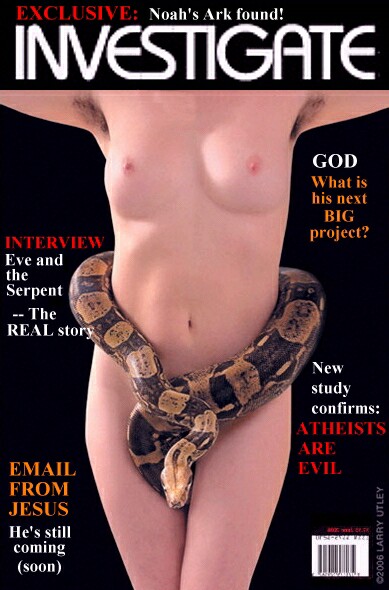

 All hail the ancient text.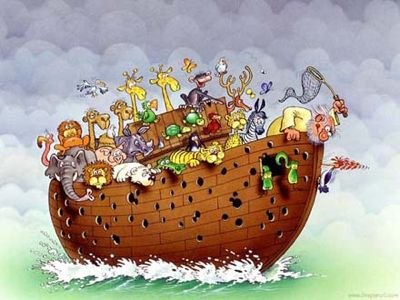
 Yet come Sunday, these same people will be in church praying to the very being that they wouldn't acknowledge in the courtroom. Christian hypocrisy.
 This was the title of a Tough Questions column by Wishart [13]. Naturally he believes the Resurrection happened, that Jesus rose from the dead after his crucifixion. Wishart goes on to provide three 'facts' that prove it. But first he begins with:
 He then mentions miracles, one of the main things that he wants to keep science away from — 'Science cannot prove that miracles did not or do not happen'. Again, this is true, but then remember that science also cannot prove that Greek gods didn't toss lightning bolts from Mt Olympus, that Icarus didn't fly too close to the sun and melt his wings or that the Tooth Fairy wasn't born in Mesopotamia. Wishart is again insisting that because science can't empirically disprove something, in this case miracles, then we should at least accept that they may be possible, that they may have happened. But by accepting this argument you must also accept the possibly of miracles by the Greek gods, by the Egyptian gods and even the Tooth Fairy. But Wishart and other fundamentalists turn into prize hypocrites and categorically deny the possibility of these beings. They are adamant that these other supernatural beings never existed. And yet when referring to the belief in ghosts Wishart has noted, 'The moment one accepts the possibility of anything supernatural, by definition one would have to accept the possibility of the existence of God'. [18] Wishart insists that belief in the supernatural opens up the possibility of God, and by extension he must therefore understand that it opens up the possibility of an infinite number of gods and supernatural beings. And yet he denies them all bar the Christian God. He has supposedly investigated all these thousands of religions and beliefs in supernatural beings and reached the conclusion that there is good evidence that they never existed. He'll no doubt say that he can't categorically prove this, but he is nevertheless extremely confident in his view that they are all myths, bar one. Yet when scientists state that they are extremely confident that they are all myths, bar none, Wishart screams that they are making an assertion that they have no right to make. Hypocrite.